A cracked driveway, a pool deck ready for renovation, or an old foundation that needs to disappear before a new pour — concrete removal shows up in more Florida projects than most property owners expect, and it's one of the most underbudgeted line items when it does. The material looks simple to break up, but in practice it involves specialized equipment, real tonnage, and disposal logistics that a rented jackhammer and a pickup truck can't handle. Here's what actually drives the cost, and what to expect when you're budgeting a project in Southwest Florida.
What Concrete Removal Actually Covers
Concrete removal isn't limited to driveways. The scope covers any poured slab or surface standing between a property and its next phase:
- •Driveway and apron removal
- •Sidewalk and walkway removal
- •Pool deck and patio demolition
- •Curb and gutter removal
- •Foundation and slab removal ahead of new construction
- •Rebar and wire mesh separation on reinforced sections
Each project type carries its own thickness, reinforcement, and access profile, and those differences show up directly in the bid. A four-inch sidewalk breaks apart in a fraction of the time it takes to remove a reinforced eight-inch foundation slab.
Concrete Removal vs. Full Demolition: What's the Difference
It's easy to conflate the two, but they're different scopes. Full demolition tears down a structure — a house, mobile home, or building — down to the slab or foundation. Concrete removal is narrower: it's the process of breaking out and hauling away a slab, driveway, or paved surface, whether or not anything else on the property is being demolished.
The two overlap constantly — a demolition project usually ends with concrete removal once the structure itself is down — but you can need one without the other. Replacing a driveway or a pool deck is a concrete removal job on its own; tearing down an old structure is a demolition job that includes concrete removal as one phase. Knowing which one you actually need helps you compare apples-to-apples quotes instead of bids for two different scopes.
What Drives the Cost
Every concrete removal quote comes down to a handful of variables. Understanding them helps you evaluate whether a bid is reasonable for your specific project, not just cheap or expensive in the abstract.
- •Square footage — more area means more machine time to break, load, and haul
- •Thickness — driveways and foundations run thicker than sidewalks and typically cost more per square foot
- •Reinforcement — rebar and wire mesh have to be cut free and separated before hauling, which adds labor
- •Access — tight side yards, pool cages, and gated backyards slow equipment down and sometimes require smaller machines or hand work
- •Disposal — concrete debris has to go to a facility equipped to accept it, and that fee is part of every bid
- •Sub-base work — grading and compacting the exposed base after removal, if the site needs to be ready for a new pour, pavers, or landscaping
In Southwest Florida specifically, access and disposal tend to matter more than they might elsewhere. Many residential lots have side-yard or gated pool-cage access that limits equipment size, and hauling distance to a facility that accepts concrete varies depending on how close a job sits to Bradenton, Sarasota, or the surrounding unincorporated county.
National cost data offers a useful reference point. According to Angi's 2026 concrete removal cost data, professional tear-out typically runs $2 to $7 per square foot, with reinforced concrete adding roughly $1 to $3 per square foot for the extra labor of cutting and separating rebar. Treat that as a planning benchmark rather than a Southwest Florida quote — your actual price depends on the access, thickness, and disposal factors above.
What That Looks Like by Project Type
Using that national range as a starting point, here's roughly how different project types tend to stack up against each other in relative cost, from lowest to highest:
- •Sidewalk or walkway sections — smallest footprint and thinner concrete; generally the least expensive job even at a similar per-square-foot rate
- •Standard driveway — larger footprint and often reinforced, which is why a driveway tear-out usually costs several times more than a sidewalk section
- •Pool deck or patio — frequently reinforced and tied into coping, equipment pads, or screen enclosures, which adds cutting and access complexity
- •Foundation or full slab removal — the highest cost per square foot, driven by thickness, reinforcement, and disposal volume; this scope is usually priced alongside excavation and grading rather than as a standalone job
A standard two-car driveway alone contains an estimated 10 to 15 tons of concrete — weight that has to be broken, loaded, and hauled before the next phase of a project can start. That volume is why a firm number requires a site visit rather than a phone estimate.
Why DIY Concrete Removal Rarely Pays Off
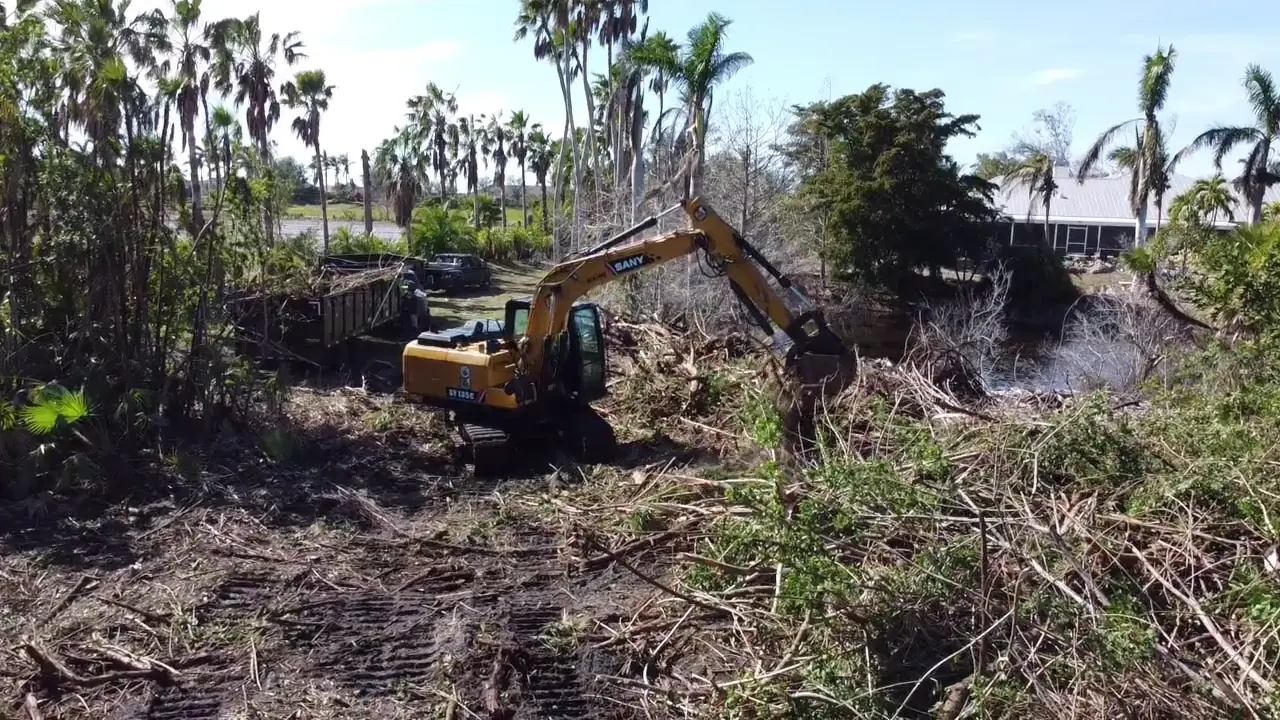
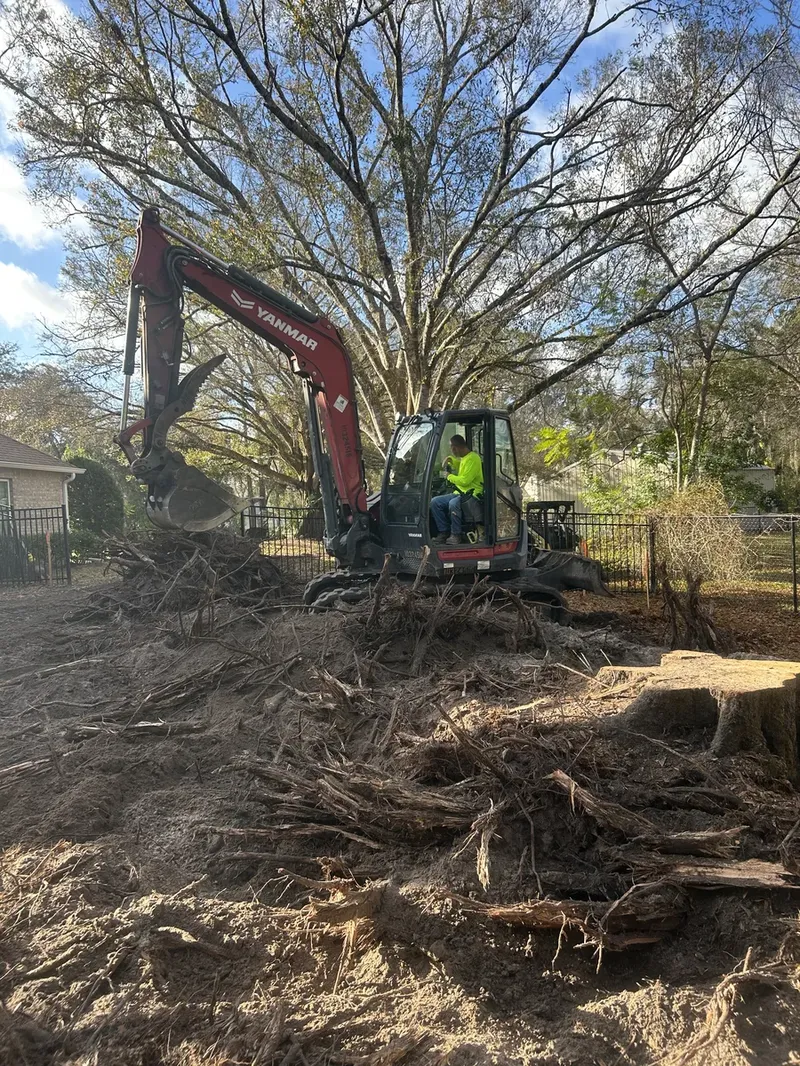
Renting a breaker and a dumpster looks like the cheaper option on paper, but it usually isn't once the full picture is accounted for. Most residential dumpsters aren't rated for the weight of broken concrete, and disposal facilities that accept it aren't always the same ones that take household debris. Add in the physical labor of breaking and loading material by hand, and a DIY timeline often stretches into a multi-day project that a professional crew — working with hydraulic breakers and excavators — clears in a single mobilization.
Recycling and Site Prep
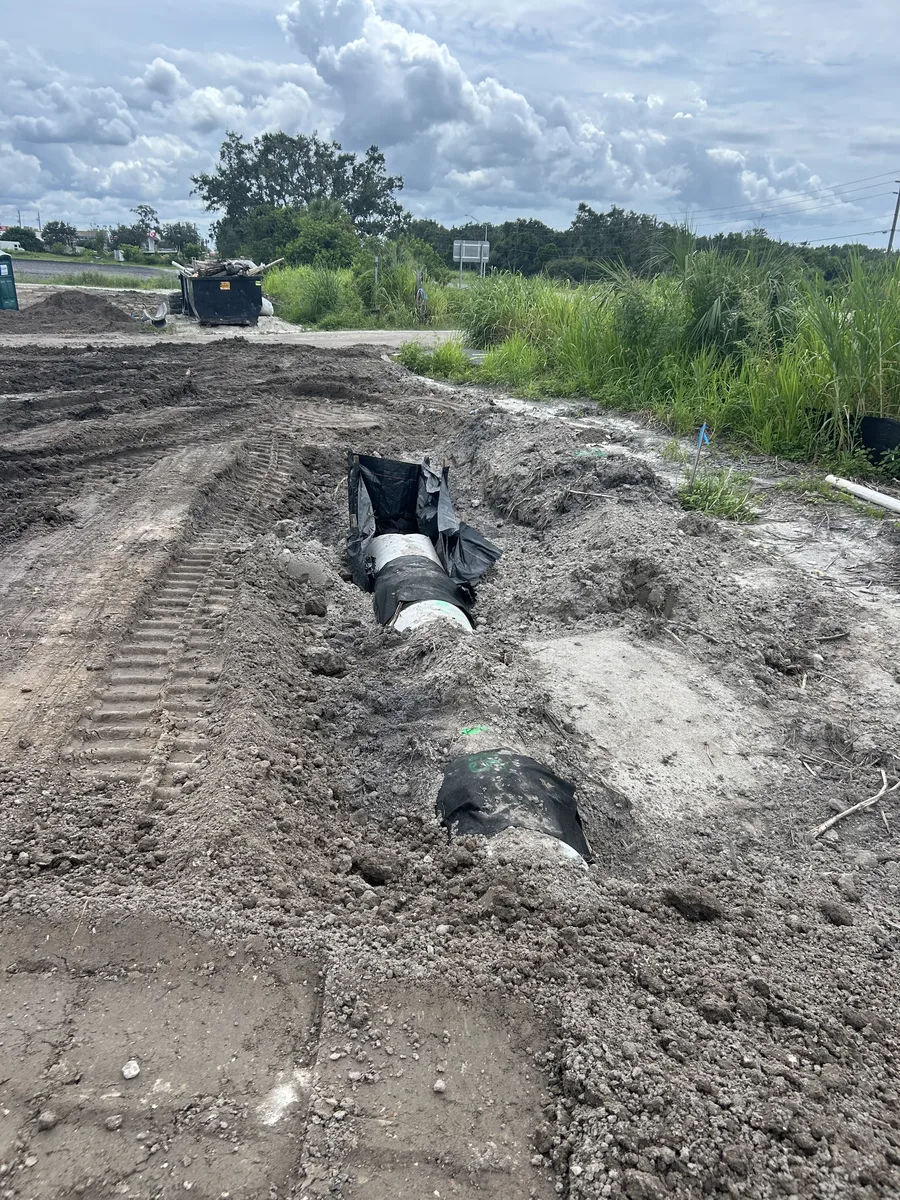
A complete concrete removal job doesn't end at the hole in the ground. Reputable contractors send broken concrete to a facility that crushes it into road-base aggregate rather than a landfill, and separate rebar and wire mesh for scrap recycling. The exposed sub-base then gets graded and compacted — a step that matters in Florida's sandy soil, where an uncompacted base settles unevenly under a new driveway or paver install. Confirm sub-base work is included in your quote; it's easy to leave out of a low bid and expensive to fix after the fact.
Permits and What to Confirm First
Removing concrete on its own typically doesn't require a standalone permit in most Southwest Florida jurisdictions, but that depends on what the removal is tied to. Work that's part of a larger permitted project — a new driveway, a pool renovation, or new construction — is usually covered under that project's permit, and work that changes drainage patterns or sits near a setback can trigger separate review. Requirements vary by county and municipality, so confirm with your local building department before scheduling standalone removal work.
Choosing a Concrete Removal Contractor
Concrete removal is closely related to full-structure demolition and often bid by the same crews, but the equipment, timeline, and disposal path aren't identical. When comparing quotes, ask directly: how do you price the job — per square foot or a flat bid? Is disposal and recycling included, or billed separately? How do you handle rebar and wire mesh? Is sub-base grading part of the quote? The questions in our guide to choosing an excavation contractor in Florida apply here too — a contractor who answers specifically, from experience, is a safer bet than one who quotes a number without measuring the job.
Lethermon Grade Excavations handles concrete removal throughout Bradenton, Sarasota, Palmetto, and the surrounding region — from single driveway tear-outs to full foundation removal ahead of new construction. Contact us for a free estimate and we'll measure the job on site and give you a firm number, not a guess.
Related reading: How Much Does Demolition Cost in Florida? and How to Choose an Excavation Contractor in Florida.
Frequently Asked Questions
Do I need a permit to remove a driveway or slab in Florida?
Removing concrete on its own typically doesn't require a standalone permit in most Southwest Florida jurisdictions, but that depends on what the removal is tied to. Work that's part of a larger permitted project — a new driveway, a pool renovation, or new construction — is usually covered under that project's permit, and work that changes drainage patterns or sits near a setback can trigger separate review. Requirements vary by county and municipality, so confirm with your local building department before scheduling standalone removal work.
What happens to the rebar and wire mesh in reinforced concrete?
Reinforced sections take more time to remove because the steel has to be cut free and separated from the concrete before either material can be hauled. Once separated, the concrete typically goes to a facility that crushes it into road-base aggregate, and the rebar and mesh go to scrap metal recycling.
How long does concrete removal take?
Most single driveways, patios, or sidewalk sections are removed in a single day. Larger jobs — full foundation removal or multiple pool deck sections — can take two to three days depending on thickness, reinforcement, and how much material has to be hauled off site.
Written by
Kameron LethermonOwner of Lethermon Grade Excavations. Military background with 15+ years of excavation and construction experience in Southwest Florida. View full profile →