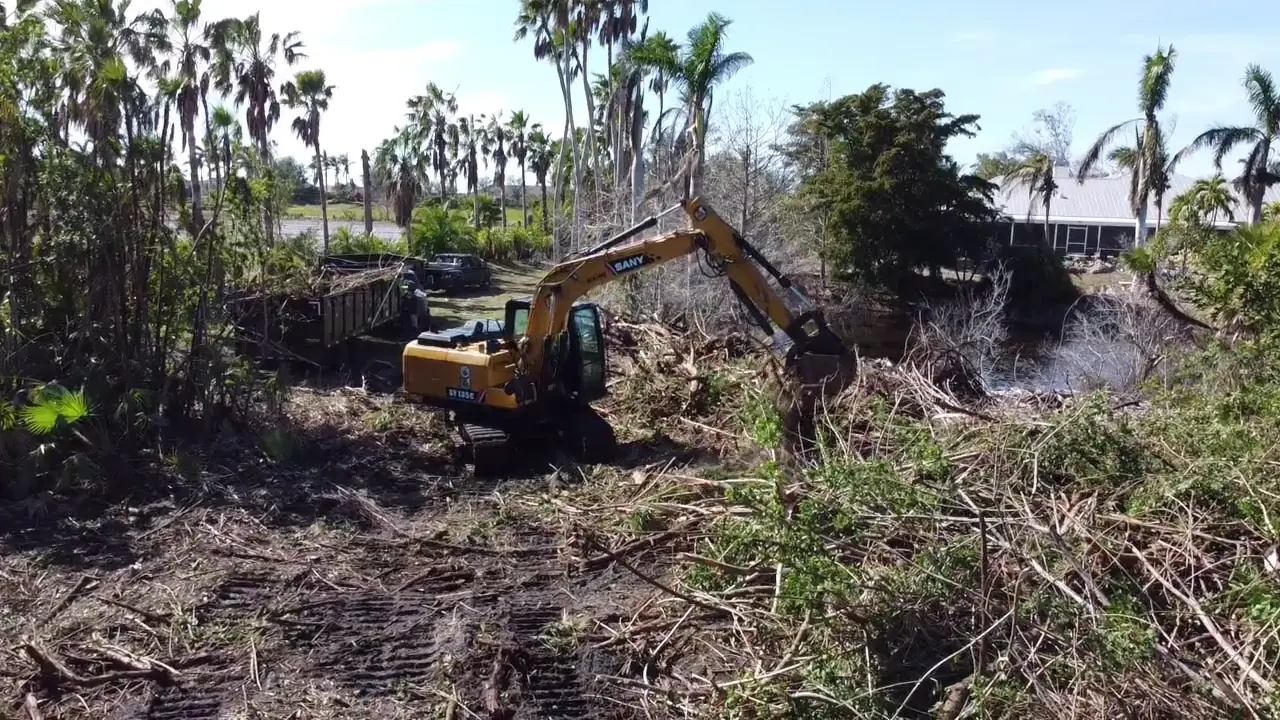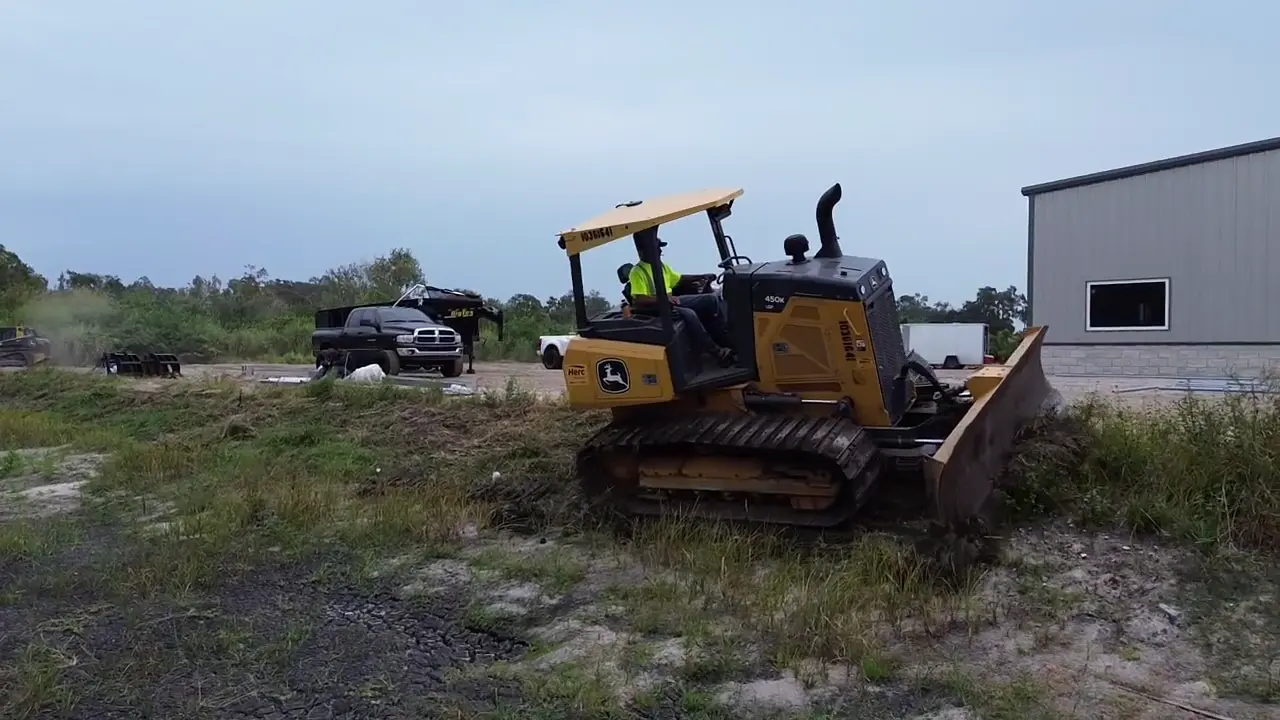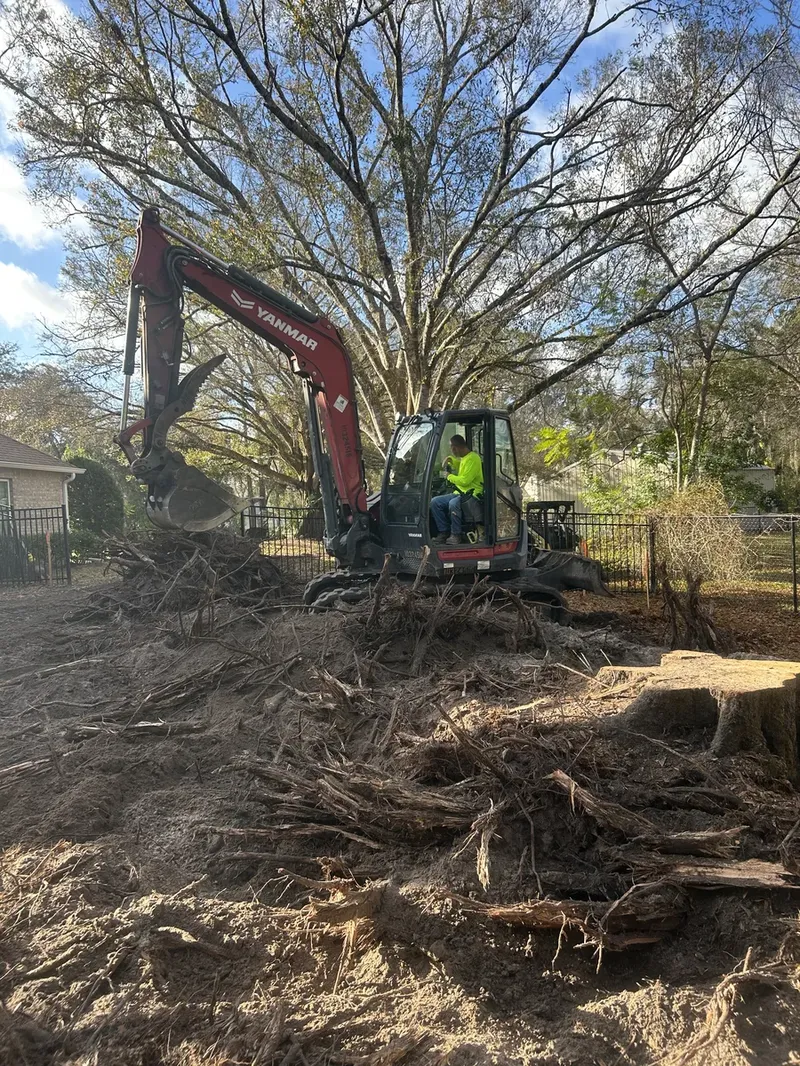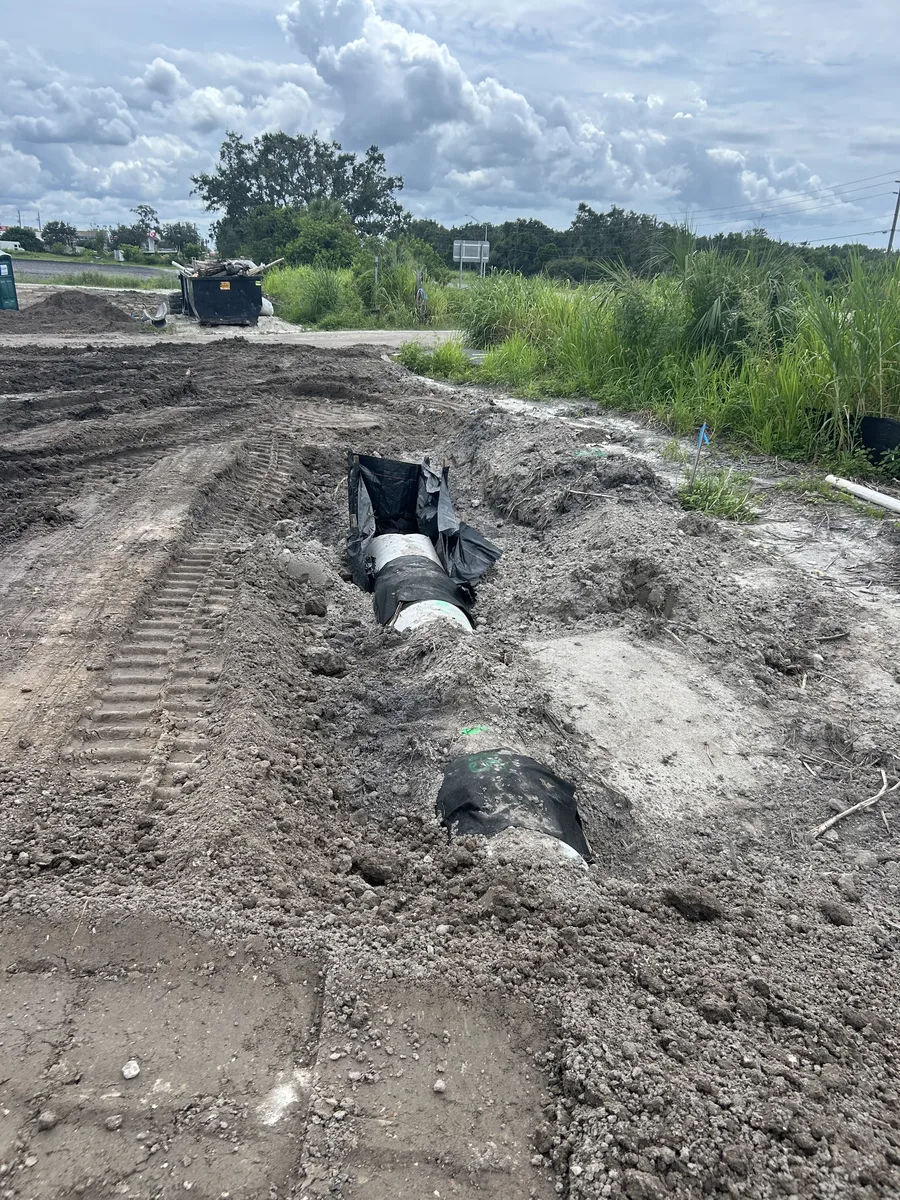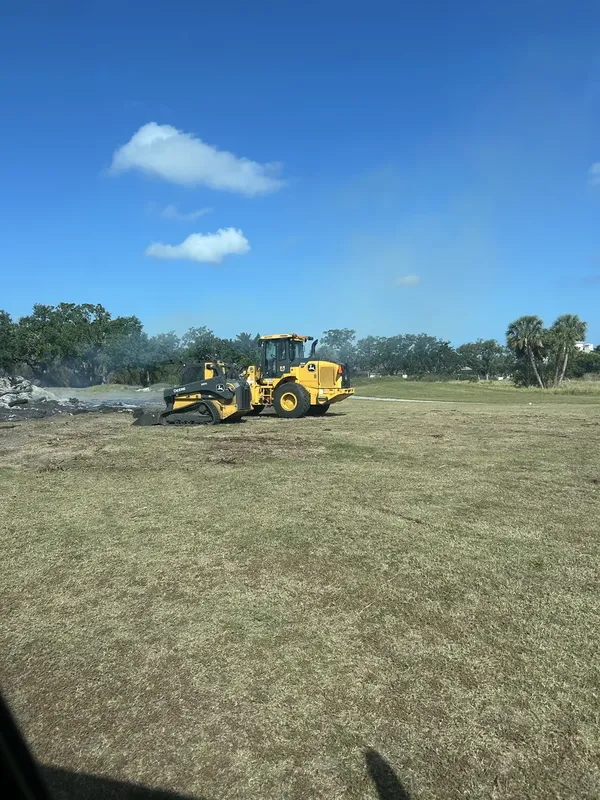
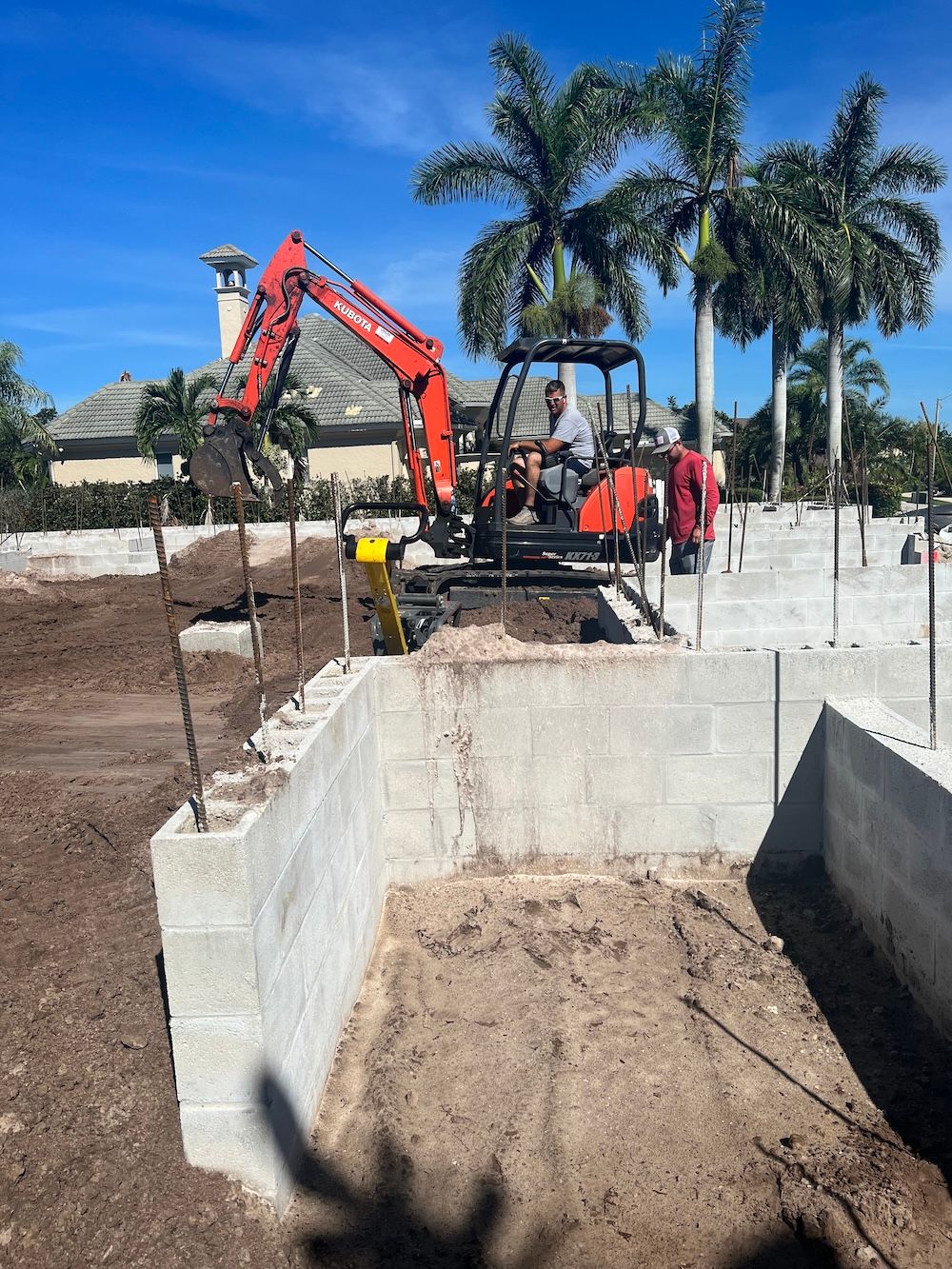
A new construction project in Southwest Florida moves through site clearing, grading, and excavation before any form gets set or concrete gets poured. But the work between breaking ground and the actual pour — what contractors call foundation prep — is where Florida's unique soil conditions and water table create challenges that most property owners and first-time builders don't anticipate until they're standing in them.
Foundation prep isn't one task. It's a sequence of steps, each of which has to be executed correctly for the foundation to perform over the long term. In a climate and soil environment like Manatee and Sarasota Counties, getting that sequence right matters more than it does in most parts of the country.
What Foundation Prep Actually Covers
Foundation prep is everything that happens between clearing the site and pouring the slab — the ground-level work that determines whether a foundation is structurally sound and drainage-compliant from day one.
In Southwest Florida, nearly all residential construction is slab-on-grade — no basements, no crawlspace, concrete poured directly on a prepared subgrade. The high water table makes basements impractical across virtually all of Manatee and Sarasota Counties. That puts the quality of subgrade work front and center: once the slab is poured, there's no access to the ground beneath it. Fixing a soil problem after the fact means breaking concrete.
The prep process typically includes:
- •Site clearing, if not already complete — stumps and organic material must be removed from the building footprint
- •Rough grading to establish the building pad at the correct elevation
- •Foundation excavation for footings and grade beams per the engineering plans
- •Fill placement and compaction where the site requires it to achieve target elevation or bearing capacity
- •Subgrade drainage and moisture management below the slab
- •Final grade verification and compaction testing before county inspection and pour
Each of those steps has real consequences if skipped or done poorly. In Florida, the margin for error in subgrade preparation is smaller than in most places — and the consequences of getting it wrong are harder to undo.
SW Florida Soil: What You're Working With
The soils in coastal Manatee and Sarasota Counties are predominantly sandy — well-draining in dry conditions, but with almost no natural bearing capacity when loose. That's the central challenge of foundation prep in this region. Sandy soil that hasn't been compacted to the correct density will settle under load, and settlement is rarely uniform.
Differential settlement — where one part of the slab drops more than another — is what cracks slabs and structural frames. It's responsible for a large share of the foundation problems you see in older Florida construction. The fix is rarely cheap, and it never happens until after you've already built on top of it.
When a site requires fill to reach the correct pad elevation — common in low-lying parcels and coastal areas — that fill must be placed in controlled, compacted lifts, not dumped all at once. Uncompacted fill can settle for months or years under a loaded slab. Compaction testing confirms the subgrade has reached the bearing capacity specified in the engineering plans. On sites with new fill or questionable native soil, that documentation is what gives you a defensible record that the subgrade was ready when the concrete went down.
The Water Table Factor
Southwest Florida has one of the more pronounced seasonal water table cycles in the country. In the dry season — roughly October through May — water tables in Manatee and Sarasota Counties can sit several feet below the surface. Come June, with the rainy season delivering intense daily storms, the same soil can become saturated within weeks. This seasonal swing creates two specific challenges for foundation prep work.
Timing matters. Foundation prep is most efficient in the dry season, when soil is most workable and the water table is at its seasonal low. Projects that push into June through September can encounter saturated subgrades that are harder to compact to spec. Wet-season projects aren't impossible — they require more active site drainage management and scheduling flexibility.
Dewatering is often required. On sites near the coast or in low-lying areas, footing excavations can encounter groundwater even in dry months. Dewatering — temporarily pumping the excavation to allow proper footing work — is a standard practice on many Southwest Florida projects. If your contractor hasn't addressed this possibility upfront, ask specifically how they handle shallow water table sites.
Setting the pad at the correct elevation above the documented seasonal high water table is a long-term performance issue, not just a permit box to check. A slab set too close to that water table can experience hydrostatic pressure and chronic subgrade moisture over time. Combined with proper drainage design, the right pad elevation is part of what makes a foundation perform through decades of wet seasons — not just the first.
The Foundation Prep Sequence
Here's what the work looks like in order on a typical residential or light commercial project in Bradenton, Parrish, or Lakewood Ranch:
Land clearing and stump removal — if not already done as part of site clearing. Any organic material in the building footprint must be removed before grading begins. Stumps and buried roots left to decompose create voids under the slab over time.
Rough grading — establishing the building pad at the target elevation per the engineering plans. In flood-zone parcels, the finished floor elevation is governed by FEMA flood zone mapping, and site grading must reflect those minimum elevations. This is where you find out if the site needs significant fill import to build out of the flood zone.
Foundation excavation — excavating perimeter footings and interior grade beams to the depths in the structural drawings. Florida has no frost line, so footing depths are shallower than in northern states — but the excavation must still reach competent bearing soil below any loose, disturbed, or organic material.
Fill placement and compaction — any fill needed to reach target elevation is placed in controlled lifts and compacted between each lift. This step is where most subgrade failures originate when the work is rushed. One pass over a three-foot fill dump is not compaction.
Compaction testing and documentation — confirming the subgrade meets the density required by the structural plans. The test results go into the permit file. This happens before the county building inspection and before any concrete is poured.
Final grading — pre-pour grading to confirm positive drainage away from the building footprint in all directions. In Florida, positive drainage away from the foundation isn't a nicety — it's what determines whether your drainage performs for decades or creates chronic moisture problems in years one and two.
Permits and What to Verify
Foundation work in Florida falls under the building permit process managed by the county or municipal building department. The structural drawings and soils report are part of the permit package. Required inspections — typically at footing excavation and before the pour — must pass before concrete is placed. Those inspections also create documentation that protects you if a structural question surfaces later.
Projects involving significant earthwork, fill import, or drainage alterations may also need review from the Southwest Florida Water Management District (SWFWMD) or the county's stormwater engineering department. Thresholds and requirements vary by project type, location, and drainage impact. Verify current requirements directly with the relevant agency — or work with a contractor who has navigated the same permit path on comparable projects in your jurisdiction.
What to Look for in a Foundation Prep Contractor
The prep sequence above looks straightforward on paper. What separates contractors in practice is whether they understand local soil conditions, know when to call for compaction testing, and build the schedule around the seasonal water table — or just dig, fill, and move on. When evaluating excavation contractors for a foundation prep scope, ask directly:
- •Do you work from engineered plans, or do you set grade from your own judgment?
- •How do you handle footing excavations that encounter groundwater?
- •What compaction testing do you coordinate, and do you keep documentation for the permit file?
- •Have you prepped foundations in flood zones or on coastal sites in Manatee or Sarasota County?
- •How do you approach wet-season projects — do you schedule around the rainy season or manage through it?
A contractor who can answer those questions with specifics has done this work under Florida conditions. One who can't is learning on your project.
Start with a Site Walk
Foundation prep done right sets up everything that follows — framing, mechanicals, finishes, and the long-term structural performance of the building. Done wrong, it creates problems that are expensive to diagnose and, in many cases, can't be fixed without breaking the slab.
Lethermon Grade Excavations handles foundation prep across Manatee and Sarasota Counties — residential and commercial, new construction and rebuild. We work from your engineering plans, coordinate compaction testing, and will walk the site with you before the project starts to assess conditions and flag anything that needs to be addressed before the pour.
Contact us for a free estimate — we'll walk the property with you and give you a straight read on what the site needs before any concrete goes down.
Related reading: Why Site Grading Is the Most Critical Step in Florida Construction and How to Prepare Your Lot for Construction in Florida.
Frequently Asked Questions
How does SW Florida's wet season affect foundation prep timing?
The dry season (October through May) is ideal for foundation prep — soil is most workable and the water table is at its seasonal low. Projects that push into June through September encounter wetter subgrades that are harder to compact to spec. Wet-season work is manageable but requires more active scheduling, site drainage management, and sometimes dewatering of footing excavations.
Is soil testing required before pouring a foundation in Florida?
For permitted construction, the structural engineer's plans typically specify subgrade bearing capacity requirements. Compaction testing confirms the subgrade meets those specs before the pour. The specific requirements — what tests are needed, who performs them, and when — are set by the engineering documents and the county's inspection process. Confirm the current requirements with your engineer and local building department.
What's the difference between site grading and foundation prep?
Site grading establishes the overall pad elevation and surface drainage across the parcel. Foundation prep is the more targeted work within the building footprint — footing excavation, compaction, and subgrade preparation that brings the ground to structural readiness for the pour. They overlap and are typically sequenced together as part of the same site prep phase.
Written by
Kameron LethermonOwner of Lethermon Grade Excavations. Military background with 15+ years of excavation and construction experience in Southwest Florida. View full profile →