Hurricane season drainage prep comes down to one question: when a storm parks a foot of rain on your lot, where is that water going to go? The time to answer it is June and July — before the season's mid-August-to-October peak — not the week a named storm shows up in the forecast cone. Here's what actually protects a Southwest Florida yard, what you can do yourself, and what takes equipment.
This region doesn't need a direct hit to flood. Debby in 2024 put parts of Sarasota and Manatee County under water as a tropical storm, and Milton followed two months later. The properties that came through best weren't lucky — they had grade and drainage that gave the water a path.
Why Florida Yards Flood When a Storm Stalls
Three things stack against you by late summer. The terrain is nearly flat, so water moves slowly even on a good day. The ground is already saturated from months of daily thunderstorms. And the water table — often just a few feet down in Sarasota and Manatee County — has risen through the wet season, so the soil has little capacity left to absorb anything. Then a storm arrives during the season's statistical peak and drops more rain in a day than the lot normally sees in a month.
The difference between a yard that drains in two hours and one that holds water for two days is rarely mysterious. It's grade, plus a clear path off the property. Both are checkable — and fixable — in advance.
The 30-Minute Walkthrough That Finds Problems Early
Wait for one of July's hard afternoon downpours, put on boots, and walk the lot while it's still raining. You'll learn more in half an hour than from any inspection on a dry day:
- •Mark every spot where water ponds instead of moving — those are your grade problems
- •Follow the swale lines between lots and along the road — look for spots blocked by sod buildup, fence posts, planting beds, or stored material
- •Check where downspouts discharge — roof water dumping at the slab soaks the backfill zone right beside your foundation
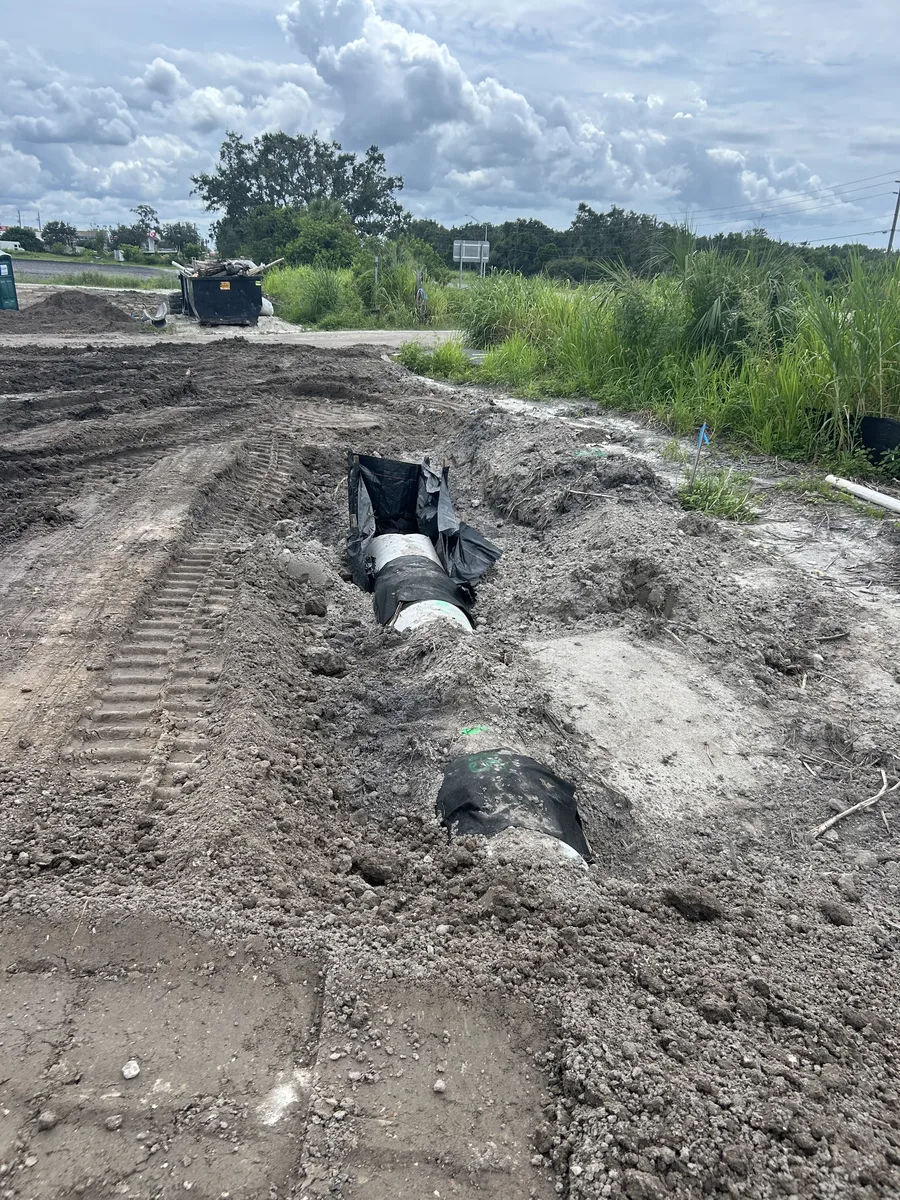
- •Look into both ends of your driveway culvert — silt, roots, and crushed pipe are the most common blockages we dig out
- •Note where water enters from neighboring lots — you can't stop it at the line, but you can give it a route through
The Five Fixes That Matter Most Before Peak Season
- •Re-cut blocked swales. That shallow ditch between lots is engineered drainage, not decoration. Years of mowing and settling flatten it out; re-cutting the flow line restores the path the neighborhood was designed around.
- •Regrade for positive slope. Ground should fall away from the slab — roughly 6 inches over the first 10 feet. Regrading is machine-and-laser work, but it's the fix that solves ponding at the source instead of chasing it.
- •Add French drains for chronic wet spots. Where regrading alone can't win — low corners, side yards pinched between houses — perforated pipe in a gravel trench moves water out instead of letting it stand.
- •Clear or replace driveway culverts. A silted or crushed culvert dams the roadside swale and backs water onto your lot and your neighbor's. If the pipe is collapsed, replacement is a half-day job — in July. In October it's a waiting list.
- •Extend downspouts. Get roof water at least past the backfill zone around the foundation — farther if the grade lets you tie extensions into a swale or drain line.
Our guide to the five most common Florida drainage problems goes deeper on how each of these failures starts and what the permanent fix looks like.
What to DIY and When It Takes Equipment
Plenty of this list is a Saturday with gloves: cleaning gutters, adding downspout extensions, pulling debris out of swales and culvert mouths, moving stored material out of flow paths. Do that part yourself and you've already improved how the lot handles a storm.
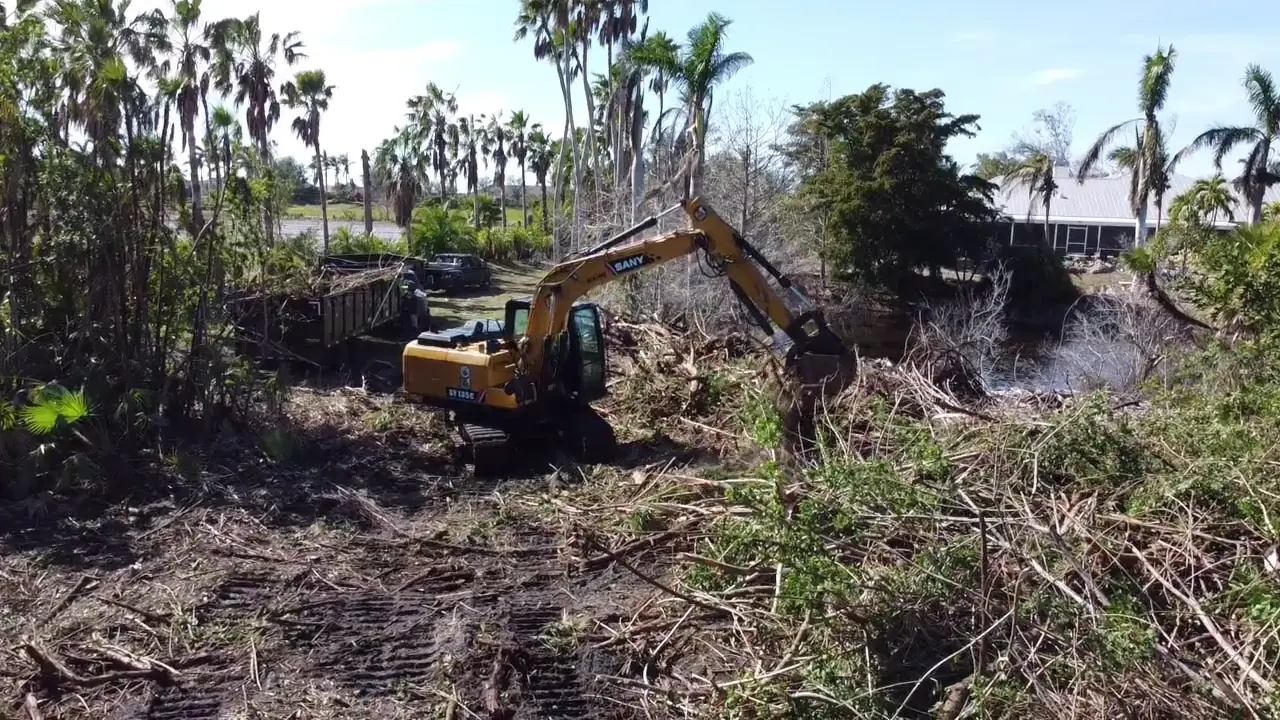
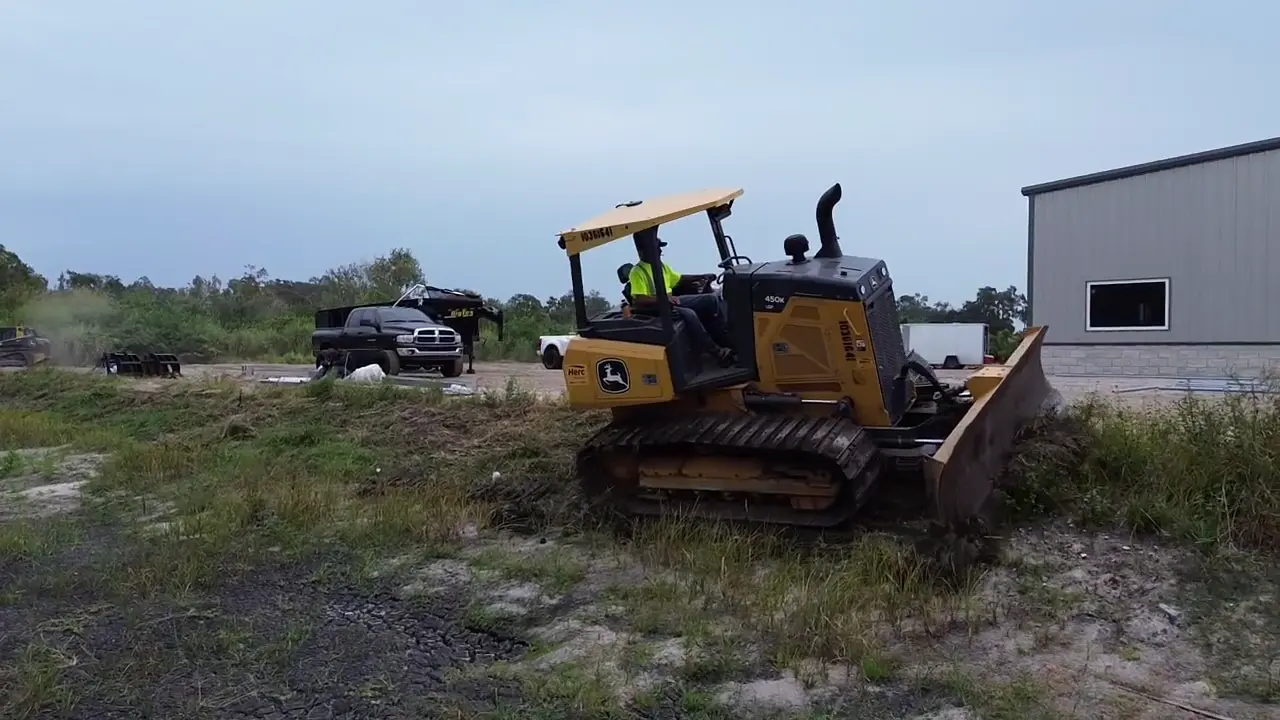
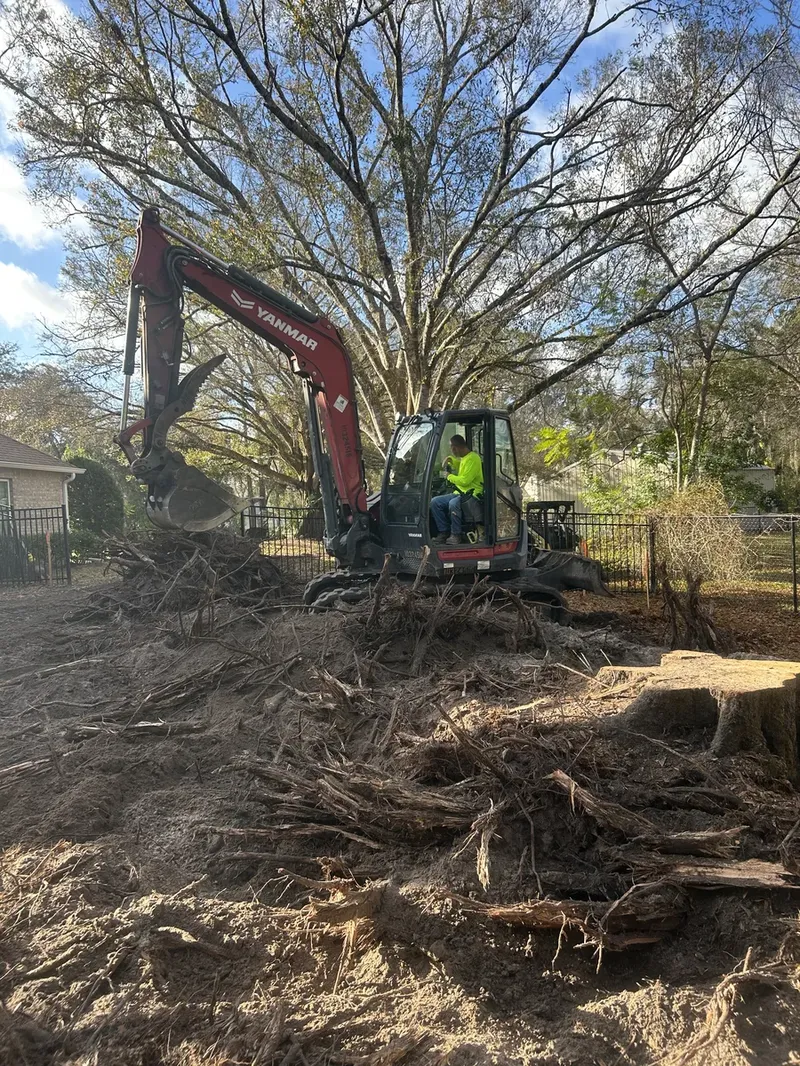
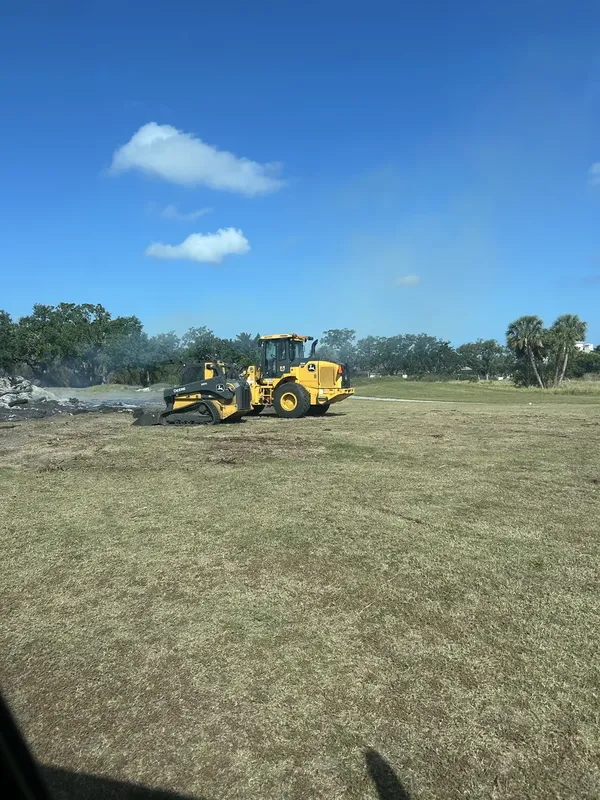
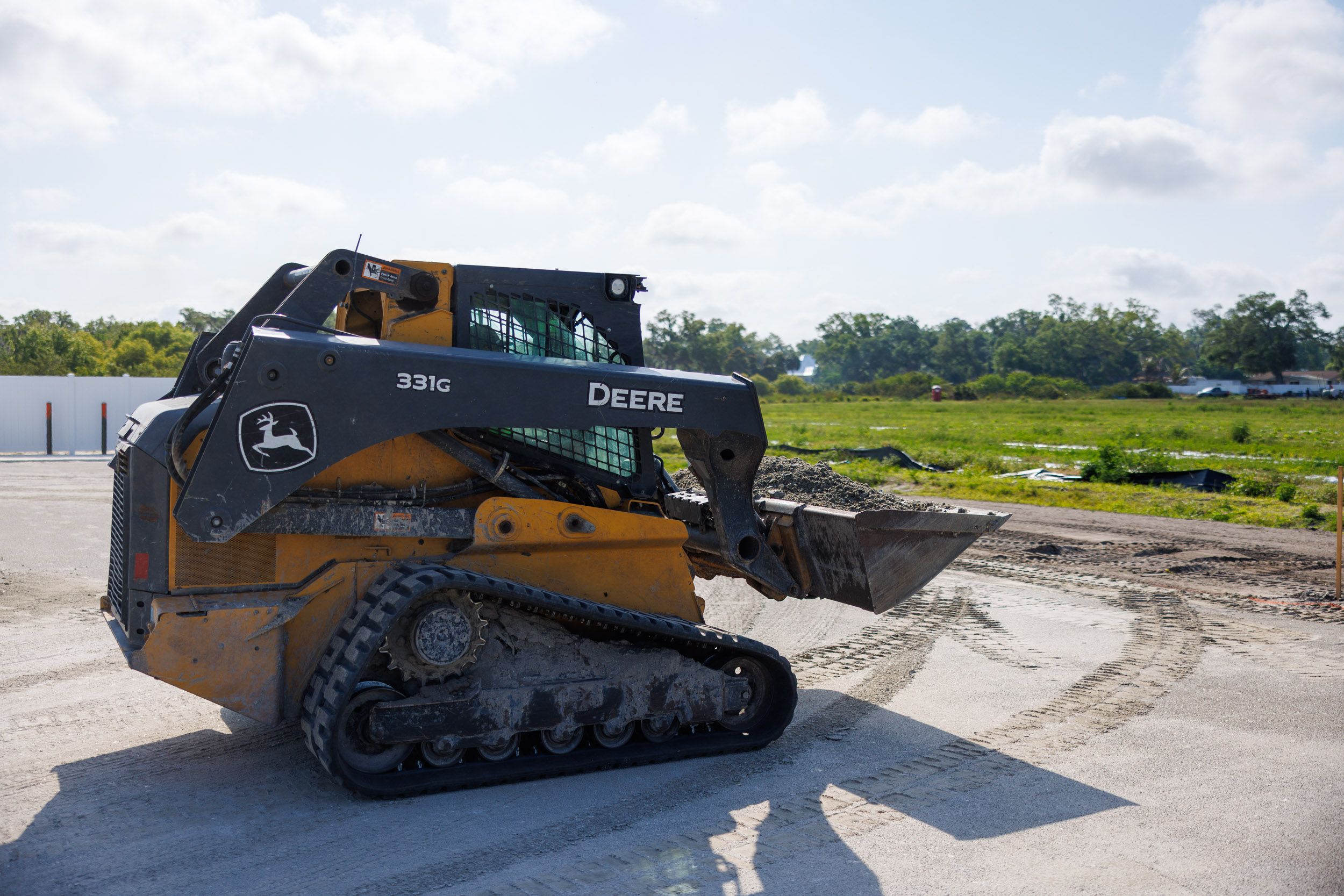
Regrading, French drain runs, berms, culvert replacement, and retention-area work are equipment jobs — laser-guided grade control and an operator who knows what the county expects. Sod laid over a grade problem is still a grade problem; we've regraded plenty of yards where the previous "fix" was new grass over standing water.
One honest scheduling note: most of the flooded-yard calls we take in October were visible in July. Once the first storm has Florida in the cone, every drainage crew in the region books out. The cheap, calm month to fix drainage is before the season peaks — and early-summer work also gives new grade and sod time to settle in before the heaviest rain.
Permits and County Rules Worth Knowing
Interior lot regrading is usually simple, but the moment work touches a platted drainage easement, a roadside swale, or a culvert under a county road, Sarasota and Manatee County rules apply — and redirecting runoff onto a neighboring property can turn into a code complaint even when everything else was done right. Larger projects can also involve the Southwest Florida Water Management District. This is normal territory for us: we confirm what applies to your lot and coordinate it as part of the job.
If a Storm Is Already Named
Seventy-two hours out, be realistic about what still helps: clear culvert mouths and swale debris, extend downspouts, sandbag garage and low door openings, and secure anything loose that could end up blocking a drain path. What doesn't happen the week before a storm is regrading — tearing up a yard in front of a hurricane makes things worse, not better.
After the storm: photograph everything for insurance, then fix the cause rather than the symptom. We've handled storm-damage cleanup, drainage repairs, and demolition after past storms across Manatee and Sarasota counties — the yards that flood once usually flood again until the grade changes.
Lethermon Grade Excavations handles drainage work — swales, regrading, French drains, berms, and culverts — across Bradenton, Sarasota, Palmetto, Parrish, and the surrounding area. Request a free estimate and we'll walk the lot with you, tell you what's a Saturday job and what's a machine job, and get the machine work done before the season peaks.
Frequently Asked Questions
When should I fix drainage problems before hurricane season?
By the end of July. The Atlantic season peaks from mid-August through mid-October, and drainage crews book up fast once the first storms start forming. Grading and French drain work done in early summer also has time to settle and get sod re-established before the heaviest rain arrives.
How much slope should my yard have away from the house?
The common rule of thumb is about 6 inches of fall over the first 10 feet from the foundation. Many Florida lots lose that slope over the years as landscaping builds up, soil settles, or additions change how water moves — which is why regrading is one of the most common pre-season fixes we do.
Will a French drain stop hurricane flooding?
It helps, but be realistic: no residential system outruns a foot of rain in a day. A French drain clears chronic wet spots and moves water away from structures faster once the storm passes. The real goal of drainage prep is that the house stays dry and the water has somewhere to go — that takes grade, swales, and drains working together.
Do I need a permit to regrade my yard in Sarasota or Manatee County?
Regrading the interior of your own lot is usually straightforward, but work in drainage easements, roadside swales, or around driveway culverts is county-regulated, and changing how runoff flows onto a neighboring property can create a code issue. We confirm what applies to your specific lot and handle the coordination as part of the job.
Written by
Kameron LethermonOwner of Lethermon Grade Excavations. Military background with 15+ years of excavation and construction experience in Southwest Florida. View full profile →