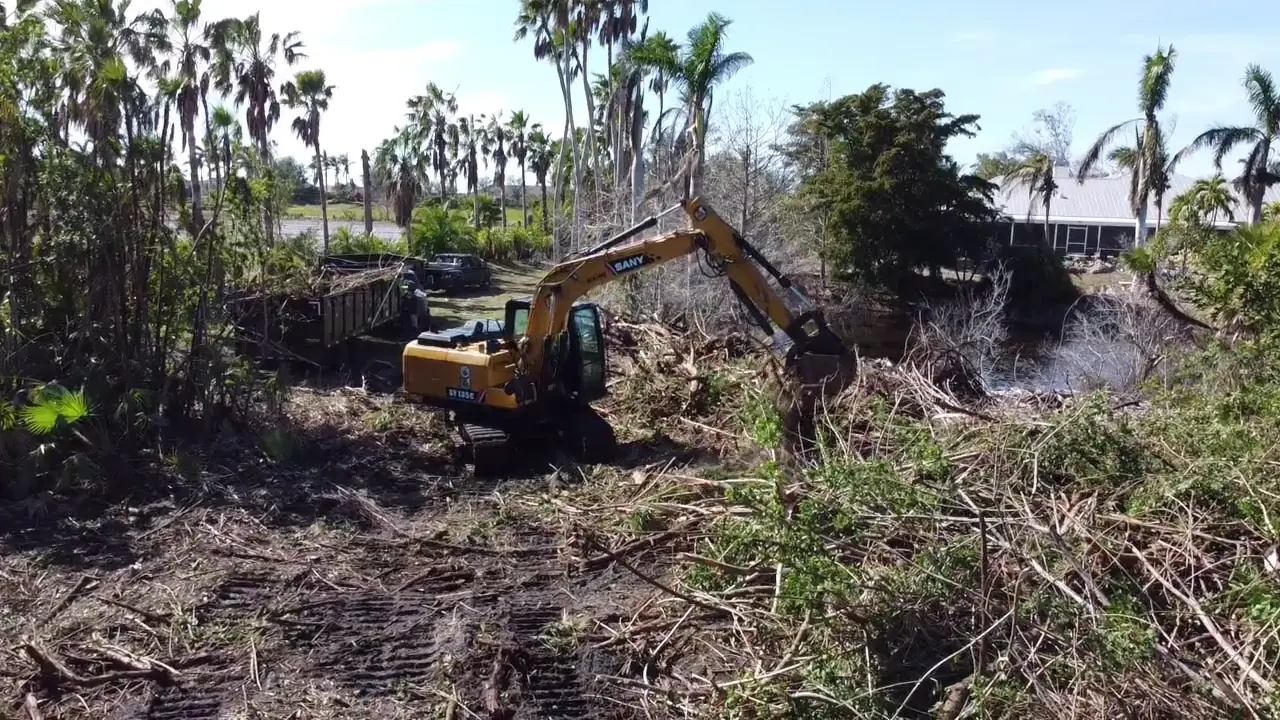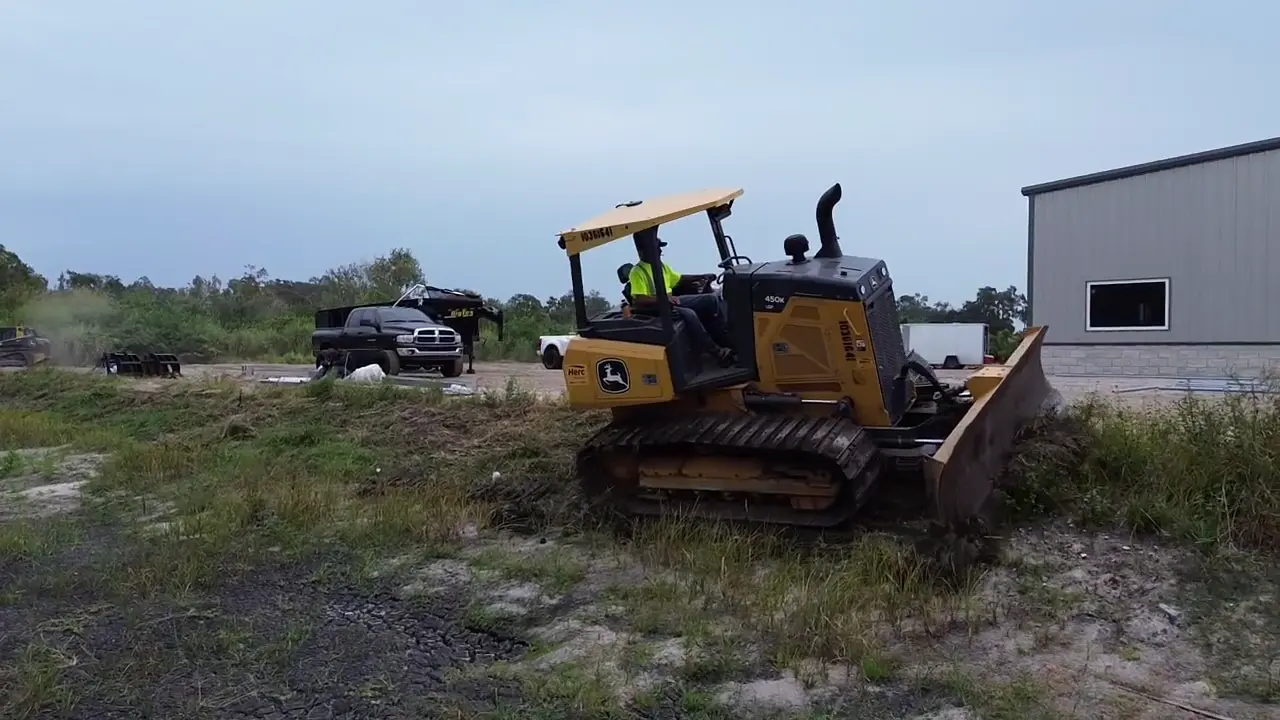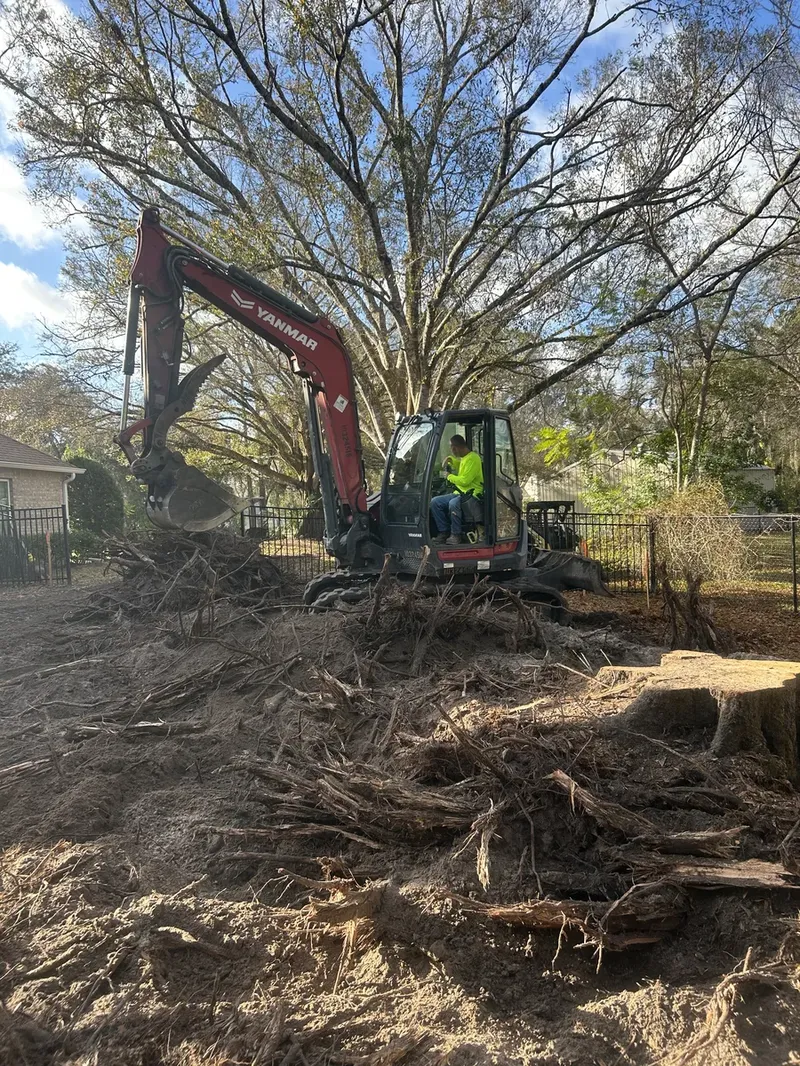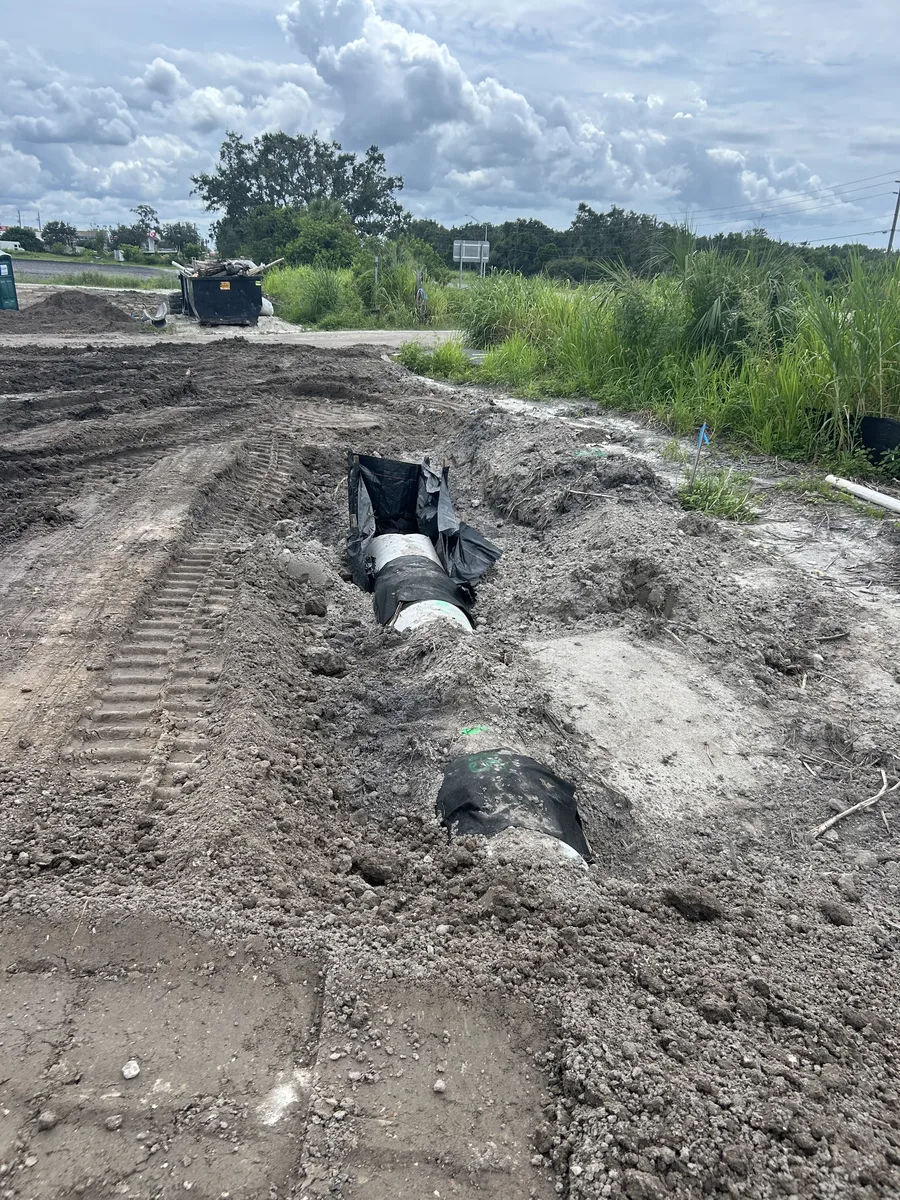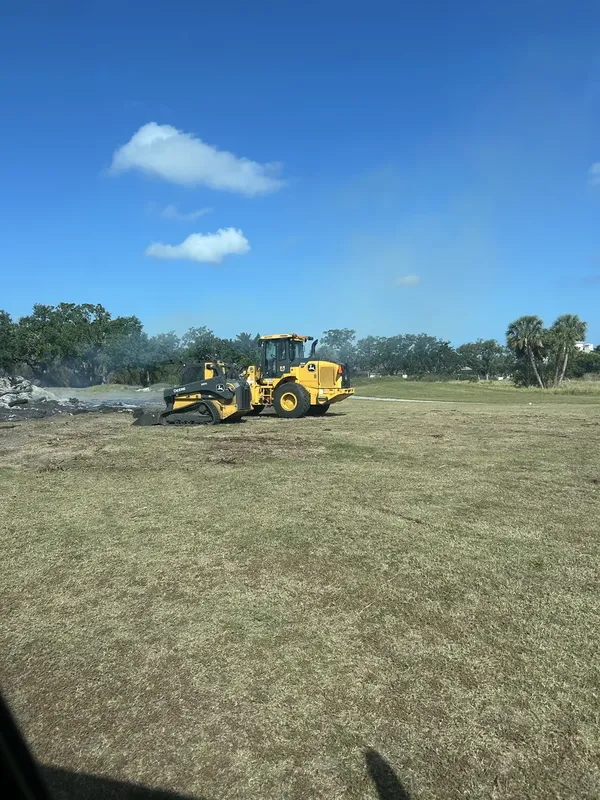
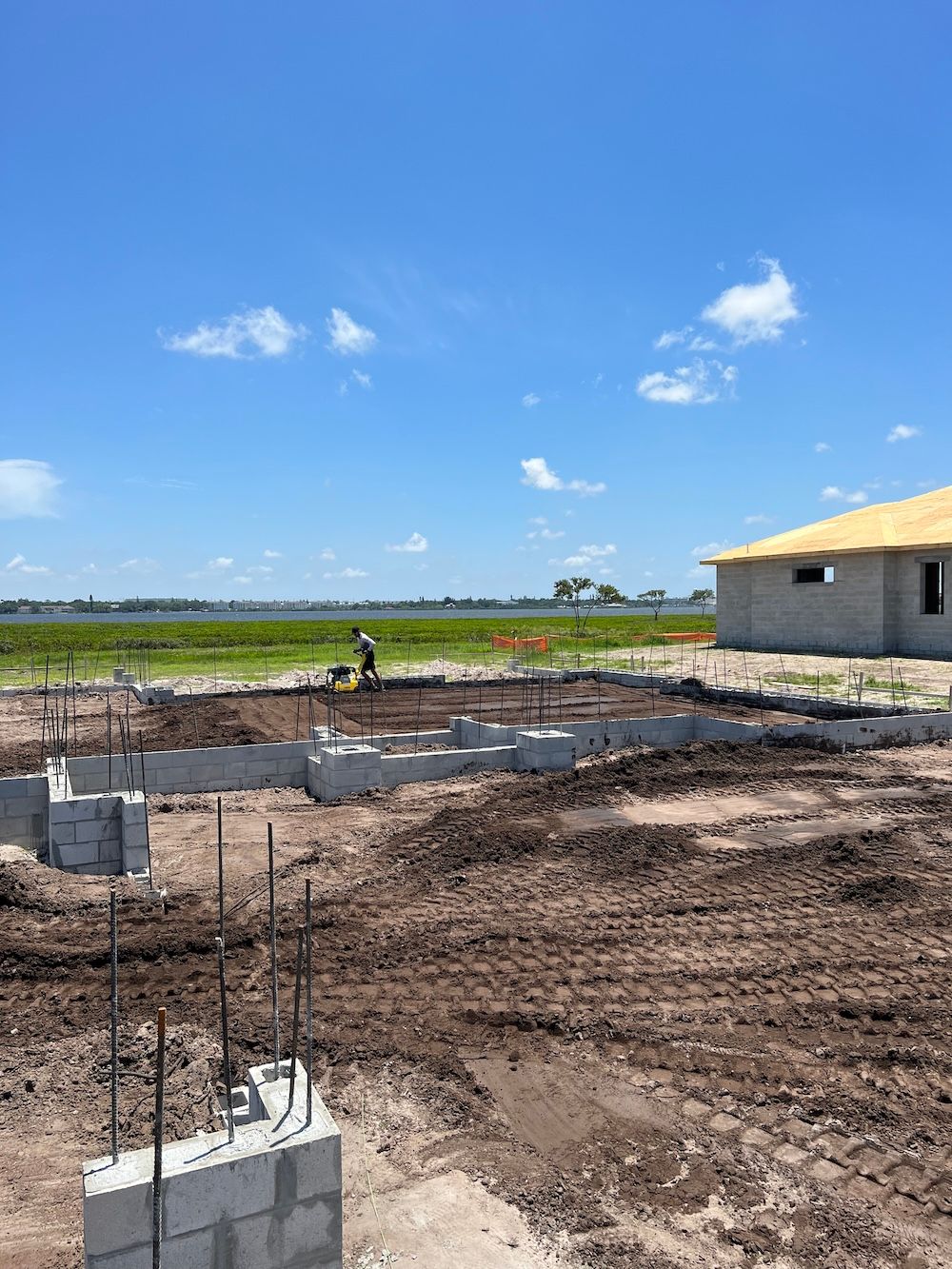
Most property owners treat trenching as an afterthought — dig a ditch, drop in a pipe, backfill it. In many parts of the country, that's roughly accurate. In Southwest Florida, it's more involved. High water tables, loose sandy soil, strict utility locating requirements, and a rainy season that can flood an open trench overnight all add layers that experienced local contractors account for from day one. This guide explains what utility trenching in Southwest Florida actually involves, why local conditions matter, and what you should know before your project begins.
What Utility Trenching Covers
Utility trenching is the process of digging a narrow trench to install, repair, or replace underground lines. Most people associate it with large commercial projects — but homeowners and builders in SW Florida deal with it constantly. Common types include:
- •Water supply and sewer lines for new construction or additions
- •Electrical conduit to outbuildings, pool equipment, or EV chargers
- •Irrigation system main lines and zone piping
- •Underground drainage — French drains, catch basins, and swale connections
- •Septic tank connections and drain field piping
- •Communication lines — fiber optic, cable, and telephone conduit
Each utility type carries its own depth requirement, bedding material specification, and inspection step — all set by your local municipality, utility provider, or in the case of drainage, the Southwest Florida Water Management District (SWFWMD). A qualified contractor identifies what permits and specs apply to your project before breaking ground, not during.
Why SW Florida Conditions Change the Math
Trenching in Manatee and Sarasota counties isn't the same as trenching in central Florida, and it's a different job from what contractors working in drier states are used to. Three conditions drive most of the difference.
High Water Table
Much of SW Florida sits just a few feet above the regional water table, and during the wet season — June through September — groundwater rises closer to the surface. An open trench can begin taking on water within hours, particularly in low-lying areas, near retention ponds, or on coastal lots. Contractors manage this by scheduling work during drier windows, using temporary dewatering where necessary, or sequencing dig-to-backfill on the same day to minimize exposure time. If a contractor tells you the timeline is weather-dependent, that's not an excuse — it's an honest read on local conditions.
Sandy Soil and Trench Stability
SW Florida's sandy soil doesn't hold a vertical cut the way clay does. An open trench can begin to slough and collapse within hours — especially when wet. This creates both a safety problem and a quality problem: unstable walls can shift installed pipe or conduit before backfill is complete. For deeper trenches, experienced crews use trench boxes or shoring to hold walls stable while they work. For shallower residential runs, moving efficiently from dig to install to backfill the same day reduces exposure and keeps the trench profile clean.
Seasonal Timing
SW Florida's dry season runs roughly November through April. If your project schedule has flexibility, trenching work is generally cleaner and faster during those months — the water table is lower, rain-delay risk is reduced, and working conditions are firmer overall. Trenching happens year-round on active construction sites, but it requires more weather-awareness and responsive scheduling during the rainy season.
The Trenching Process, Step by Step
1. Call Sunshine 811 — No Exceptions
Florida law requires that you notify Sunshine 811, the state's one-call utility locate service, before any digging begins. This triggers a locate request that sends utility companies out to mark their underground lines with paint and flags. Skipping this step isn't a time-saver — it risks the crew, damages infrastructure, and carries real legal and financial liability. A qualified contractor handles this as a standard part of project setup. If someone offers to skip it, that alone is reason to find a different contractor.
2. Permits and Engineering Review
Depending on scope and location, your project may require a permit from Manatee County, Sarasota County, or a municipal building department. Drainage projects that tie into stormwater systems may also need SWFWMD review. Requirements vary by project type and municipality — your contractor should clarify what applies before equipment is on site, not after.
3. Equipment Selection
The right equipment depends on trench depth, width, and site access. Compact chain trenchers work well for shallow residential runs in open ground. Mini excavators give more control on tighter lots or where soil conditions require extra care around existing utilities. Hydrovac — pressurized water excavation — is used when working in close proximity to live utilities where precision matters most. An experienced contractor evaluates site conditions before mobilizing, not after arrival.
4. Digging, Bedding, and Utility Installation
Once locate flags are in and permits are in hand, the crew digs to the specified depth. Bedding material — typically clean sand or gravel depending on the utility type — goes in first to cushion and stabilize the pipe or conduit. The utility is then set, connected, and staged for inspection. Most permitted work requires a rough inspection before backfill so the inspector can verify depth, materials, and connections while everything is still visible.
5. Backfill and Compaction
Backfilling a trench isn't shoveling dirt back in. Proper compaction in layers — called lifts — prevents settlement that can crack pavement, knock irrigation heads out of alignment, or stress pipe joints over time. In Florida's sandy soil, this matters more than in denser soils: uncompacted sand settles visibly. A depression that shows up months after a job is often traced back to inadequate compaction, not a pipe failure.
6. Final Inspection and Surface Restoration
For permitted work, a final inspection confirms installation per code. Surface restoration — sod, gravel, asphalt patch, or landscaping — follows and closes out the site. On active construction projects, restoration often happens in phases as other trades complete their work.
Common Trenching Projects Across SW Florida
The fastest-growing areas in our service region — Parrish, Lakewood Ranch, and North Port — are generating high volumes of new construction with extensive utility infrastructure that didn't exist five years ago. Across the region, common project types include:
- •Water and sewer laterals for new homes, additions, and accessory dwelling units (ADUs)
- •Electrical conduit to detached garages, barns, workshops, and pool equipment pads
- •Pool plumbing and electrical connections
- •Irrigation main lines and zone distribution piping for residential and commercial lots
- •French drain networks and catch basin installations for stormwater management
- •Septic system connections and drain field installations on unincorporated lots
- •Commercial site utility infrastructure on multi-lot plat developments
How to Prepare Your Property Before the Crew Arrives
A few steps you can take to set up a clean run:
- •Mark any privately installed irrigation heads, drip lines, or low-voltage landscape lighting. Sunshine 811 locates utilities to the meter — private systems on your side of the connection are your responsibility to flag.
- •Confirm equipment access — gate widths, overhead clearance, and whether the ground near the trench path is firm enough for machinery.
- •Know your property lines. If the trench path runs near a boundary, a recent survey prevents disputes before work starts.
- •Walk the planned trench route with your contractor before equipment arrives — align on path, depth, and surface restoration expectations from the start.
Working With a Local Trenching Contractor
Contractors who handle trenching well in SW Florida have built their process around local conditions — they know which neighborhoods flood first in June, which soil profiles in eastern Manatee County run harder, and how to sequence a tight lot where equipment has limited room to maneuver. That institutional knowledge doesn't appear on a bid sheet, but it shows up in schedule performance and finished quality.
Before you go to bid, it's worth understanding your full site prep scope. If your project includes drainage work alongside utility runs, see our overview of drainage solutions and our guide to preparing your lot for construction. Trenching often happens in the same mobilization as grading and drainage — bundling that work can save real time and cost.
Lethermon Grade Excavations handles utility trenching across Manatee and Sarasota counties, including active growth areas like Parrish and North Port. If you have a project in the planning stage, reach out for a free estimate — the earlier we can review your site and utility layout, the more accurately we can scope the work and fit it into your schedule.
Frequently Asked Questions
Do I have to call 811 before trenching in Florida?
Yes. Florida law requires you to notify Sunshine 811, the state's one-call locate service, before any digging. It sends utility companies out to mark underground lines with paint and flags. A qualified contractor handles this as standard project setup — if someone offers to skip it, that's reason to find another contractor.
Why is utility trenching more involved in Southwest Florida?
Three local conditions drive it: a high water table that can flood an open trench within hours during the June–September wet season, loose sandy soil that won't hold a vertical cut and can collapse, and seasonal timing. Crews manage this with dewatering where needed, trench boxes or shoring, and same-day dig-to-backfill sequencing.
When is the best time of year to schedule trenching?
Southwest Florida's dry season — roughly November through April — is generally cleaner and faster for trenching. The water table is lower, rain-delay risk drops, and ground conditions are firmer. Trenching happens year-round, but the rainy season requires more weather-aware scheduling.
Do I need a permit for utility trenching?
Often, yes. Depending on scope and location, your project may need a permit from Manatee County, Sarasota County, or a municipal building department, and drainage work that ties into stormwater systems may need SWFWMD review. Most permitted work also requires a rough inspection before the trench is backfilled.
Written by
Kameron LethermonOwner of Lethermon Grade Excavations. Military background with 15+ years of excavation and construction experience in Southwest Florida. View full profile →