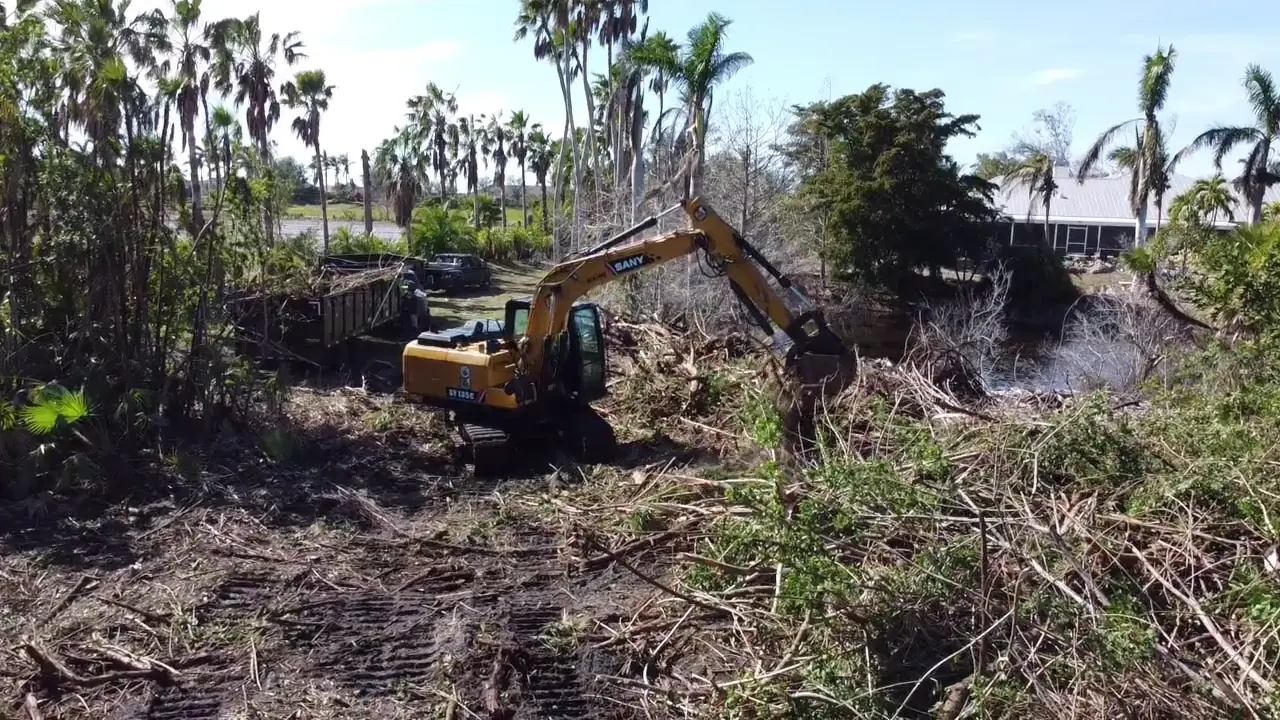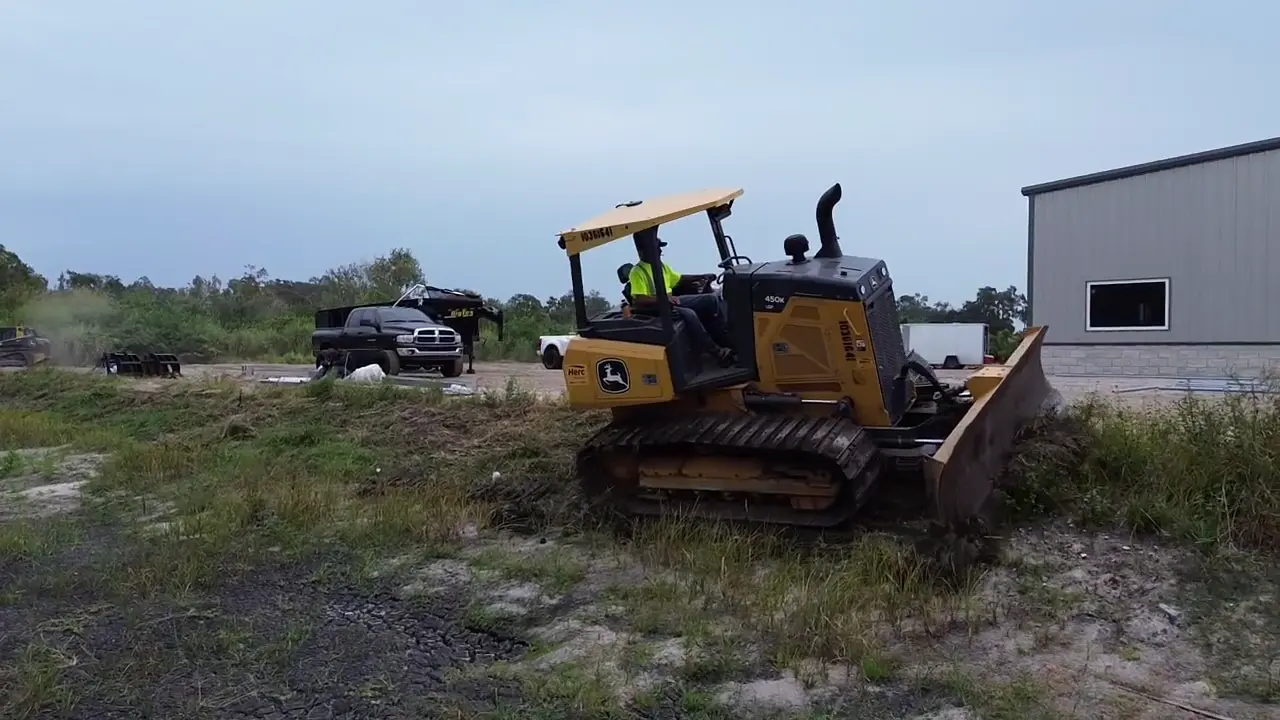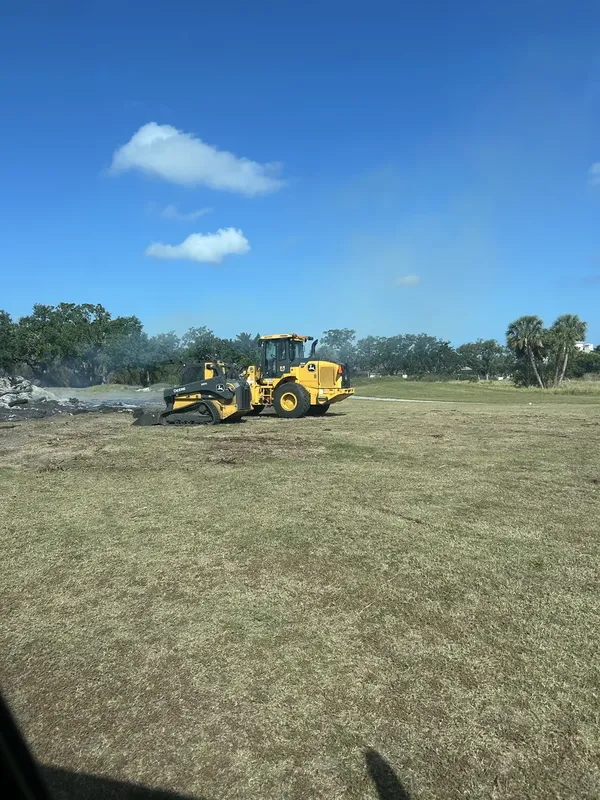
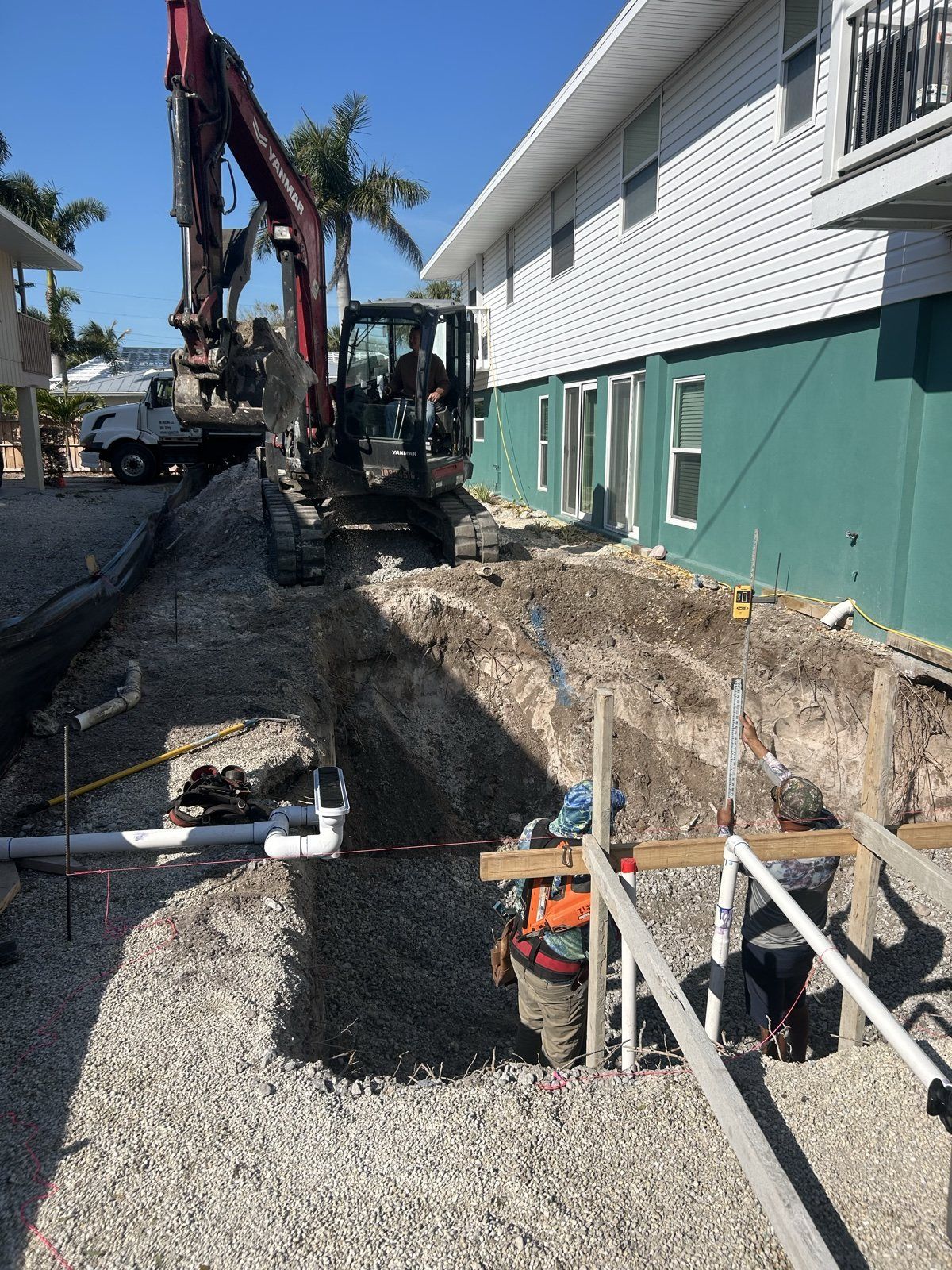
Pool excavation in Sarasota, FL looks simple from the street: an excavator, a staked outline, a hole. In practice it is one of the most site-sensitive jobs we do. The soil is sandy, the water table is often close, and many lots leave little room to maneuver. Getting those three things right decides whether the dig goes smoothly. If you are weighing a pool, this guide covers how pool excavation in Sarasota actually runs and what to settle before the machine arrives.
Pool Excavation in Sarasota Starts With the Ground
Sarasota sits on sandy Gulf Coast soil. Sand digs quickly, which helps production, but it does not hold a vertical wall the way clay does. Pool walls are cut, shaped, and then braced by steel and shell soon after, so the open hole has to stay stable for the days it is open.
The other variable is groundwater. A pool is a deep hole in a shallow water table, and a deep end can reach water that a footing trench never would. Water changes how the dig is staged, how the bottom is finished, and how the pool is protected once it is built. None of this makes Sarasota a bad place for a pool. It means the plan should account for water from day one.
Before the Excavator Arrives
A clean dig depends on work that happens before any dirt moves:
- •Plans and permit in hand. Your pool builder should have approved plans and the permit before we mobilize.
- •Utility locates. Every dig starts with a call to Sunshine 811. Irrigation lines, power, and service lines are common in established Sarasota neighborhoods.
- •A staked layout. The outline, depths, shelves, and any custom features are marked so the operator is cutting to plan, not guessing.
- •A spoil plan. Decide early whether excess soil will be spread on the property or hauled away. A pool displaces a lot of material, and small lots rarely have room for all of it.
Access and Staging on Sarasota Lots
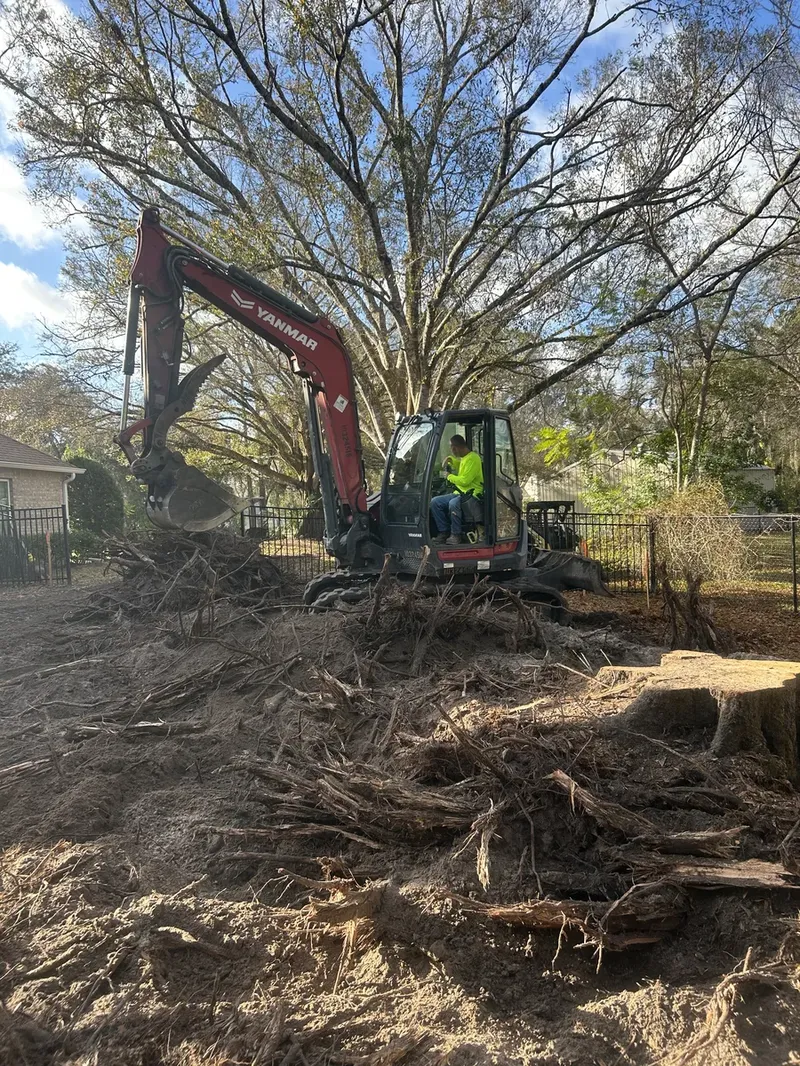
Many Sarasota properties are tight: narrow side yards, mature oaks and palms, fences, and neighbors close by. Equipment needs a path in, a place to stage, and somewhere to put or load spoil. If the only way to the backyard is a gate or a narrow side yard, a smaller machine and more hauling may be the better call than a larger excavator that cannot get through.
Walk the access route with your excavator before you sign. Ask about the machine size, how trucks will load, and what will be protected along the way: pavers, irrigation heads, and tree roots. Surprises here cost more than anything else on a pool dig.
Dewatering: Plan for Groundwater
When a pool excavation reaches groundwater, the site has to be dewatered so the hole stays workable and the walls do not slough in. Industry guidance on pool dewatering, such as the American Shotcrete Association's article on dewatering in swimming pools, describes methods including sump pumps, relief valves, and well point systems. Which one fits depends on how much water is moving through the soil and how long the hole stays open.
The same source is clear on why this matters after construction: groundwater can push up on an empty or partly drained pool. That is a design and engineering question for your pool builder, and we are not going to substitute for their plans. What we can do is tell you honestly what we see in the soil and whether we expect water at your depth, so it is a line in the plan and not a mid-project change order.
The Dig Itself
Once the site is ready, a skilled operator shapes the hole to the design: the deep end, shelves, benches, and any spa or custom features. Most residential pool digs run a day or two, which we also cover in our general pool excavation guide. Tolerances matter. The pool builder is setting steel and forming a shell to that shape, and a hole that is over-dug or out of square gets corrected with extra material and extra cost.
Sandy soil also means the open hole is not a place to leave for a week. Good scheduling keeps the gap between the dig and the steel short, so the walls are not exposed to rain or traffic longer than necessary.
Backfill, Grading, and Drainage After the Shell
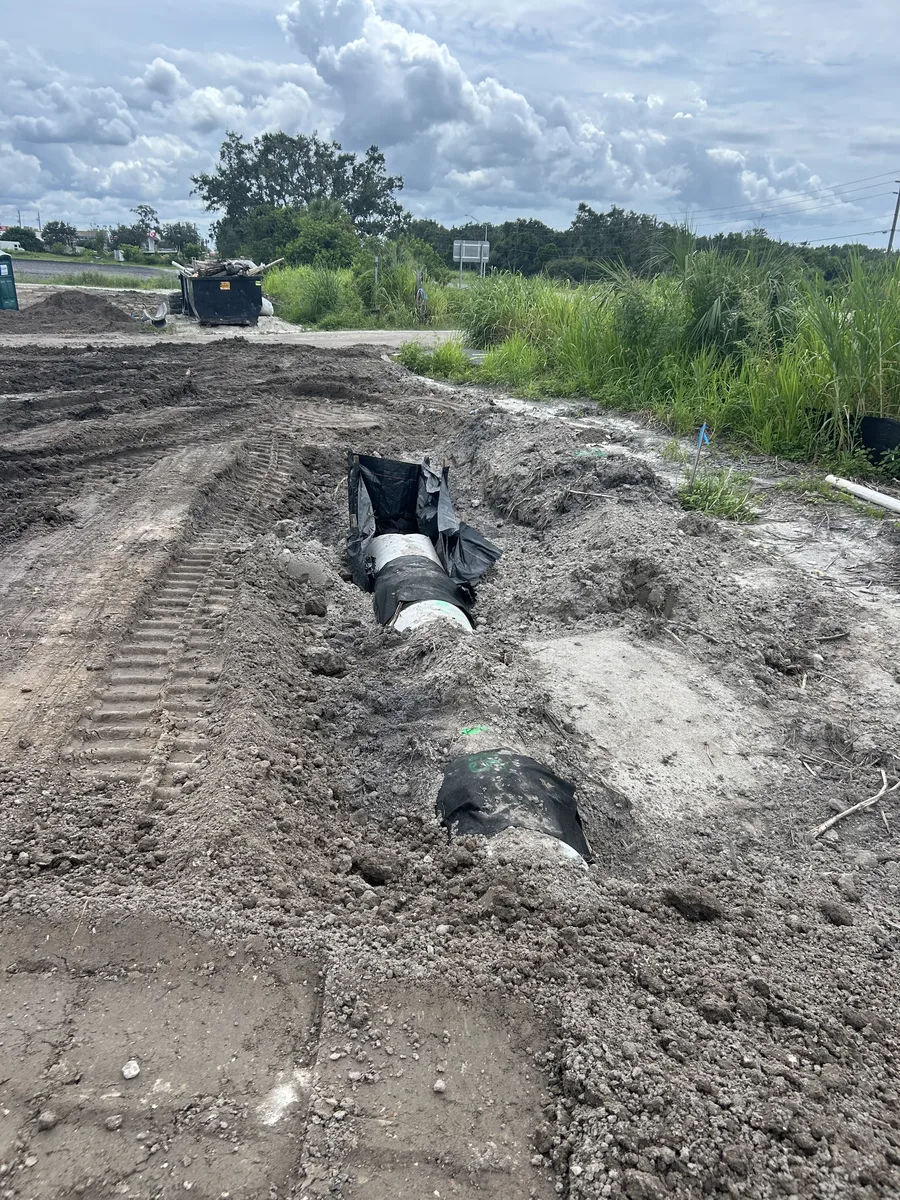
The excavation contractor often returns once the shell is complete to backfill around it and rough grade the yard. Backfill should be placed and compacted in a controlled way, because settling soil around a pool shows up later as cracked decking and low spots. After that, site grading sets the yard to shed water away from the pool and the house, and where needed, drainage work such as a swale or a pipe keeps runoff from collecting around the deck.
Ask your pool builder whether backfill and rough grade are in their scope or ours. A gap between trades here is a common source of finger pointing.
Timing Around Wet Season
Southwest Florida's rainy season runs through the summer and into early fall, and that is when the water table is typically highest. Digging then is routine, but it works best with a dewatering and staging plan from the start. Late fall through spring is generally the easier window. Our guide to excavation in Florida's rainy season goes deeper on how we plan around it.
Permits and Pool Barrier Rules
Pool construction is permitted work, and whether your property is handled by the City of Sarasota or Sarasota County depends on the address. Confirm which applies with the local building department before digging. Florida's Residential Swimming Pool Safety Act, Chapter 515 of the Florida Statutes, sets barrier requirements, including a minimum outside barrier height of 4 feet. Your pool builder handles the design, but it is worth knowing that fencing and access are part of the plan. We work across the Sarasota area and coordinate with builders, but a blog post is never a substitute for checking with the authority that permits your lot.
Beyond Sarasota
The same approach applies in Lakewood Ranch and Bradenton, where lots, soils, and water conditions vary block by block. Pool digs are one piece of our broader excavation services.
Get a Free Estimate
If you are planning a pool, we will walk your lot, check access, tell you upfront if we expect water or rock, and give you a clear scope for the dig and backfill. Request a free estimate and we will go from there.
Frequently Asked Questions
How long does pool excavation take in Sarasota?
Most residential pool digs are a one to two day job once the site is staked and utilities are located. Groundwater, tight access, or hauling a lot of spoil off site can add time, which is why we walk the lot before giving a schedule.
Will I hit water when digging a pool in Sarasota?
It is a real possibility. The water table in Southwest Florida can sit close to the surface, especially in the wet season and nearer the bay and waterways. Ask your excavator and pool builder how they plan to dewater before the dig starts, not after.
Who handles backfill after the pool shell is built?
Usually the excavation contractor returns after the shell is complete to backfill around it and rough grade the yard. Confirm that this is in scope with your pool builder so it does not become a gap between trades.
Do I need a permit before the pool dig?
Pool construction is permitted work, and the requirements depend on whether your property falls under the City of Sarasota or Sarasota County. Your pool builder normally pulls the permit, but confirm with the local building department before any digging starts.
Written by
Kameron LethermonOwner of Lethermon Grade Excavations. Military background with 15+ years of excavation and construction experience in Southwest Florida. View full profile →