Drainage problems don't announce themselves until the first hard rain — a low corner that never dries out, a driveway that sheets water toward the garage, a side yard that stays soggy for days after everyone else's lawn has drained. Fixing it means understanding drainage cost in Florida before you call a contractor, because the price swings enormously depending on which system actually solves your problem. Here's what drives that cost, what the systems are, and what a fair Southwest Florida quote should include.
What Drainage Work Actually Covers
"Drainage" isn't one job — it's a category that covers several distinct fixes, and a contractor's first task is figuring out which one (or combination) your lot actually needs:
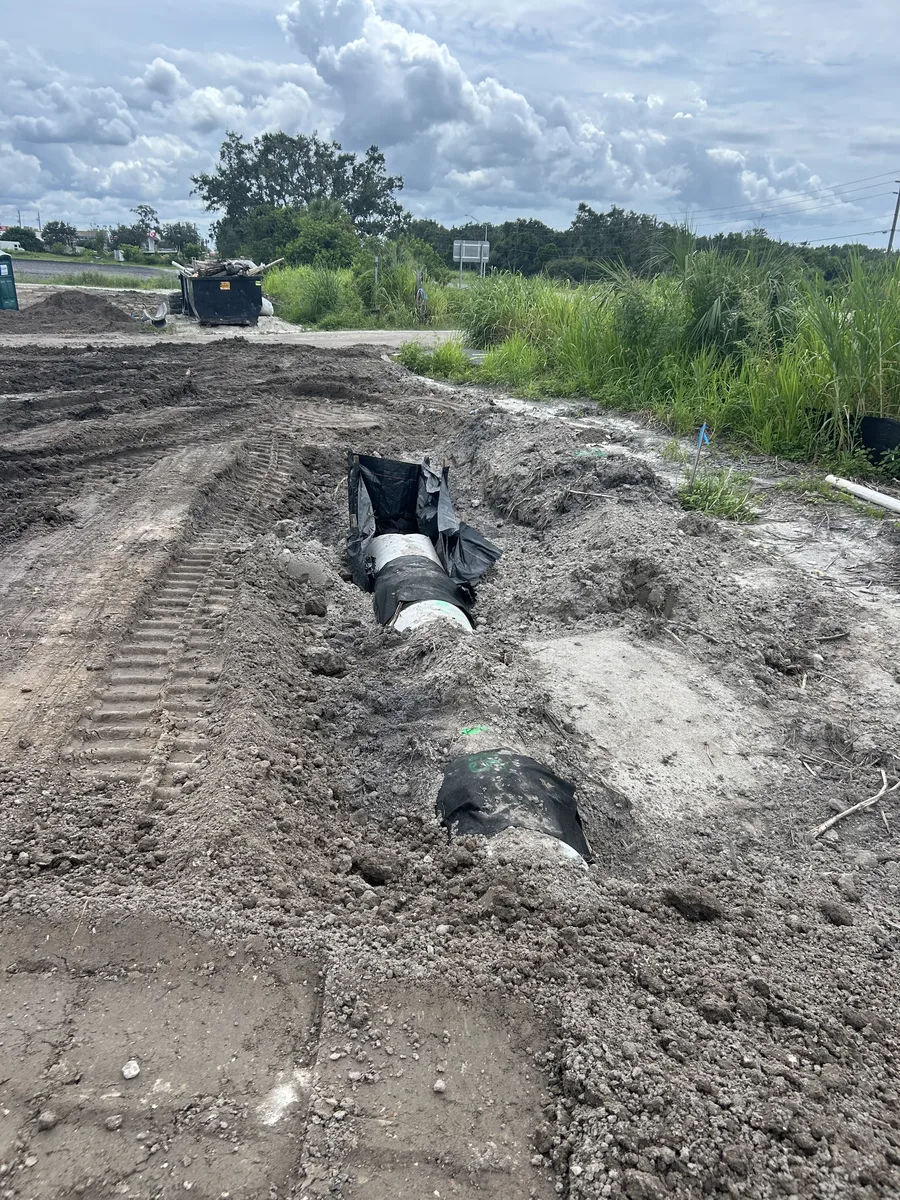
French drains — a perforated pipe buried in a gravel-wrapped trench that intercepts water moving through the soil and redirects it away from a wet area or foundation
Dry wells — an underground chamber that collects runoff and lets it percolate slowly into the surrounding soil, often paired with downspouts or a French drain outlet
Area and catch basins — surface grates tied into buried pipe that capture standing water at a specific low point and carry it to a swale, pond, or street drain
Swale and grade correction — reshaping the land itself so water sheds toward the intended path instead of pooling, sometimes all a lot needs on its own
Downspout tie-ins and culvert work — connecting roof drainage into the yard's piped system and keeping the culvert under a driveway clear and correctly sized
Most jobs combine two or three of these rather than a single fix — regrading to establish the right slope, then a French drain or dry well for the low spot regrading can't reach on its own. That's part of why drainage quotes vary so much: the scope, not just the linear footage, determines the price.
What Drives Drainage Cost in Southwest Florida
A handful of site conditions explain most of the spread between a modest fix and a full system:
System type. A dry well, a French drain, and a surface area drain all move water differently and require different labor and materials, so the type of system selected is the single biggest cost driver.
Linear footage and depth. Longer runs and deeper trenches mean more excavation, more pipe, and more gravel or aggregate backfill.
Soil and water table. Sandy soil is generally easier to trench than the rock and clay pockets found further inland, but a high water table — common across much of Manatee and Sarasota County for much of the year — can complicate trenching and limit how well a dry well percolates, sometimes pushing the design toward surface solutions instead.
Access. Fenced yards, pool cages, mature landscaping, and tight side-yard access all slow equipment down and add labor time compared with an open lot.
Outlet availability. A system needs somewhere for water to go — a swale, pond, or storm drain. If no legal outlet exists near the problem area, the run gets longer and the job gets more involved.
Existing grade problems. If the yard's underlying slope is wrong, pipe alone won't fix it — regrading has to happen first or alongside the drainage work, which adds scope.
Typical Drainage Cost Ranges
National cost-data aggregators give a useful starting benchmark, though your actual price depends entirely on the site factors above. According to Angi's 2026 yard drainage data, a complete system typically runs $2,147 to $7,170, averaging around $4,631. HomeGuide puts exterior French drains specifically at $10 to $35 per linear foot, or roughly $500 to $8,800 for a full yard or curtain drain depending on length. Dry wells generally run $1,200 to $5,200 installed, and surface area or channel drains tend to fall between $30 and $100 per linear foot of pipe and grate.
Treat these as planning ranges, not a quote. A short French drain solving one wet corner and a full-property system tying multiple downspouts, a dry well, and regrading together are both "drainage work" but land at very different ends of that range. The only way to get a firm number is a site visit — ask any contractor to walk the lot during or right after a rain so they can see the problem, not just hear about it.
Regrading vs. Pipe: Which Do You Actually Need
It's tempting to jump straight to a French drain, but the cheaper and more durable fix is often correcting the grade first. If water is standing because the ground slopes toward the house or has flattened out over years of settling and mowing, regrading solves the problem at the source — see our guide on site grading cost in Florida for what that work runs. Pipe and structures earn their cost where regrading alone can't win: a low corner boxed in by a fence line, a side yard pinched between two houses, or a spot where water arrives from a neighboring lot with nowhere else to go. A contractor who recommends pipe without first checking the grade is skipping a step that could save you money.
Why Southwest Florida Adds Its Own Variables
This region's flat terrain and seasonal rainfall pattern mean drainage systems here work harder than in most of the country. Water doesn't have much natural fall to rely on, the water table rises through the wet season, and the same lot that drains fine in April can flood in August. We cover the seasonal side of this in our hurricane season drainage prep guide, and the most common failure patterns we see in our post on Florida drainage problems and fixes. If you're budgeting drainage work, plan it — and ideally install it — well before peak season rather than after a storm has already shown you the problem.
Permits and What to Confirm First
Drainage work sits at the intersection of your property and the broader stormwater system your neighborhood relies on, so permitting requirements vary by county, municipality, and whether the work changes how water leaves your lot. Projects that alter grade, add impervious area, or discharge toward a neighboring property or public right-of-way are more likely to need review than a simple French drain contained on one lot. The Southwest Florida Water Management District (SWFWMD) oversees regional stormwater rules, but day-to-day permitting for residential drainage work typically runs through your local county or city building department. Confirm requirements with that office — or ask your contractor to pull the permit as part of the job — before work starts.
Choosing a Drainage Contractor
Because drainage problems are diagnostic before they're mechanical, the contractor's judgment matters as much as their equipment. When comparing quotes, ask how they determined the system they're recommending, whether they checked the grade before proposing pipe, where the water will discharge, and whether permitting is included in the price. The same questions in our guide to choosing an excavation contractor in Florida apply directly here — a contractor who walks the lot in the rain and explains the reasoning behind a specific system is a better bet than one who quotes a price over the phone.
Lethermon Grade Excavations installs French drains, dry wells, and full-property drainage systems throughout Bradenton, Sarasota, Venice, and the surrounding region. If your yard holds water longer than it should, contact us for a free, on-site estimate — we'll diagnose the actual cause before recommending a fix.
Related reading: Hurricane Season Drainage Prep and 5 Common Florida Drainage Problems and How to Fix Them.
Frequently Asked Questions
What's the difference between a French drain and a dry well?
A French drain is a buried, perforated pipe in a gravel trench that intercepts and redirects water moving through the soil — it moves water away from a problem area. A dry well is a chamber that collects water and lets it slowly percolate into the surrounding ground. They're often used together: a French drain or downspout feeds into a dry well that handles the final disposal.
Do I need a permit for drainage work on my property in Florida?
It depends on the scope and your jurisdiction. Simple, contained work like a single French drain often doesn't require a standalone permit, while work that changes grade, adds impervious area, or affects how water leaves your lot is more likely to need review. Requirements vary by county and city, so confirm with your local building department before scheduling work.
How long does drainage installation take?
A single French drain or dry well for one problem area is often a one-day job. Larger projects — regrading combined with multiple drains, downspout tie-ins, and a new outlet — typically take two to four days depending on the property size and how much of the yard is involved.
Will regrading alone fix a wet yard, or do I need pipe and drains?
It depends on why the water is standing. If the underlying slope is wrong, regrading solves the problem at the source and may be all you need. If the low point is boxed in by a fence, structure, or property line with nowhere for regraded water to go, you'll likely need a French drain, dry well, or area drain in addition to grade correction.
Written by
Kameron LethermonOwner of Lethermon Grade Excavations. Military background with 15+ years of excavation and construction experience in Southwest Florida. View full profile →