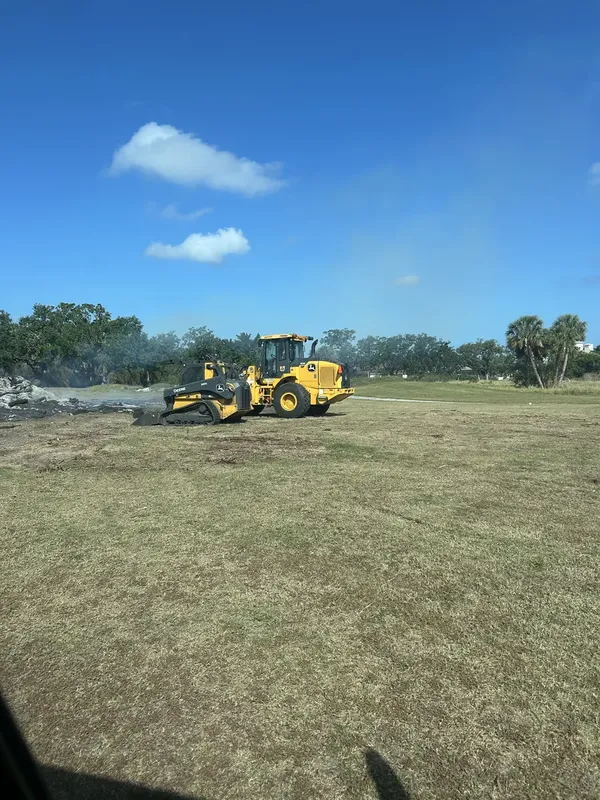
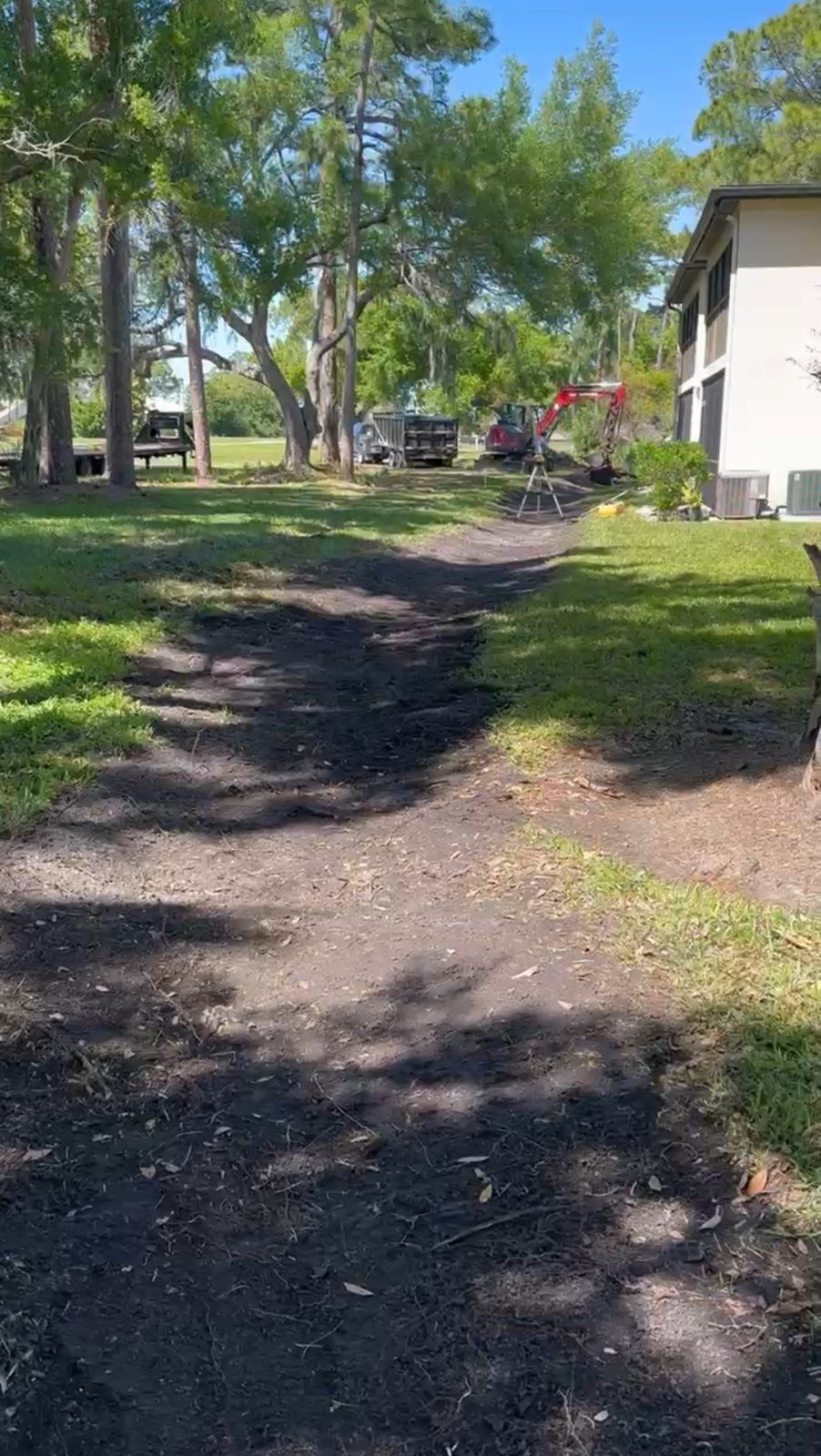
Drainage ditch cleaning is one of those jobs nobody thinks about until the yard floods. Across Manatee County, and especially on the larger rural and semi-rural lots around Parrish and Palmetto, open ditches and swales carry stormwater off pastures, driveways, and home sites. When they silt in or grow over, water sits where it never used to. This guide explains why ditches stop draining, who is usually responsible for which ditch, and what a proper cleanout involves, so you can get it handled before the next wet season.
Why Drainage Ditches Stop Working
Southwest Florida is flat. A ditch here may have only a gentle fall from one end to the other, so it does not take much to stop the flow. Every storm washes fine sand and organic material into the channel. Grass, cattails, and brush take root and trap more of it. Over a few seasons the bottom builds up, the flow line flattens, and the ditch starts holding water instead of moving it.
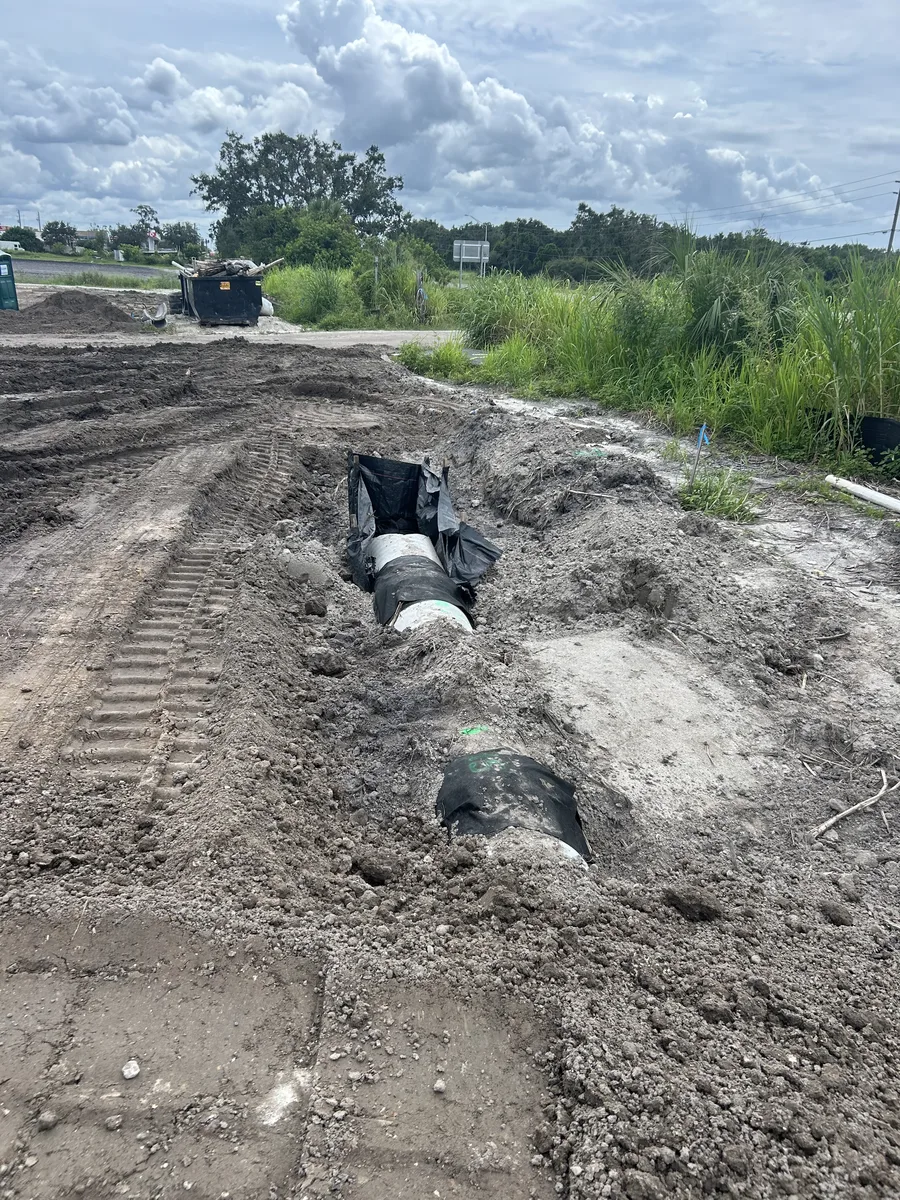
Culverts are usually where the problem shows first. A driveway pipe that is half full of sediment, crushed by traffic, or rusted through can back up an entire run of ditch upstream of it. Sometimes the pipe was undersized or set too high from the start, and the ditch never drained the way it should.
Signs your ditch needs attention
- •Standing water that lingers for days after a normal rain, where it used to drain quickly
- •Grass, cattails, or brush growing across the bottom of the channel
- •A driveway culvert with sediment or debris visible inside either end
- •Water topping the driveway or spilling into the yard during heavy storms
- •Soft, soggy ground in a pasture or along a property line that used to stay firm
- •Eroded or slumping banks falling into the channel
One sign by itself may just mean a wet week. Several together usually mean the ditch has lost its fall and needs to be cleaned and re-cut.
Who Is Responsible for Which Ditch?
Before anyone brings a machine, it matters who owns the ditch. The answer for your property depends on your survey, any recorded easements, and which government or district has jurisdiction. In general terms, ditches fall into a few groups.
Ditches in the public right-of-way
Many roadside ditches in unincorporated Manatee County sit inside the county right-of-way. The Southwest Florida Water Management District's drainage complaint guidance lists unmaintained ponds, swales, ditches, cross drains, and culverts within the right-of-way of county-maintained roads as a matter for the county's Public Works department, not the water management district. If the roadside ditch in front of your property is clogged, start by reporting it to Manatee County Public Works. Do not assume you can dig in the right-of-way yourself; work there generally requires county approval.
Driveway culverts
Driveway culverts sit where private access meets the public ditch, which makes them a common source of confusion. Manatee County handles driveway culverts through a Public Works driveway and culvert permit, applied for through the county's online permitting portal, and the county's application states that culvert and swale grades are set by county personnel. That detail matters: a culvert set at the wrong elevation can dam the very ditch it is supposed to drain. If your driveway pipe is failing, confirm with the county what permit is needed and who sets the grade before anyone replaces it.
Ditches on private land
Field ditches, boundary ditches, and swales entirely on your own property are typically yours to maintain. Routine cleanout of a private ditch that does not change where water leaves the property often needs no permit, but work that redirects flow, connects to a public system, or touches wetlands can. Requirements vary by county, city, and site, and larger work may involve the Southwest Florida Water Management District (SWFWMD). Confirm with your county and SWFWMD before reshaping how water leaves your land.
City limits, districts, and HOAs
City limits change the picture. If your property is inside the City of Palmetto, check with the city rather than the county, since drainage inside city limits may fall under the city. North Port, across the line in Sarasota County, runs its own Road and Drainage District: the city's assessment reports list swale and culvert maintenance among the services that district funds, while the city has also said it is not authorized to perform drainage work on privately owned land, which remains the owner's responsibility. Many newer subdivisions around Parrish also have community development districts or HOAs that own their stormwater systems. If you live in one, check with the district or association before touching a shared ditch.
What Professional Drainage Ditch Cleaning Involves
Cleaning a ditch is not just scooping out mud. The goal of professional ditch cleaning is to restore a continuous fall so water runs downhill to where it is allowed to go. A proper cleanout generally follows this order:
Walk the line. Find where the ditch is silted in, where it is blocked, and where the water is supposed to end up.
Locate utilities. Florida's Underground Facility Damage Prevention and Safety Act (Chapter 556, Florida Statutes) requires excavators to notify Sunshine 811 before digging, and roadside ditches often run alongside buried lines.
Confirm ownership and permits. Settle who owns the ditch and whether any right-of-way, culvert, or drainage permit applies before equipment arrives.
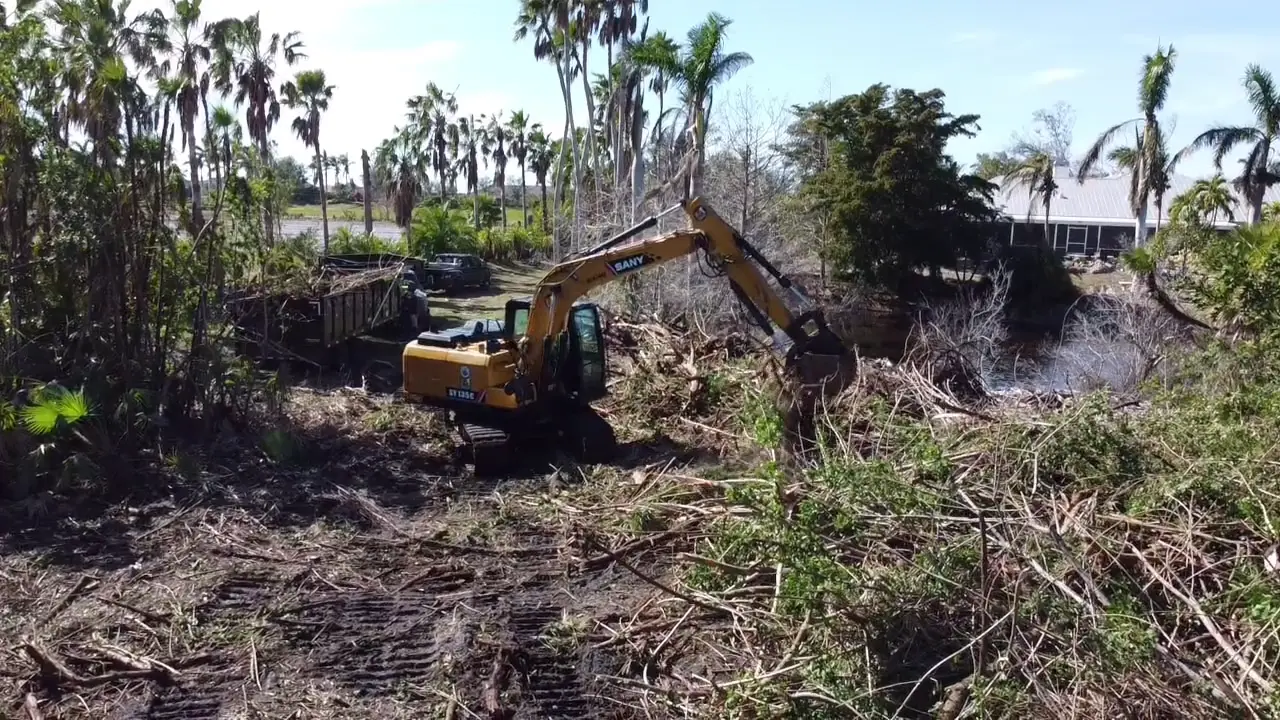
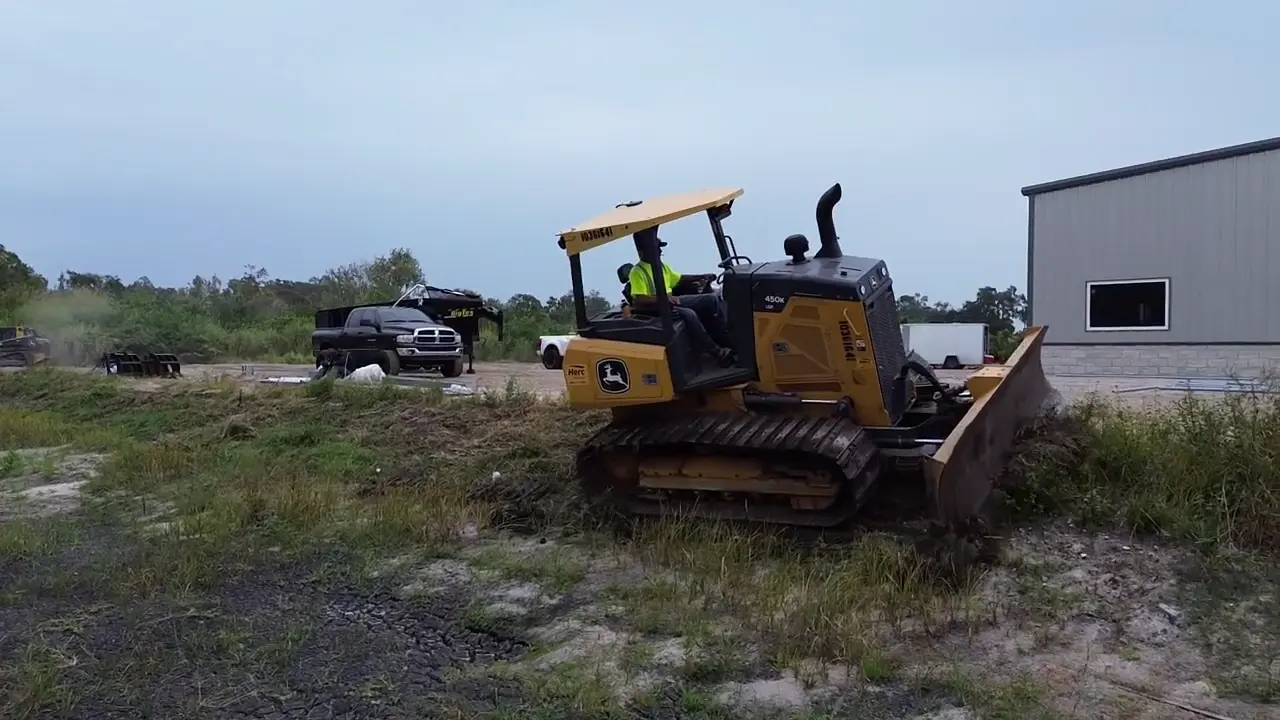
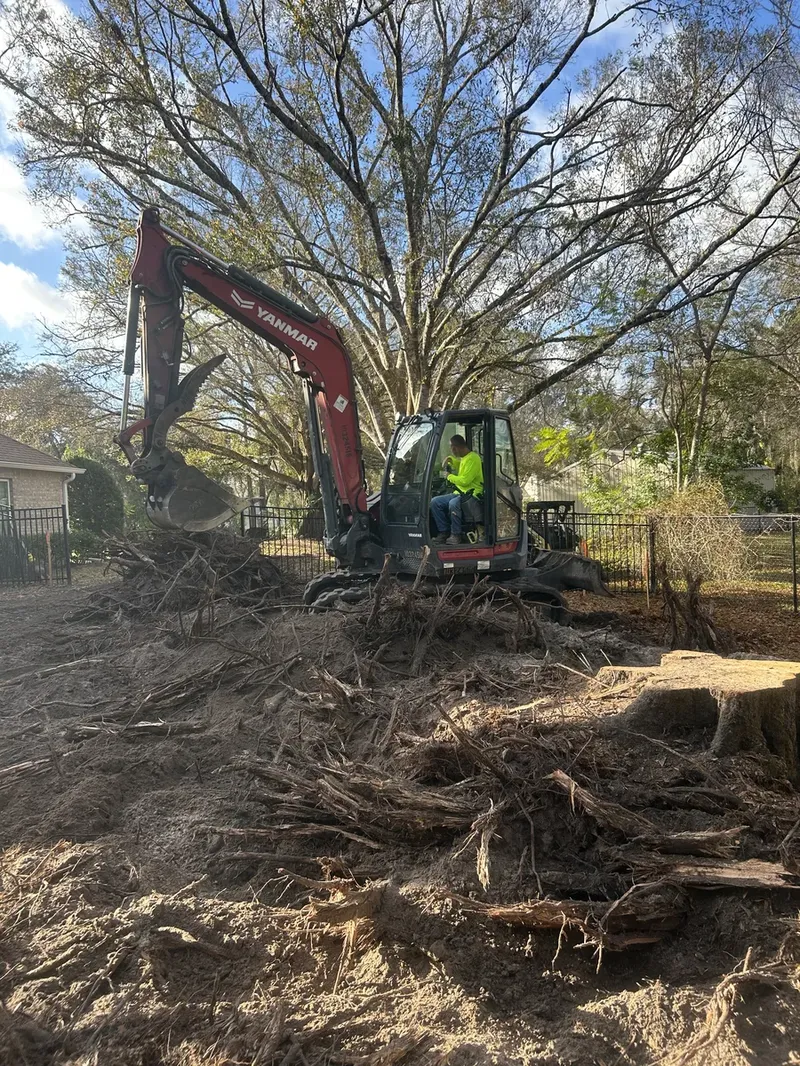
Clear the overgrowth. Brush, cattails, and grass come out so the channel can be seen and shaped.
Remove the silt and re-cut the flow line. The bottom is cut back to a consistent grade and checked as the work goes.
Clean or reset culverts. Pipes are cleaned out, or replaced and set at the proper elevation where they are crushed, rusted, or undersized.
Shape and stabilize the banks. Banks are sloped so they hold, and bare soil is covered so the ditch does not fill right back in.
Handle the spoil. Material is hauled off, or spread on site where the owner and any applicable rules allow.
Why grade matters more than depth
A common mistake is digging a ditch deeper in one spot. A deep hole in the middle of a flat ditch just becomes a small pond. What moves water is a steady slope from start to outfall, with each culvert set to match. That is why a crew that understands grading, not just digging, makes the difference, and why ditch work often ties into broader drainage solutions for the rest of the property.
Timing: Clean Ditches in the Dry Season
The best time to clean a drainage ditch is before you need it. Late fall through spring is generally the drier part of the year in Southwest Florida, so ditches run lower, banks are firmer, and equipment can work without tearing up a wet pasture. As we covered in our guide to dry season excavation in Florida, finishing drainage work before the summer rains return gives new banks time to stabilize and lets you see how the ditch performs before a big storm tests it.
Ditch Cleaning in Parrish, Palmetto, and North Port
Parrish still has a mix of pasture, acreage homesites, and new subdivisions, and its older field and roadside ditches carry a lot of water. See our page on ditch cleaning in Parrish for the local details. Palmetto, where Lethermon is based, has older neighborhoods and farmland to the east that rely heavily on open ditches and culverts; here is our Palmetto ditch cleaning page.
North Port is a different setup, with a city-run drainage district and a large network of residential swales. We handle ditch and swale cleaning in North Port on private property and confirm where the city's responsibility begins. In every area, soil, access, and ownership vary lot by lot, so we walk the site before quoting.
Not sure whether your problem is the ditch or the yard itself? Our article on common Florida drainage problems walks through the difference. Larger stormwater features, such as a community retention pond, are a separate job; our guide to retention pond dredging covers those.
Questions to Ask Before You Hire
- •Who owns this ditch, and does the work need a permit?
- •Will you call Sunshine 811 and wait for utility locates before digging?
- •How will you set and check the grade, including at the culverts?
- •Where will the spoil go?
- •How will the banks be stabilized so the ditch stays open?
Get Your Ditch Flowing Again
Lethermon Grade Excavations cleans, re-cuts, and excavates drainage ditches and swales for property owners, farms, and builders across Manatee and Sarasota counties. Kameron Lethermon directs the crews, and we will tell you plainly what your ditch needs and who has to sign off before we start. Request a free estimate and we will walk the line with you.
Frequently Asked Questions
How often should a drainage ditch be cleaned?
There is no fixed schedule. It depends on how much sediment and vegetation the ditch collects. A good habit is to walk your ditches at least once a year, ideally during the dry season before summer rains, and clean them when you see standing water that lingers, growth across the bottom, or a culvert filling with silt.
Who maintains the roadside ditch in front of my house in Manatee County?
Roadside ditches within the right-of-way of county-maintained roads are generally a Manatee County Public Works matter, and the Southwest Florida Water Management District's drainage complaint guidance points residents to the county for them. Ditches inside city limits, in a CDD or HOA, or on private land can be different, so confirm ownership with the county before any work.
Do I need a permit to clean a ditch on my property?
Routine cleanout of a private ditch that does not change where water leaves your property often does not need a permit. Work in the public right-of-way, culvert replacement, changes to drainage patterns, or anything near wetlands can. Rules vary by county, city, and site, so check with your local building or public works department and SWFWMD, or ask us to confirm before we start.
Can you replace a clogged or crushed driveway culvert?
Yes. In Manatee County, driveway culverts go through a Public Works driveway and culvert permit, and the county's application states that culvert and swale grades are set by county personnel. We coordinate with the county so the new pipe is permitted and set at the right elevation to keep the ditch flowing.
Written by
Kameron LethermonOwner of Lethermon Grade Excavations. Military background with 15+ years of excavation and construction experience in Southwest Florida. View full profile →