Every retention pond in a Southwest Florida subdivision is doing a job most residents never think about — until it stops working. These grassy depressions and small lakes are engineered stormwater systems, built to hold runoff during heavy rain and release it slowly so streets and yards don't flood. Over years of storms, sediment settles, banks erode, and outfall structures clog with vegetation — all of it quietly eating into the pond's design capacity. Retention pond maintenance in Florida isn't optional landscaping; it's infrastructure upkeep tied to your community's stormwater permit and, eventually, its flood risk. Here's how HOAs, developers, and property owners can tell when a pond needs more than routine mowing.
What a Retention Pond Actually Does
Despite looking like a natural pond, most stormwater ponds in Florida subdivisions are anything but. They're sized and engineered during the development's original permitting process to hold a calculated volume of runoff — enough to handle a design storm event without flooding the surrounding streets and lots. "Retention" ponds hold a permanent pool of water and release it gradually; "detention" ponds are designed to drain dry between storms. Either way, the pond's ability to do its job depends entirely on it holding the volume it was designed for. Sediment, encroaching vegetation, and structural wear all reduce that volume over time, whether or not the water looks fine from the road.
Who's Responsible for Keeping It Working
Once a developer finishes a community, the stormwater permit — and the legal responsibility that comes with it — typically transfers to the homeowners association, condo association, or Community Development District, not to the original developer or the water management district. From that point forward, upkeep is the association's obligation. Florida's water management districts, including the Southwest Florida Water Management District (SWFWMD) in this region, generally expect permitted stormwater systems to be periodically inspected to confirm they still function as designed, but exact intervals, documentation, and requirements depend on the original permit for that specific system. Boards and property managers should confirm their pond's specific obligations directly with SWFWMD or the agency that holds the permit rather than assume — many associations don't realize they've inherited this responsibility until a resident complains about standing water or a lender asks for documentation.
Signs a Pond Needs More Than Routine Care
A pond that's falling behind on capacity doesn't always look obviously broken. Watch for:
- •Water that doesn't recede within a day or two of a normal rain event, when it used to drain faster
- •Visible sediment bars, mud flats, or a shrinking shoreline exposed along the bank, especially near the main inflow pipe
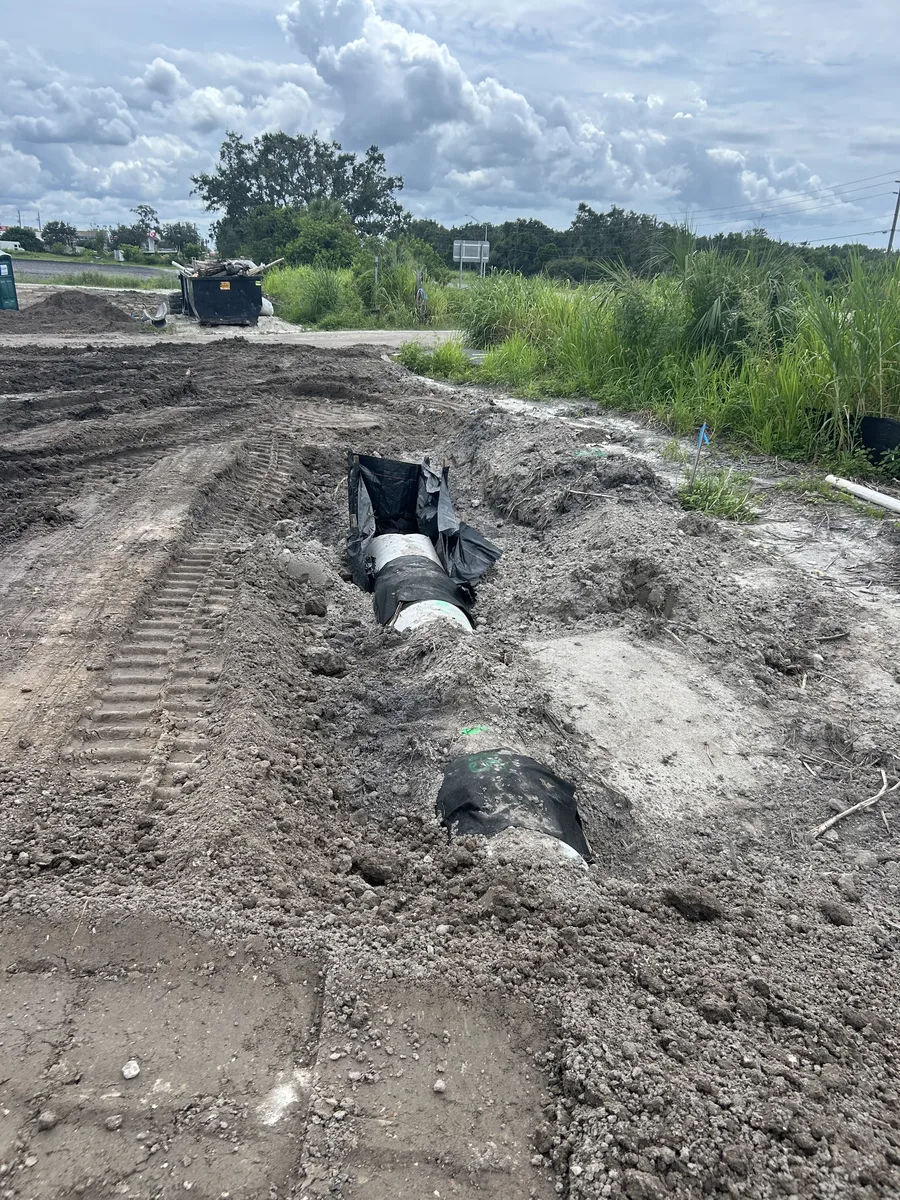
- •Cattails, torpedo grass, or other vegetation choking the outfall structure or control weir so water can't reach it
- •A noticeably smaller open-water surface compared to when the pond was first built
- •Persistent odor, algae blooms, or mosquito complaints that return no matter how often the banks are mowed
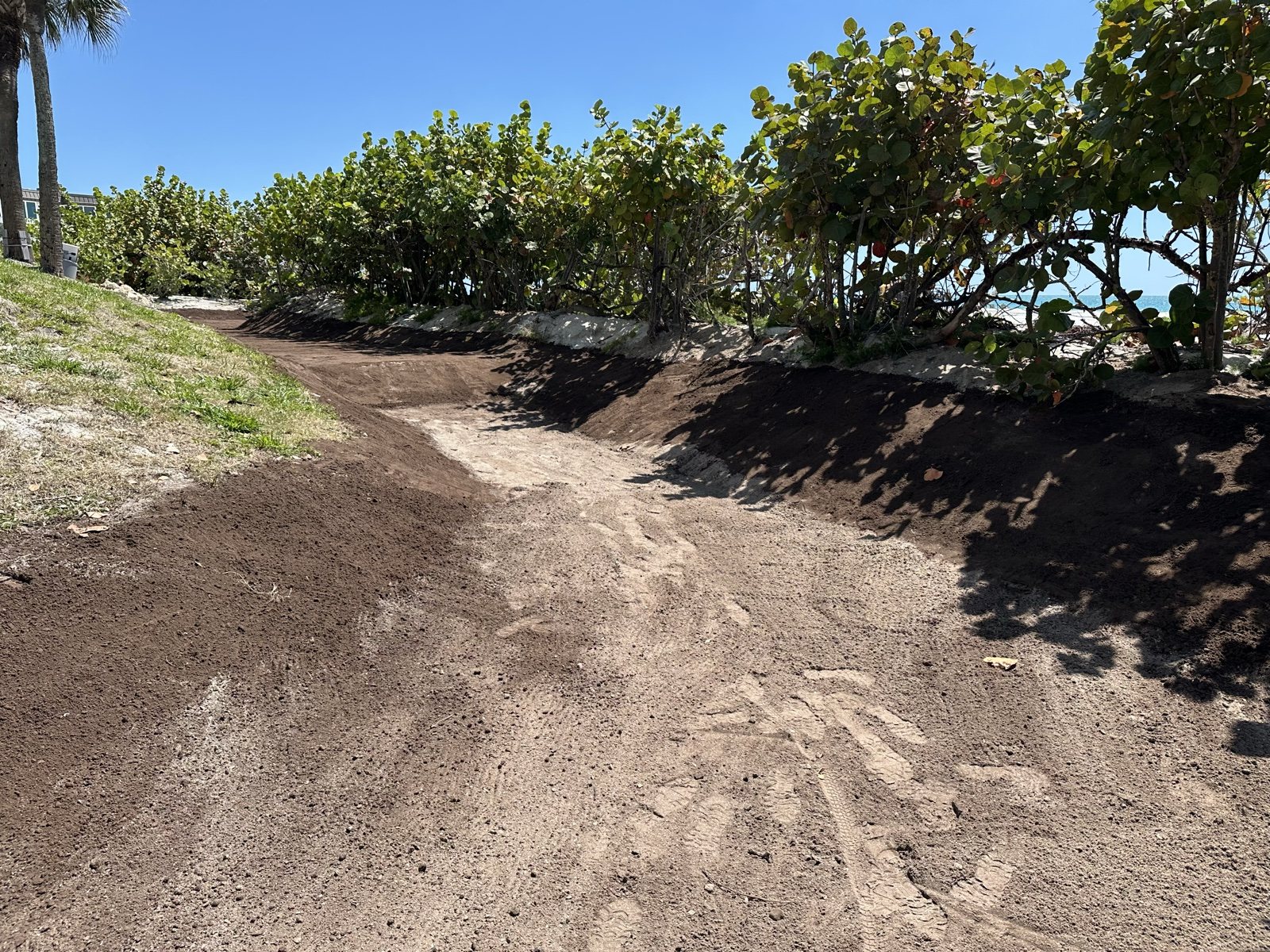
- •Erosion notches, slumping, or bare soil along the banks
Any one of these is worth a closer look. Several together usually mean the pond has lost meaningful capacity and is due for a professional assessment.
Routine Maintenance vs. a Dredging Project
Mowing banks, spraying nuisance weeds, skimming trash, and clearing debris from the outfall structure are routine maintenance — ongoing work most communities already budget for through a landscaping or lake-management contractor. Dredging is different: it's the mechanical removal of accumulated sediment to restore the pond to its original design depth and capacity, and it's civil and excavation work, not landscaping. Guidance from SWFWMD generally favors selective, hand-removal of nuisance vegetation over mass clearing of native wetland plants around a pond, so it's worth checking with the district or your community's engineer before any large-scale vegetation removal — not just before dredging. A simple depth check every few years, comparing current conditions to the pond's original design plans, is the easiest way for a board to catch a capacity problem before it becomes a flooding problem.
What a Dredging Project Actually Involves
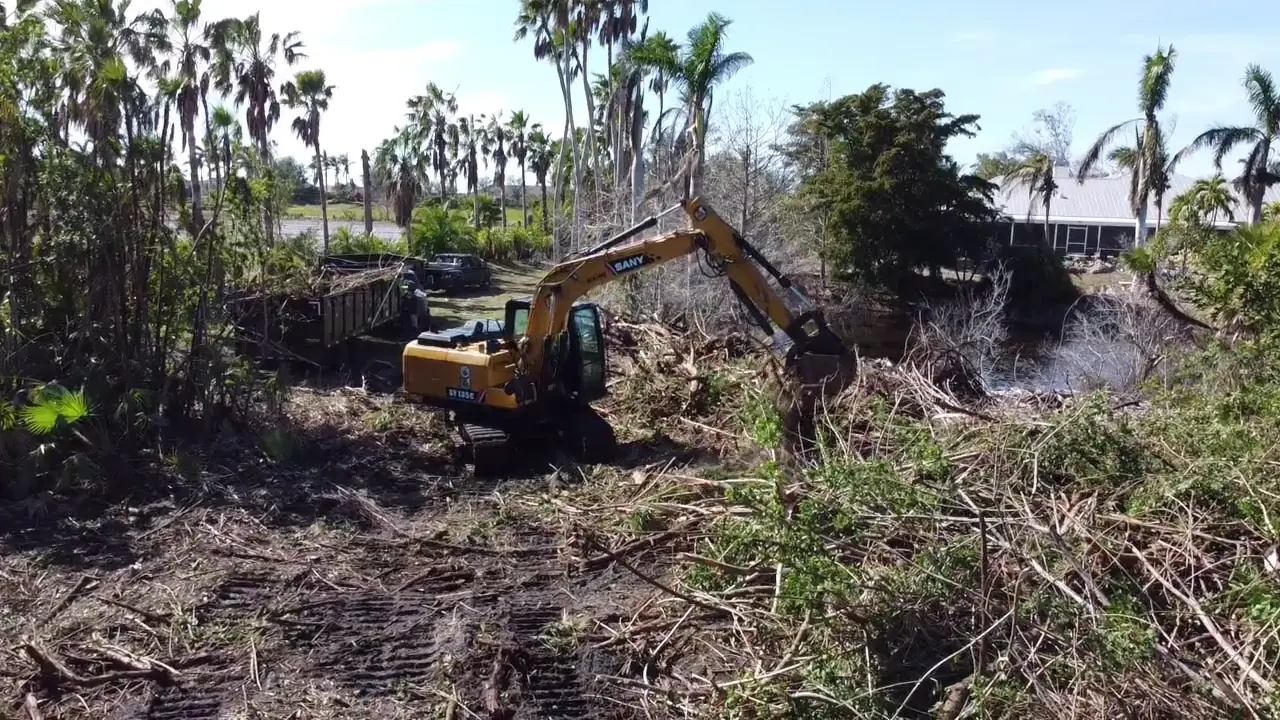
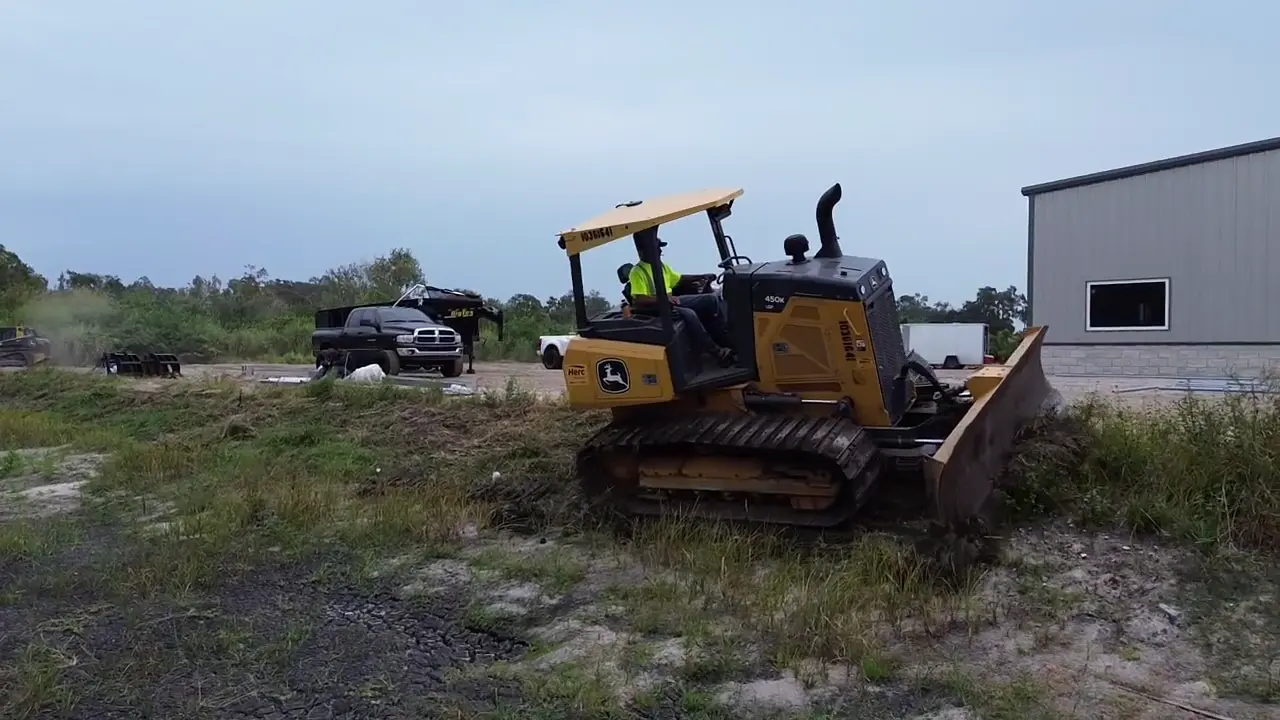
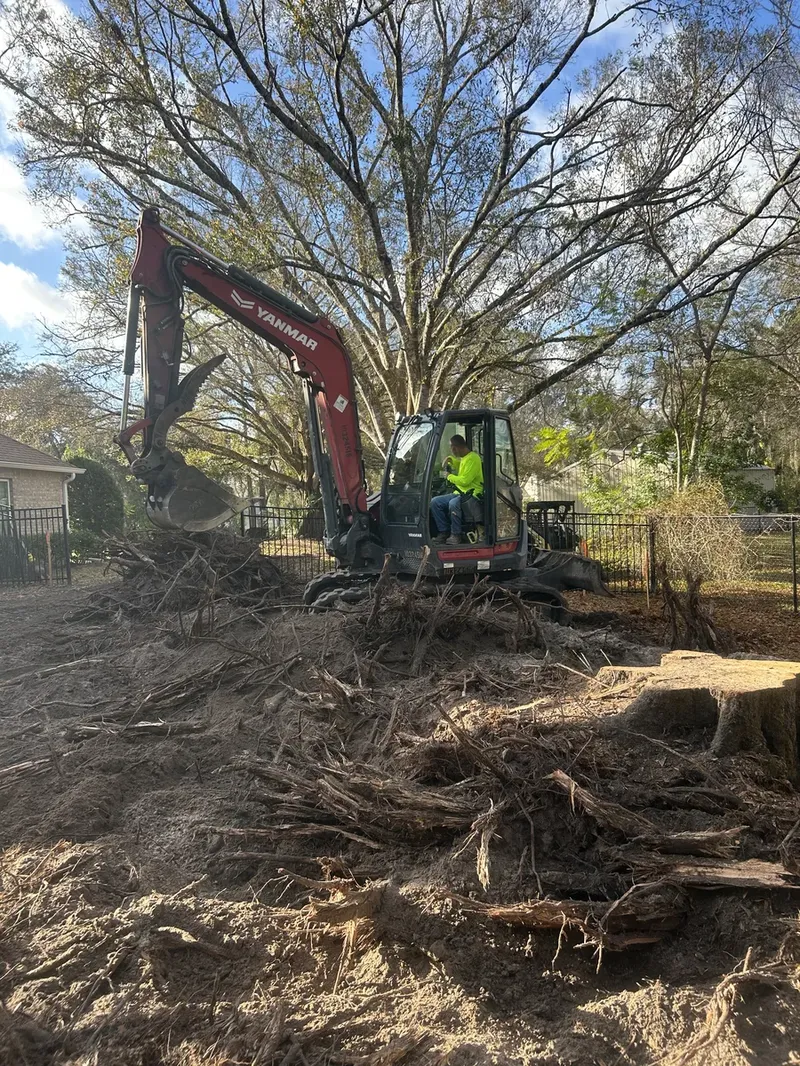
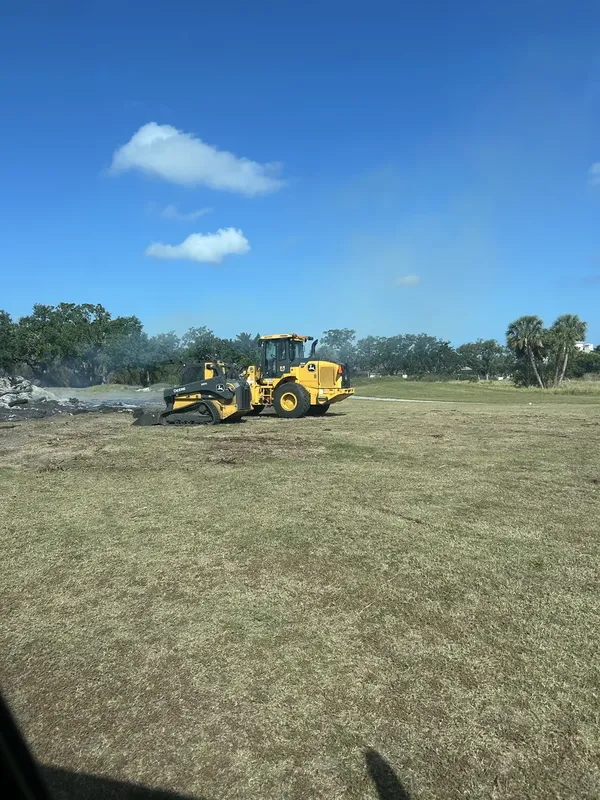
Once sediment has meaningfully reduced a pond's capacity, restoring it means physically removing that material — either mechanically, with an excavator working from the bank or a low-ground-pressure machine working in the pond itself, or hydraulically on larger or deeper ponds, pumping sediment out as slurry. Site access drives cost and method here just as it does on any excavation project: a pond with open frontage and room to stage equipment is a very different job than one landlocked behind a narrow easement or a two-car driveway. The material that comes out has to go somewhere too — typically dried on-site and hauled off, or in some cases redistributed on the property if the association and any applicable permit allow it. Because the pond is part of a permitted stormwater system, rework at this scale should be coordinated with the association's engineer of record and, in most cases, the water management district, before equipment ever shows up. This is earthmoving work at its core, and it belongs with a contractor who understands drainage systems and grading, not a general landscaping crew.
Retention Ponds in SW Florida's Fastest-Growing Communities
Communities like Lakewood Ranch and Parrish have added new phases and new stormwater ponds every year for over a decade, which means a wide range of pond ages exist side by side within the same HOA or CDD. Ponds built in earlier phases are now old enough that first-generation maintenance and dredging decisions are coming due, even as newer phases are still under construction nearby. That mix makes it worth having every pond in a community assessed individually rather than assuming they're all in the same condition. The stakes go up during Florida's wet season: an undersized or clogged pond that can't handle a heavy rain event doesn't just look bad, it backs up onto streets and yards. Our guides to stormwater management for builders and hurricane season drainage prep cover the broader planning side of this problem.
Budgeting and Planning Ahead
Dredging a retention pond is a capital project, not a line item in the annual landscaping contract, and its cost scales with the size of the pond and the volume of sediment involved — get a site-specific assessment rather than estimating from a national average. Florida law generally expects community associations to plan and reserve for major infrastructure components, which can include stormwater systems, though the specifics depend on the association's governing documents and should be confirmed with its attorney or management company. The associations that handle this best treat pond condition as a recurring item to monitor, not a surprise that shows up during a failed inspection, a real estate transaction, or a flooded street after a storm.
Lethermon Grade Excavations handles retention pond dredging and drainage work throughout Bradenton, Sarasota, Lakewood Ranch, Parrish, and the surrounding Southwest Florida area, coordinating directly with HOA boards, CDDs, and engineers of record. If your community's pond is showing any of the signs above, contact us for a free, on-site assessment before it becomes a bigger problem.
Frequently Asked Questions
How do I know if a retention pond needs dredging?
Watch for water that doesn't drain within a day or two after a normal rain, exposed sediment bars or mud flats near the inflow pipe, vegetation choking the outfall structure, a visibly shrinking open-water surface, or erosion along the banks. Any one of these is worth a professional assessment; several together usually mean the pond has lost meaningful capacity.
Who is responsible for retention pond maintenance in Florida?
After a developer completes a community, the stormwater permit and maintenance responsibility typically transfer to the HOA, condo association, or Community Development District — not the developer or the water management district. Confirm your specific obligations with SWFWMD or the agency holding the permit for your system.
Is dredging different from routine pond maintenance?
Yes. Routine maintenance — mowing banks, spraying nuisance weeds, clearing debris from the outfall — is ongoing landscaping work. Dredging is the mechanical removal of accumulated sediment to restore a pond's original design depth and capacity, and it's excavation work that should be coordinated with an engineer and, in most cases, the water management district.
Does Lethermon Grade Excavations dredge retention ponds?
Yes. We handle retention pond dredging and drainage work for HOAs, CDDs, and property owners throughout Bradenton, Sarasota, Lakewood Ranch, Parrish, and the surrounding Southwest Florida area.
Written by
Kameron LethermonOwner of Lethermon Grade Excavations. Military background with 15+ years of excavation and construction experience in Southwest Florida. View full profile →