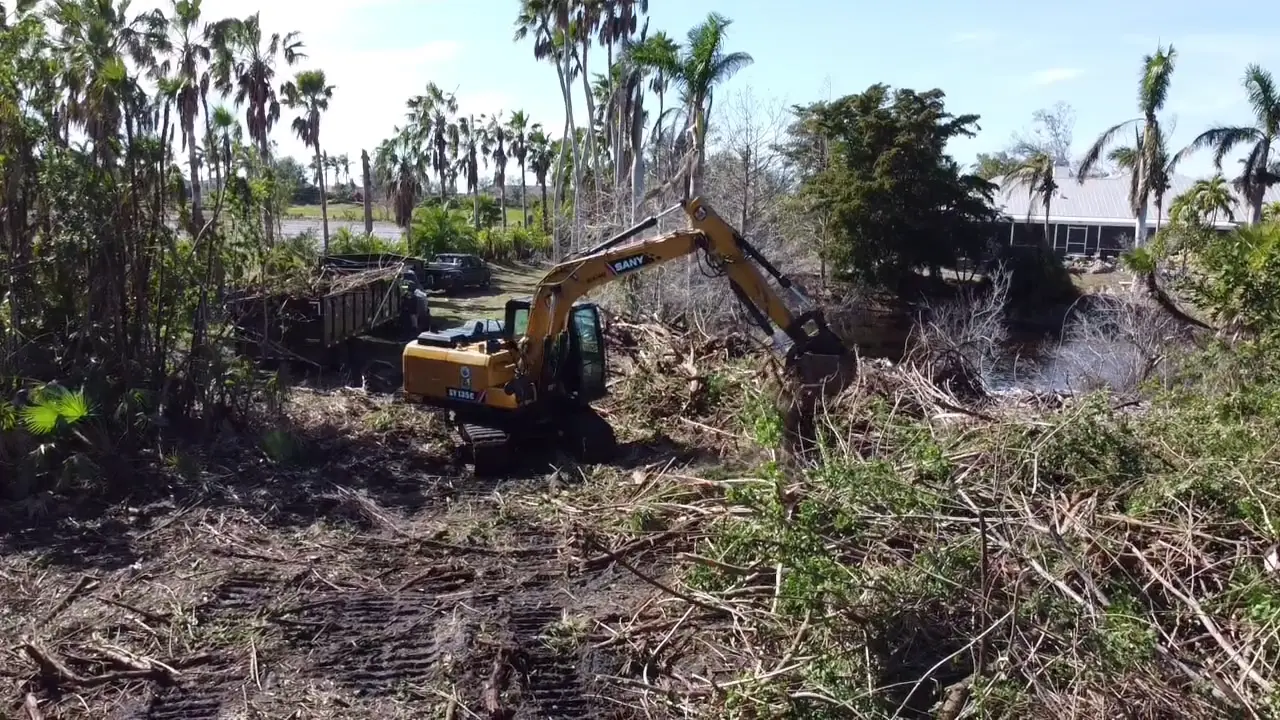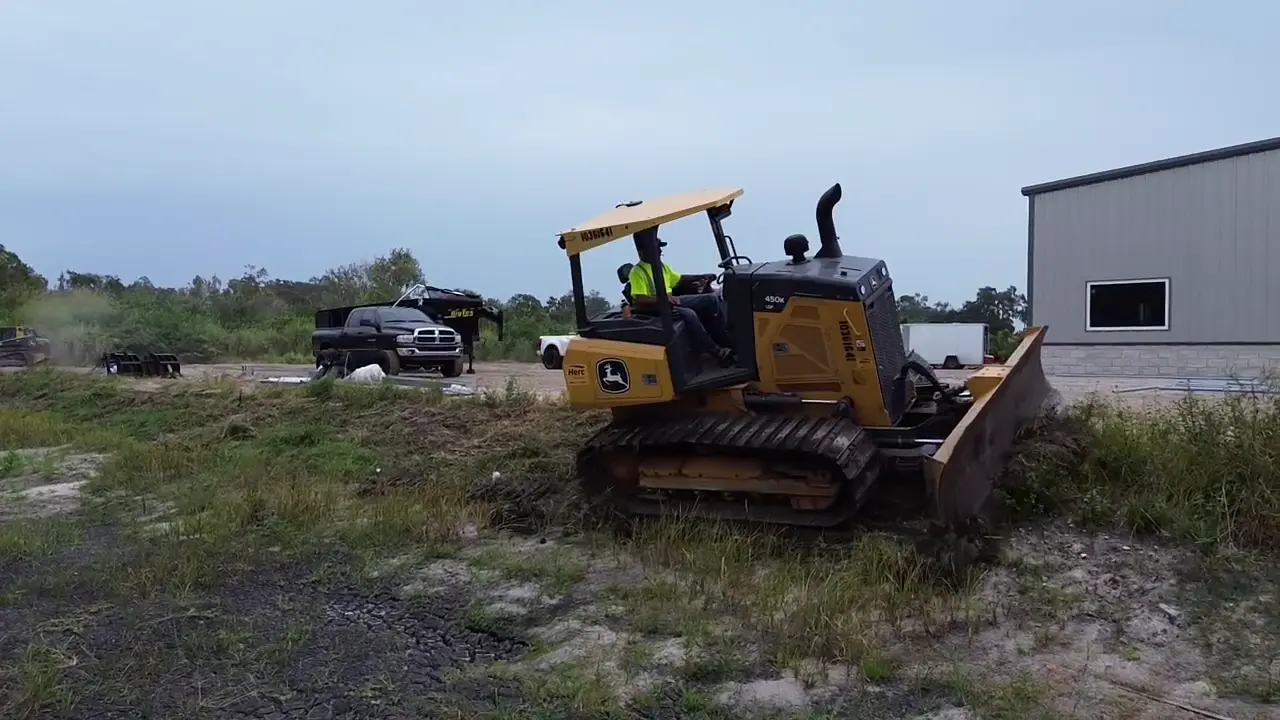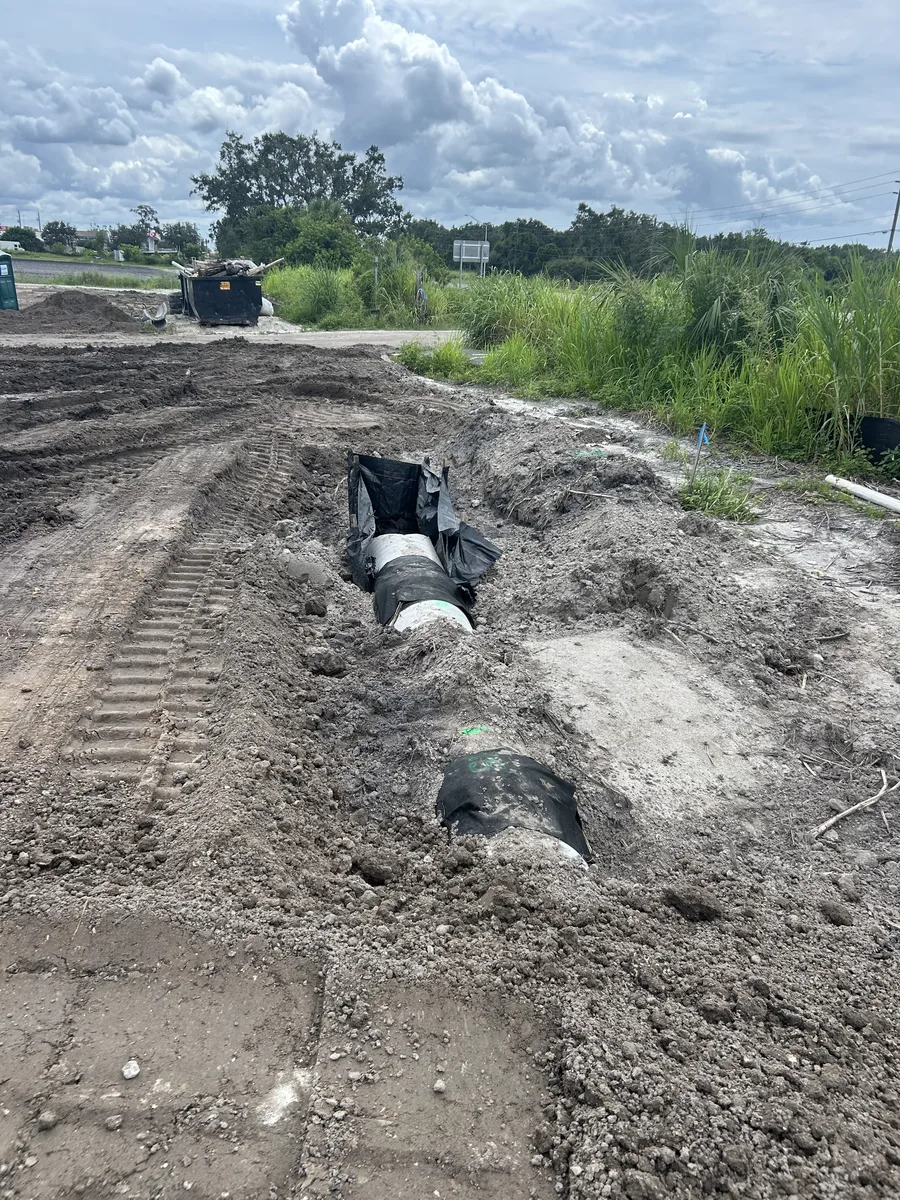
Land clearing in Sarasota, FL is not just a matter of getting an excavator onto the lot. The tree rules, the palms, the root balls and the question of where the debris goes all shape how the job runs. Settle those first and the clearing goes quickly. Skip them and a simple job turns into a delay. Here is how we think it through on our Sarasota land clearing jobs.
Start With the Trees, Not the Machine
In Sarasota, who regulates your trees depends on where the parcel sits. Two sets of rules matter most, and neither should be guessed at.
- •City of Sarasota: According to the city's Tree Protection page, a permit is required to remove or relocate any tree greater than four and one-half inches in diameter at breast height, including dead, prohibited or undesirable species. Routine trimming does not need one. The city also protects "grand trees," and removing one is prohibited unless an exemption is made.
- •Unincorporated Sarasota County: The county has its own Trees Code, and a tree permit is generally required for removal or relocation. Permits are granted only when the applicant shows one of the listed conditions, such as a safety hazard or a tree that unreasonably prevents development.
Mangroves are a separate matter entirely. The city states it cannot issue a tree removal permit for red, black or white mangroves without a valid permit from the Florida Department of Environmental Protection. If your waterfront parcel has mangroves, that conversation comes before any clearing plan.
Rules and fees change, and we are not your permitting authority. Confirm current requirements with the City of Sarasota Development Services or the county's Environmental Protection staff, and tell us what you learn so the schedule matches the paperwork.
Know Your Lot Before You Clear It
A site walk answers questions that no photo can. Before we put a machine on a Sarasota lot, we want to understand a few things.
What stays and what goes
Mature oaks are part of what makes many Sarasota lots valuable. If a tree is staying, it needs protection, and the clearing has to be done around it, not near it. Marking the keepers clearly, and agreeing on them in writing, prevents the most expensive kind of mistake. Where trees are on a building permit plan, the plan should match what is actually flagged on the ground.
Palms, stumps and root balls
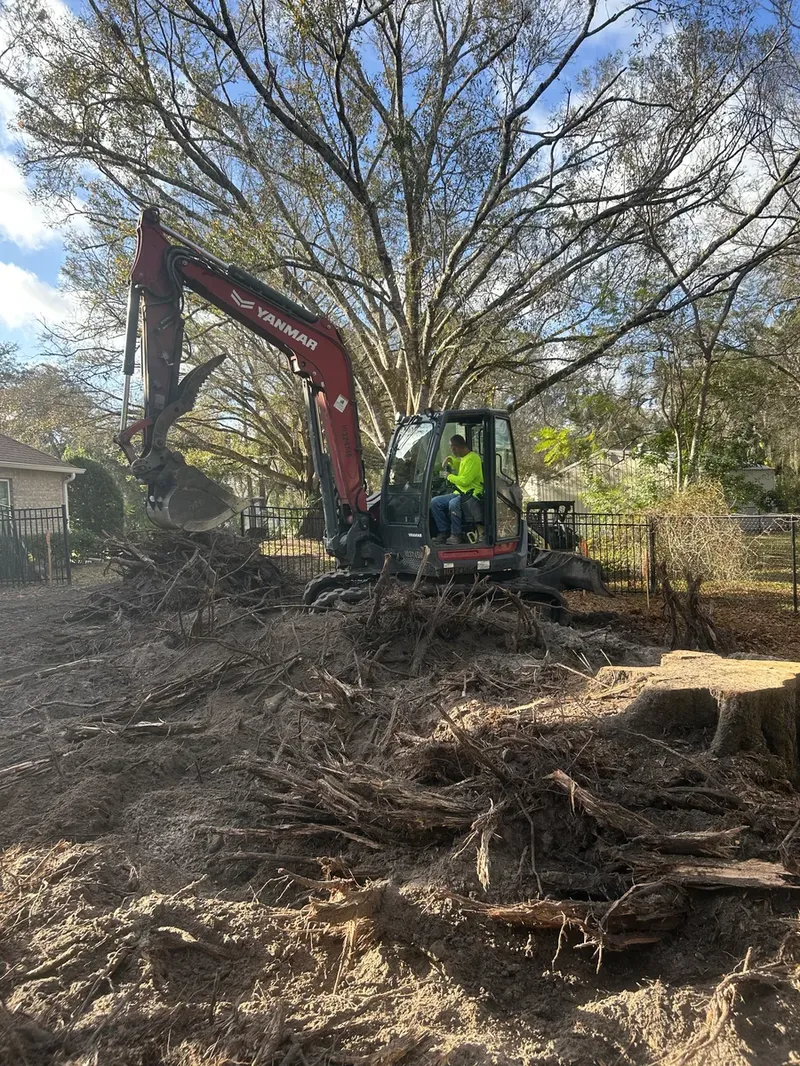
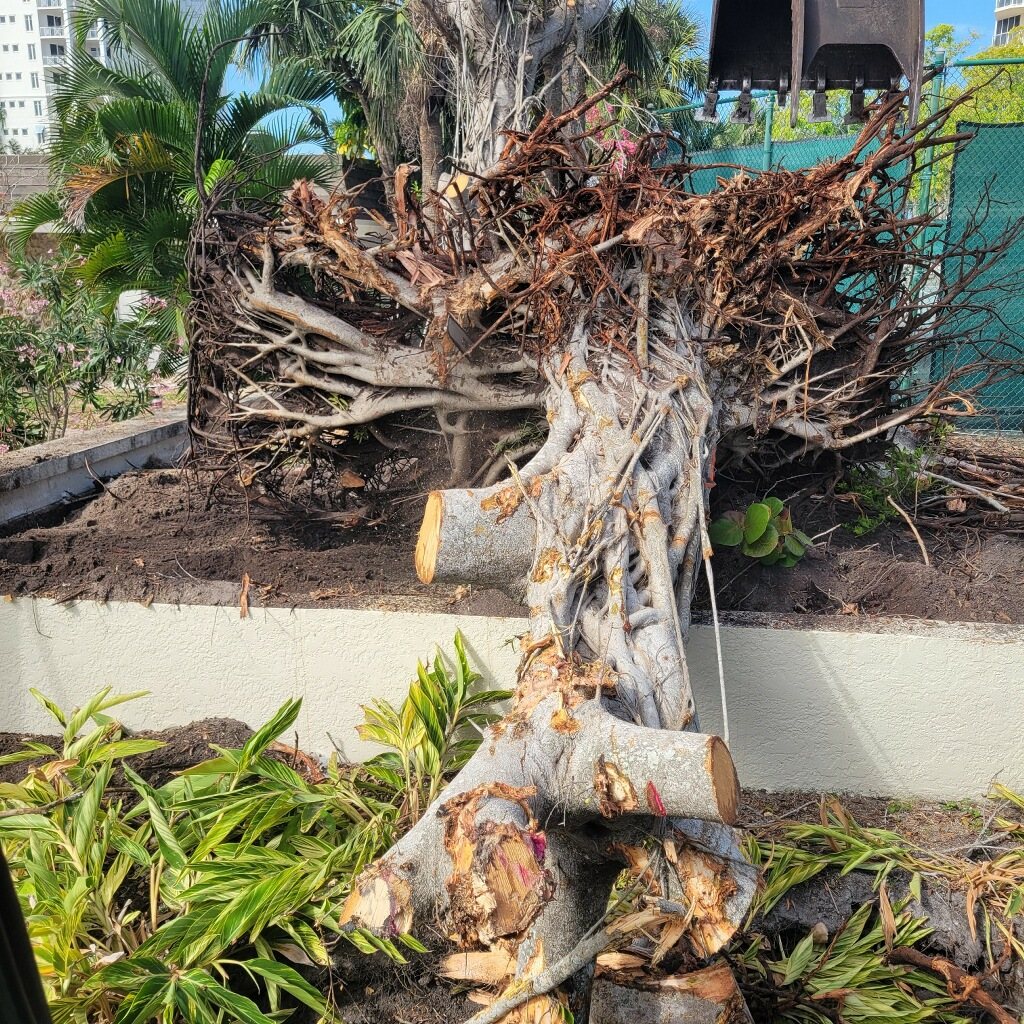
Palms look easy to remove, but a palm's root ball and the stump left behind still have to come out if you plan to build or grade over them. Leaving organic material buried under a future pad or driveway invites settling later. We pull stumps and root balls and fill the holes, so the ground can be graded properly.
Access, neighbors and utilities
Tight infill lots, barrier island streets and gated communities all change how equipment and trailers get in and out. Overhead lines, buried utilities, irrigation and shared fences should be identified up front. Florida's 811 service exists so underground utilities are located before anyone digs, and it is the right first call before ground is disturbed.
Protected Wildlife Can Pause a Job
Gopher tortoise burrows turn up on higher, sandy, vegetated ground across the region, and protected wildlife has its own rules through state agencies. We cover how that affects a schedule in our guide to gopher tortoises and land clearing in Bradenton. The short version: look for burrows early, and handle them before clearing starts, not after.
How a Clearing Job Typically Runs
Walk the lot, confirm boundaries, and flag trees to keep.
Confirm permits and any wildlife or utility checks.
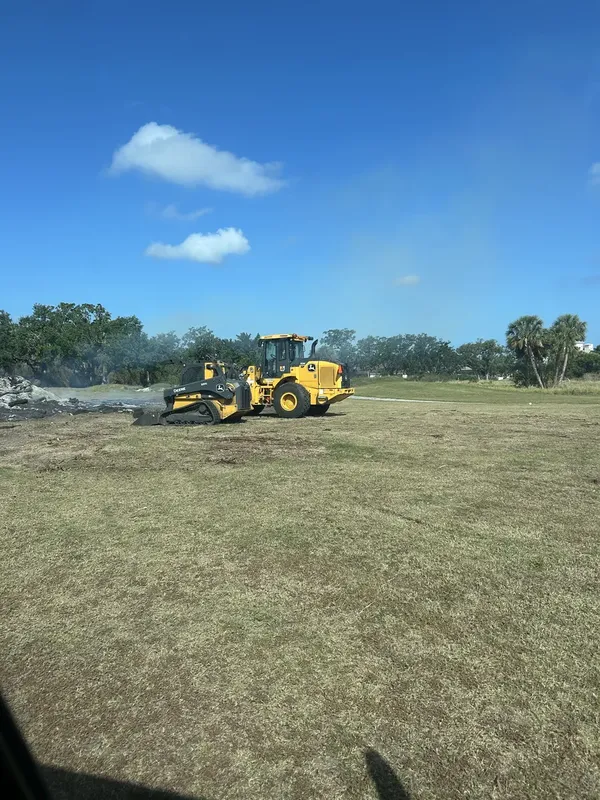
Clear brush and trees, then pull stumps and root balls.
Load and haul off debris, or stage it where agreed.
Rough grade so water drains away from the build area.
That last step matters in Sarasota's flat, sandy terrain. A cleared lot with no plan for water will hold it after the first heavy rain, which is why we like to pair clearing with site grading in a single scope. Final elevations and drainage should follow your approved plans and any engineer's requirements.
Debris Haul-Off: Settle It in Writing
Clearing produces a lot of material: trunks, limbs, palm fronds, brush and root balls loaded with sandy soil. On a residential lot in a neighborhood, that material has to leave the site promptly, because piles left standing attract complaints and slow every trade that follows. Decide up front whether everything is hauled off or whether some clean material, such as chipped brush or soil, is useful on the property. Ask any contractor you hire exactly who is responsible for loading, hauling and disposal, and make sure it is written into the estimate.
Timing Around the Wet Season
Southwest Florida's summer rains make cleared, bare ground messy fast. Stripped sandy soil can rut under equipment and wash toward low spots or neighboring properties. If your schedule allows, line up the clearing so grading and stabilization follow soon after. Our guide to excavating in Florida's rainy season covers how we plan around the weather. Any erosion-control requirement on your permit should be in place before the machines start, not added afterward.
What Affects the Price
We do not quote numbers in an article because every lot is different. Tree density, stump count, access, how far debris must travel and whether grading is included all move the price. Our land clearing cost guide explains those drivers in more detail, and a site visit gives you a real figure.
Plan Clearing Around Your Build Schedule
Clear too early and a lot can regrow or collect water before your builder arrives. Clear too late and you stall every trade behind you. If you are working toward a permit set, read our guide to preparing your lot for construction in Florida and share your target start date with us. We serve Sarasota and nearby communities, and our land clearing service is built around that kind of sequencing.
Ready to Walk Your Lot?
If you are weighing a clearing job in Sarasota, we are glad to look at the property and talk through the trees, the access and the schedule. Request a free estimate and we will give you a straight answer.
Frequently Asked Questions
Do I need a permit for land clearing in Sarasota?
Often, yes, if trees are involved. The City of Sarasota requires a permit to remove or relocate trees over 4.5 inches in diameter at breast height, and unincorporated Sarasota County has its own Trees Code. Which one applies depends on where the parcel sits, so confirm with the city or county before any clearing starts.
Can you clear a lot and grade it in the same job?
Yes. Clearing, stump removal, rough grading and hauling debris are usually planned together so the lot is left ready for the next trade. Tell us your build timeline when you request an estimate.
What happens to the stumps and debris?
Stumps and root balls are pulled, and brush and trunks are loaded and hauled off, unless you want material kept on site for a specific use. Confirm the plan in your written estimate.
How do I get a land clearing estimate in Sarasota?
Contact Lethermon Grade Excavations for a free estimate. We walk the lot, talk through your goals and flag permit questions before work is scheduled.
Written by
Kameron LethermonOwner of Lethermon Grade Excavations. Military background with 15+ years of excavation and construction experience in Southwest Florida. View full profile →