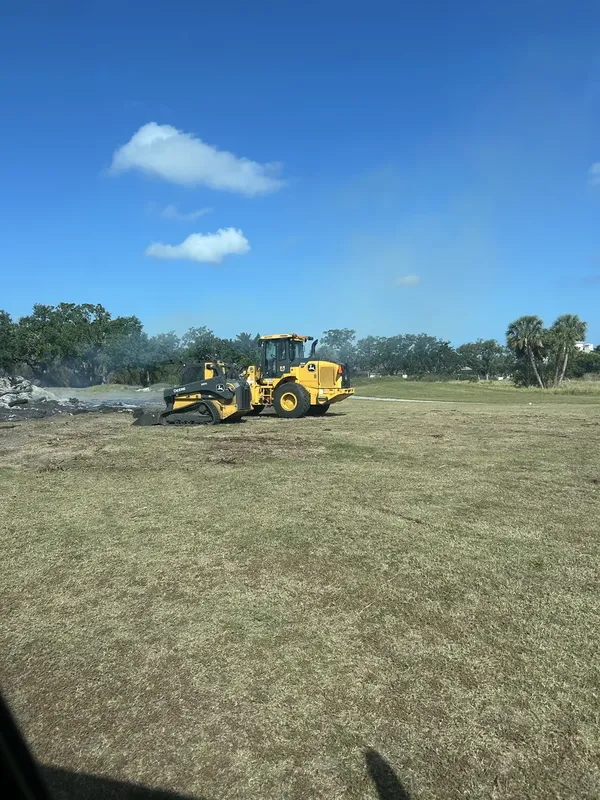
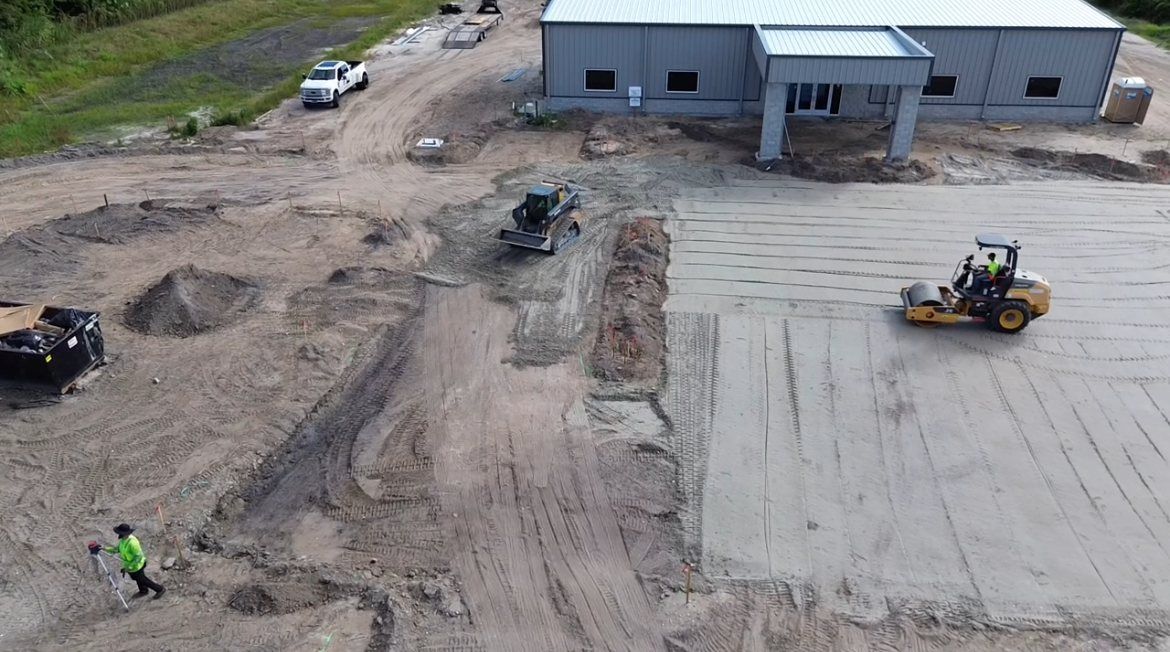
Site development is the phase between owning land and breaking ground — the clearing, mass grading, utility trenching, and stormwater work that turns a recorded plat or a raw parcel into a construction-ready pad. It's also the phase with the most moving pieces, all of which have to line up with a builder's vertical construction start date.
Here's what the site development process actually looks like in Sarasota-Bradenton, what permitting to plan for, and what makes Southwest Florida sites their own animal to prepare for.
What Site Development Actually Covers
Site development is a bundled scope, not a single trade. It wraps land clearing, excavation, site grading, utility corridor work, and stormwater infrastructure into one coordinated sequence instead of four separate contracts handed back and forth between subs.
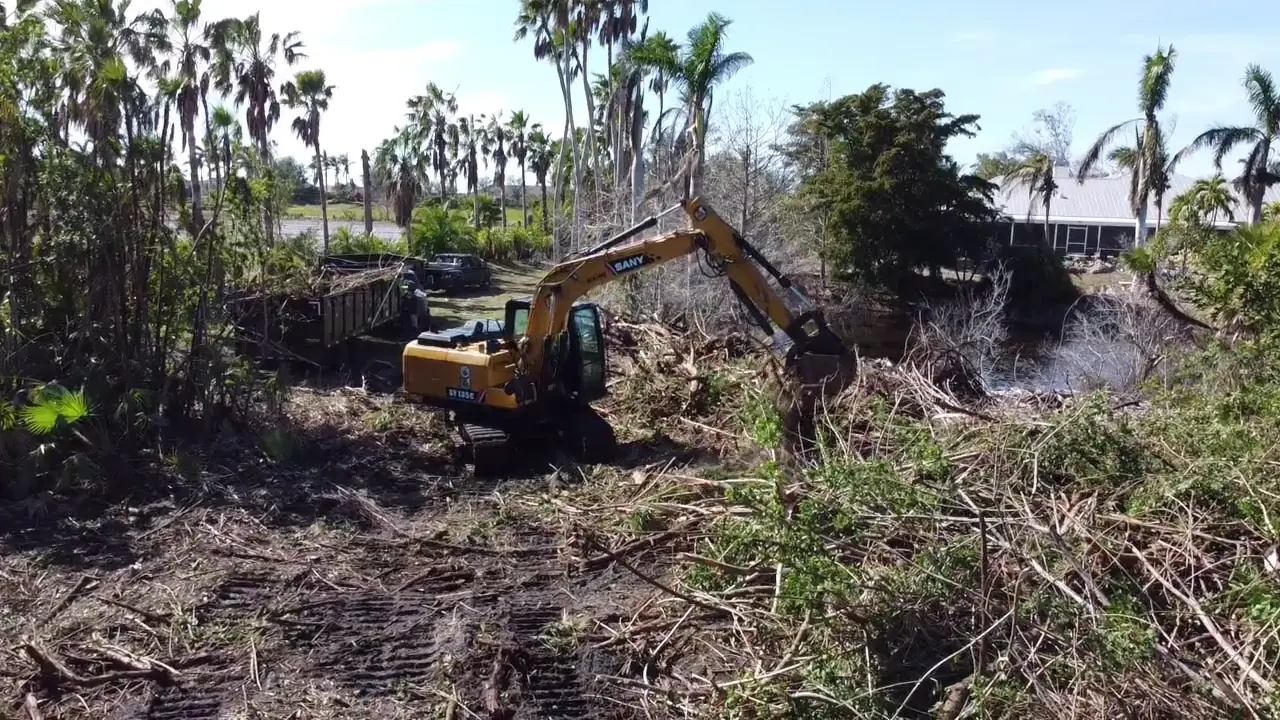
On a raw parcel, that sequence typically runs clearing and grubbing first, then mass grading to balance cut-and-fill across the site, utility corridor excavation for water, sewer, electric, and communications, and finally stormwater infrastructure — retention or detention ponds, storm drain piping, and inlet structures — tied in ahead of the final grade pass. The value of treating it as one scope instead of four is coordination: one foreman, one schedule, and no gap between the grading crew leaving and the utility crew showing up.
The Site Development Process, Phase by Phase
The order matters — skip a step or run it out of sequence and it usually shows up later as a failed compaction test or a permit hold. Here's the sequence on a typical Southwest Florida site:
- •Due diligence. Civil plans, boundary and topo survey, and geotechnical soil reports get reviewed before equipment mobilizes. Existing utilities get located and marked — Florida law requires a Sunshine 811 utility locate request before any digging begins, on a house lot or a commercial parcel alike.
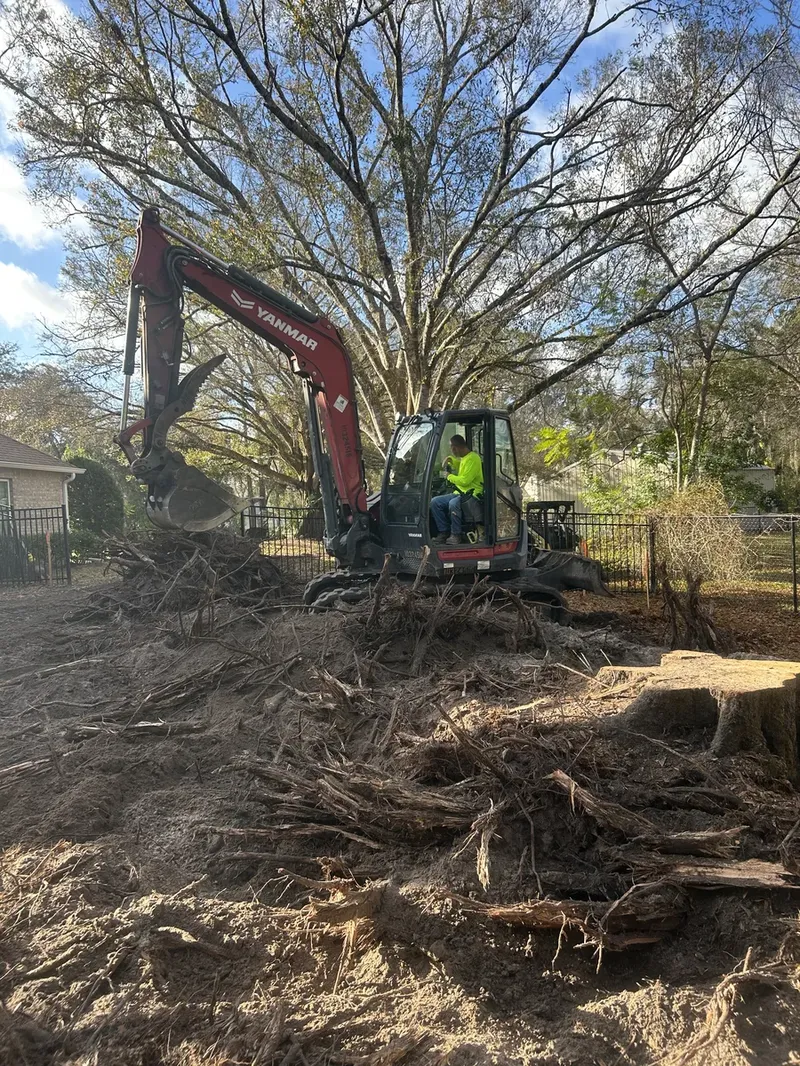
- •Mobilization and clearing. Erosion and sediment controls go in first, then vegetation and grubbing removal. Getting erosion controls in place before clearing starts, not after, is what county and state environmental inspectors check for.
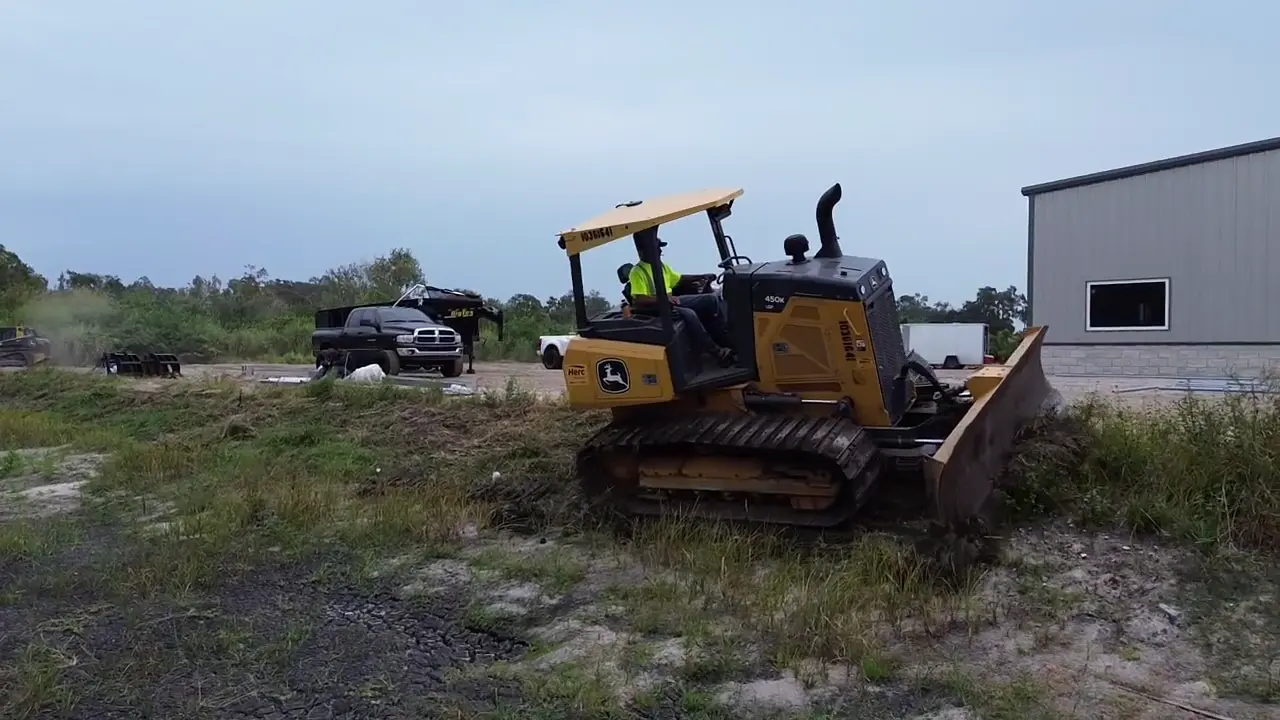
- •Mass grading and earthwork. Cut-and-fill volumes get balanced across the parcel to limit hauling, and sub-grade soils are compacted to the density specified in the geotechnical report. Rough drainage slopes get established in this pass too.
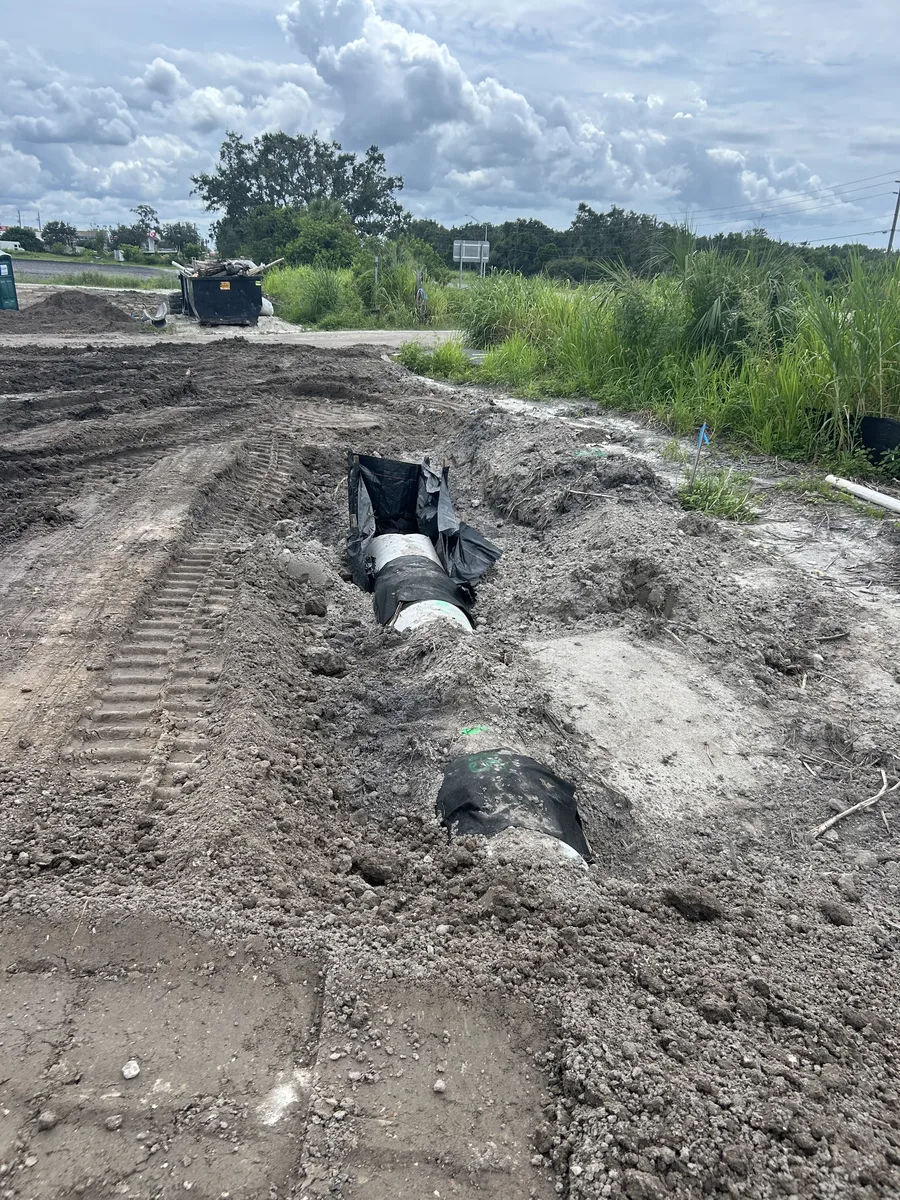
- •Utility corridor installation. Trenches for water, sanitary sewer, storm drain, electric, and communications get excavated to the depth and alignment on the civil drawings, usually running in parallel with the tail end of earthwork rather than waiting for it to finish.
- •Stormwater infrastructure. Retention or detention ponds, storm drain piping, and inlet structures get installed and connected — this has to happen before final grade, since finished elevations are built around where that water is supposed to go. Our builder's guide to stormwater management goes deeper on how that system gets designed.
- •Final grade and turnover. Grades get verified, an as-built survey gets completed, and the site gets handed off construction-ready. That's the point where foundation prep and the building crew's schedule can actually start.
Permitting: What Actually Has to Happen
Permitting on a site development project runs on two tracks that don't always move at the same speed. Locally, Sarasota County and Manatee County building departments review site plans, grading permits, and — depending on the project — subdivision or platting approvals. At the state level, most sites need a Southwest Florida Water Management District Environmental Resource Permit covering stormwater quantity and quality. SWFWMD's own applicant's handbook cites roughly 60 to 90 days for a complete application, though sensitive basins or incomplete submittals push that out.
Projects disturbing an acre or more of land also typically trigger a federal or state-delegated NPDES construction stormwater permit, which requires a Stormwater Pollution Prevention Plan before ground gets broken. None of this is paperwork to file after the fact — a permit hold mid-earthwork is one of the more expensive ways a schedule slips. Your civil engineer usually submits the applications; your contractor should be handling the erosion control plan, inspection coordination, and documentation that keeps them moving. Confirm who owns each piece before you sign anything, and verify current specifics with your county building department or SWFWMD directly — requirements shift based on acreage, disturbed area, and site conditions.
Why Southwest Florida Site Development Isn't Generic Earthwork
- •Flat terrain. Without natural elevation change to drive gravity flow, stormwater grades, swale slopes, and pipe inverts have to be engineered and held to tight tolerances — there's little margin to make up for a sloppy grading pass downstream.
- •A high water table. Groundwater sits within a few feet of the surface across much of Manatee and Sarasota counties. Utility trenching and pond excavation that reach it usually need dewatering, and earthwork timed into saturated ground compromises compaction — plan the schedule around it rather than discovering it mid-dig.
- •Sandy soils. Sandy soil moves easily but compacts and tests differently than the clay-based material most generic grading guidance assumes — moisture and density protocols need to match what's actually under the site.
- •Hurricane season. June through November adds real scheduling pressure. Earthwork phases that leave soil exposed during peak storm months carry more erosion risk, so site work timed into hurricane season usually gets sequenced to minimize how long ground stays bare.
One Contractor, One Schedule
The case for bundling site development under one contractor instead of separate clearing, grading, and utility subs comes down to sequencing. When the same foreman runs earthwork and utility trenching, those phases overlap instead of waiting on each other, and a change order gets resolved on-site instead of through an email chain between three companies. On a multi-week commercial site, that coordination is often the difference between a schedule holding and slipping by weeks.
It matters just as much on residential lots. Custom-home builders in fast-growing corridors like Lakewood Ranch and Parrish are running the same sequence at a smaller scale — clearing, pad grading, driveway sub-base prep, and utility trenching — often on a schedule tied to a closing date rather than a commercial lease-up.
Before You Break Ground: What to Ask
A handful of questions up front save the most expensive surprises mid-project:
- •What's actually in the scope? Hauling, rock excavation, and dewatering are the line items most likely to be billed separately from a base grading number — get them itemized, not buried in a lump sum.
- •Who's coordinating permits? Your civil engineer typically files the applications; confirm your contractor is providing the erosion control plan, documentation, and inspection coordination that keeps the permit moving.
- •Has the site been walked, not just quoted from plans? Soil conditions, existing utilities, and access all change the number — a fair quote follows a site visit, not a phone call.
- •Is licensing and insurance current? Florida requires contractor licensing for earthwork and site development — confirm coverage before signing.
Lethermon Grade Excavations handles full-scope site development — clearing, grading, utility trenching, and stormwater — for commercial and residential projects throughout Bradenton, Sarasota, Parrish, Lakewood Ranch, and the surrounding Southwest Florida area. Contact us for a free, on-site estimate, and we'll walk your plans and your parcel before we give you a number.
Frequently Asked Questions
What's included in commercial site development?
A full site development scope typically covers clearing and grubbing, mass grading and earthwork, utility corridor excavation for water, sewer, electric, and communications, stormwater infrastructure like retention ponds and storm drains, and final grade verification. Bundling it under one contractor means a single schedule and point of contact from raw land to construction-ready pad.
How long does site development take in Southwest Florida?
It depends heavily on acreage, soil conditions, and permitting timelines. A typical 2–5 acre commercial parcel commonly runs 4–8 weeks from mobilization to turnover once permits are in hand; smaller residential lots move faster. SWFWMD's Environmental Resource Permit review alone typically adds 60–90 days for a complete application before earthwork can start, so factor permitting into your overall timeline, not just the construction schedule.
Do I need a permit for site development in Sarasota or Manatee County?
In most cases, yes. County building departments review grading and site plans, and most sites also need a SWFWMD Environmental Resource Permit for stormwater. Projects disturbing an acre or more of land typically also need an NPDES construction stormwater permit. Requirements vary by acreage, disturbed area, and site conditions — verify specifics with your county building department or SWFWMD directly.
What's the difference between site development and site grading?
Site grading is the shaping and leveling pass that establishes finished elevations and drainage slopes — one phase within the larger site development scope. Site development is the full sequence: clearing, grading, utility installation, and stormwater work bundled together to take a parcel from raw land to construction-ready.
Written by
Kameron LethermonOwner of Lethermon Grade Excavations. Military background with 15+ years of excavation and construction experience in Southwest Florida. View full profile →