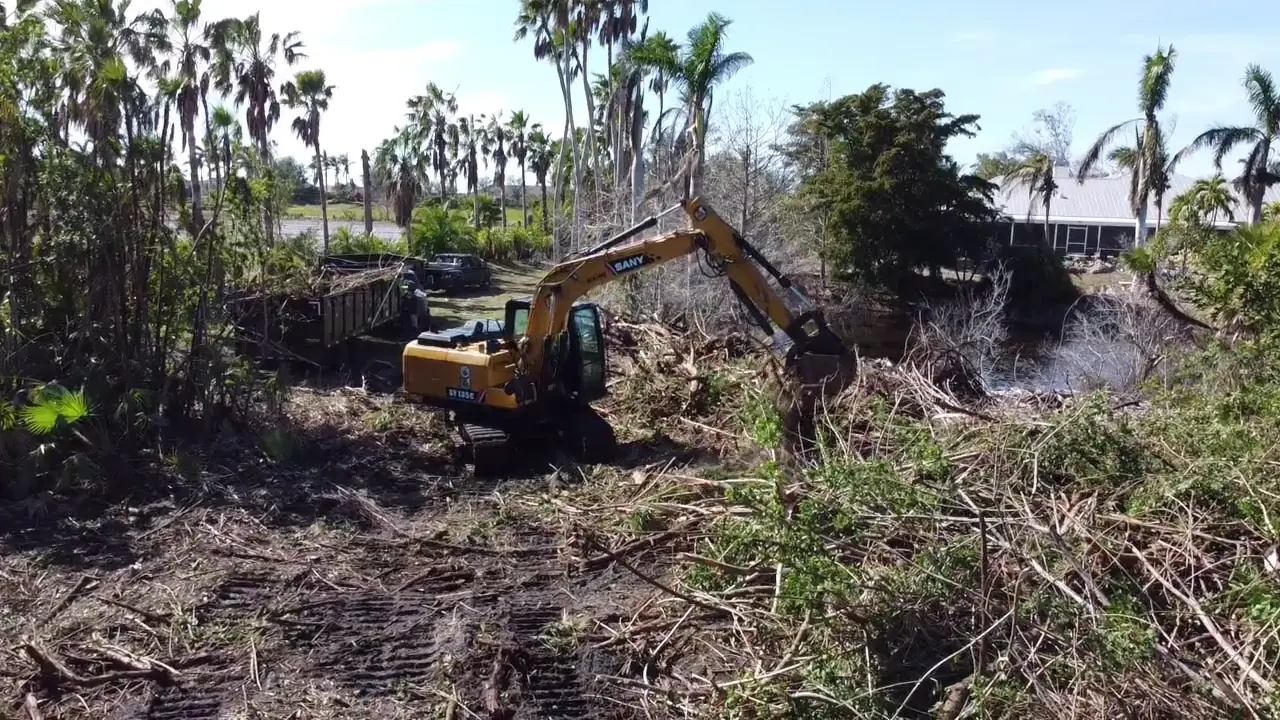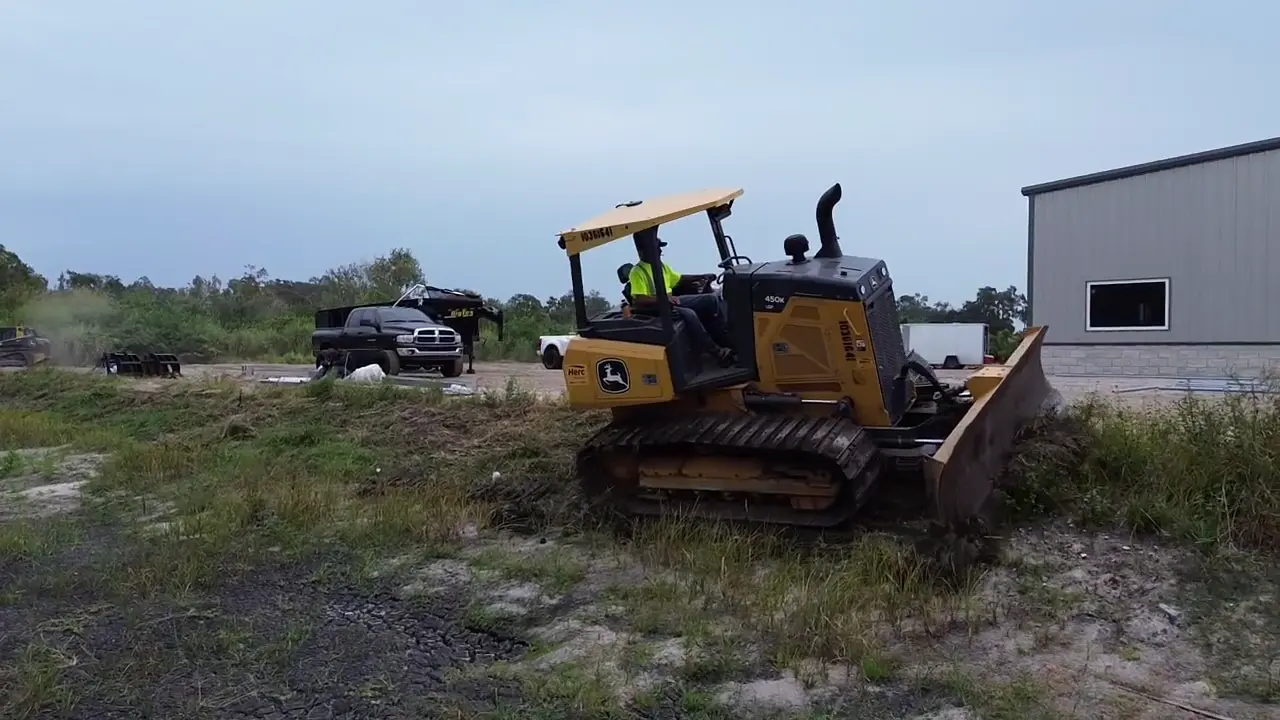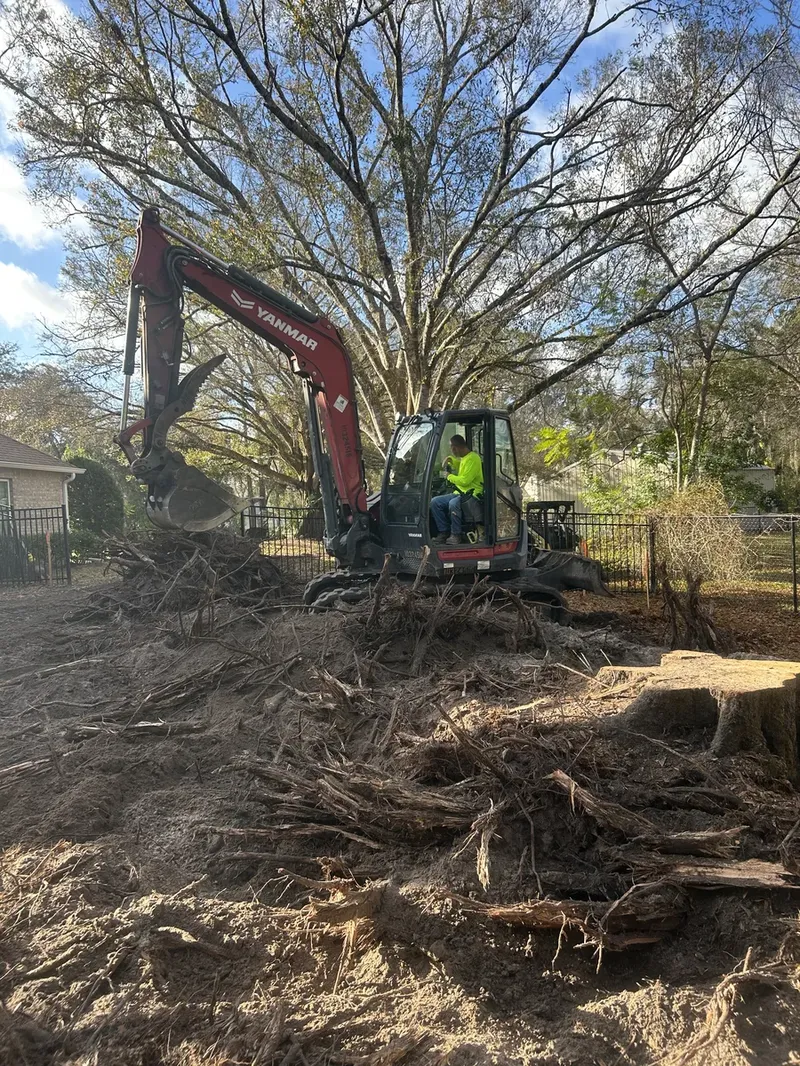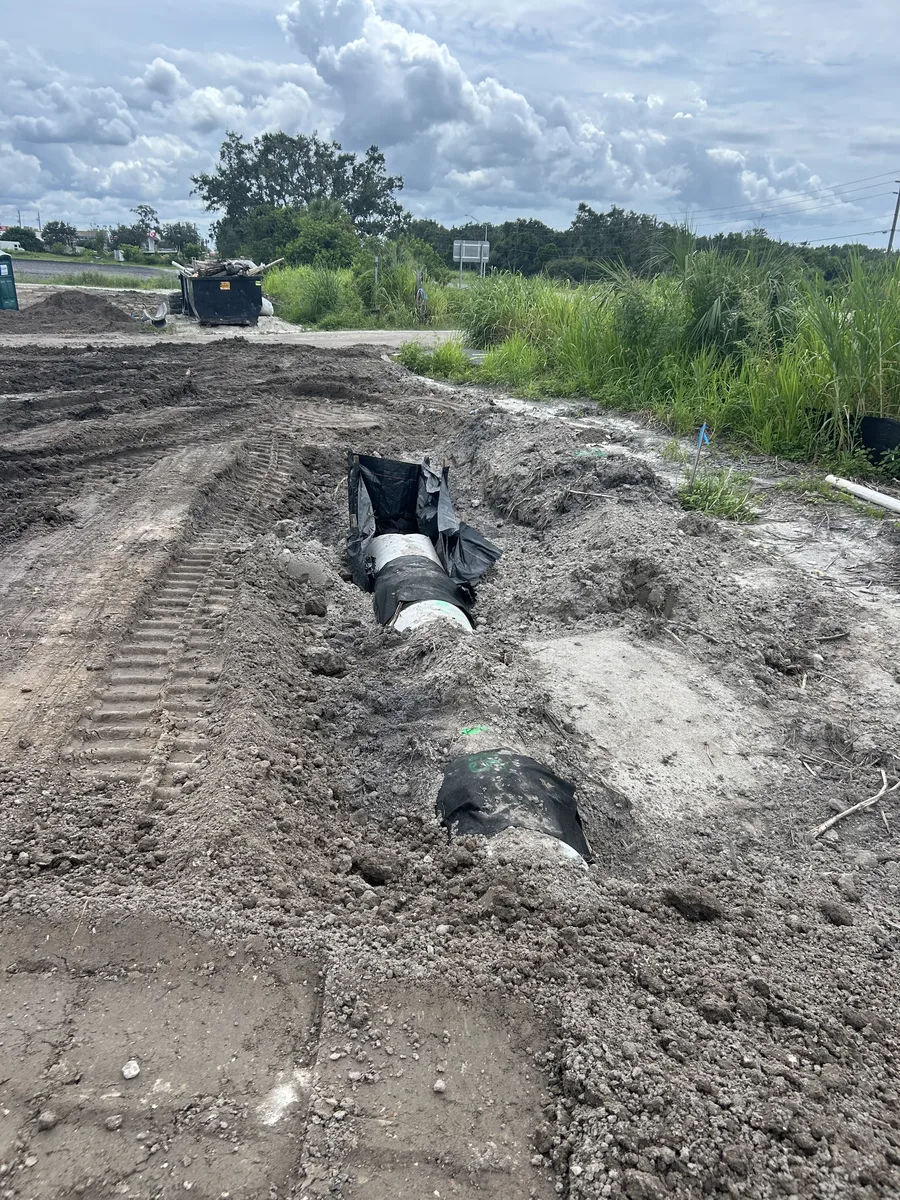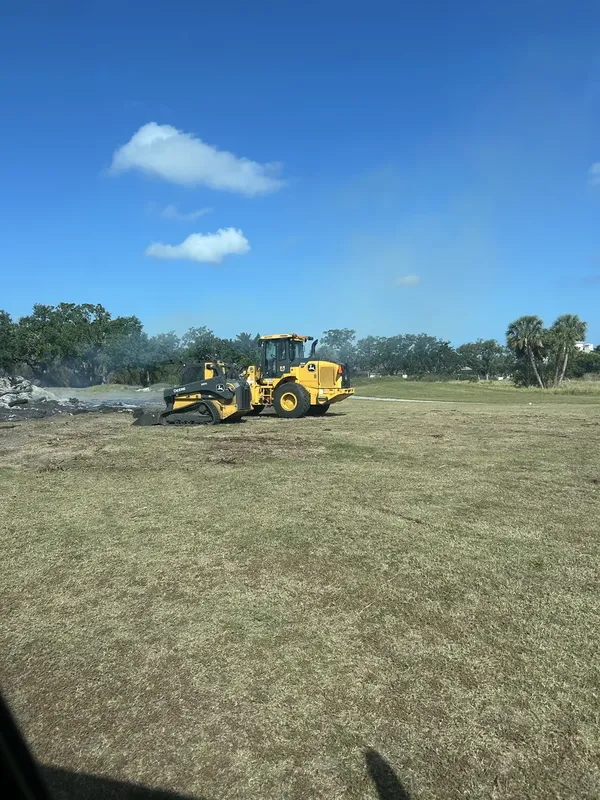
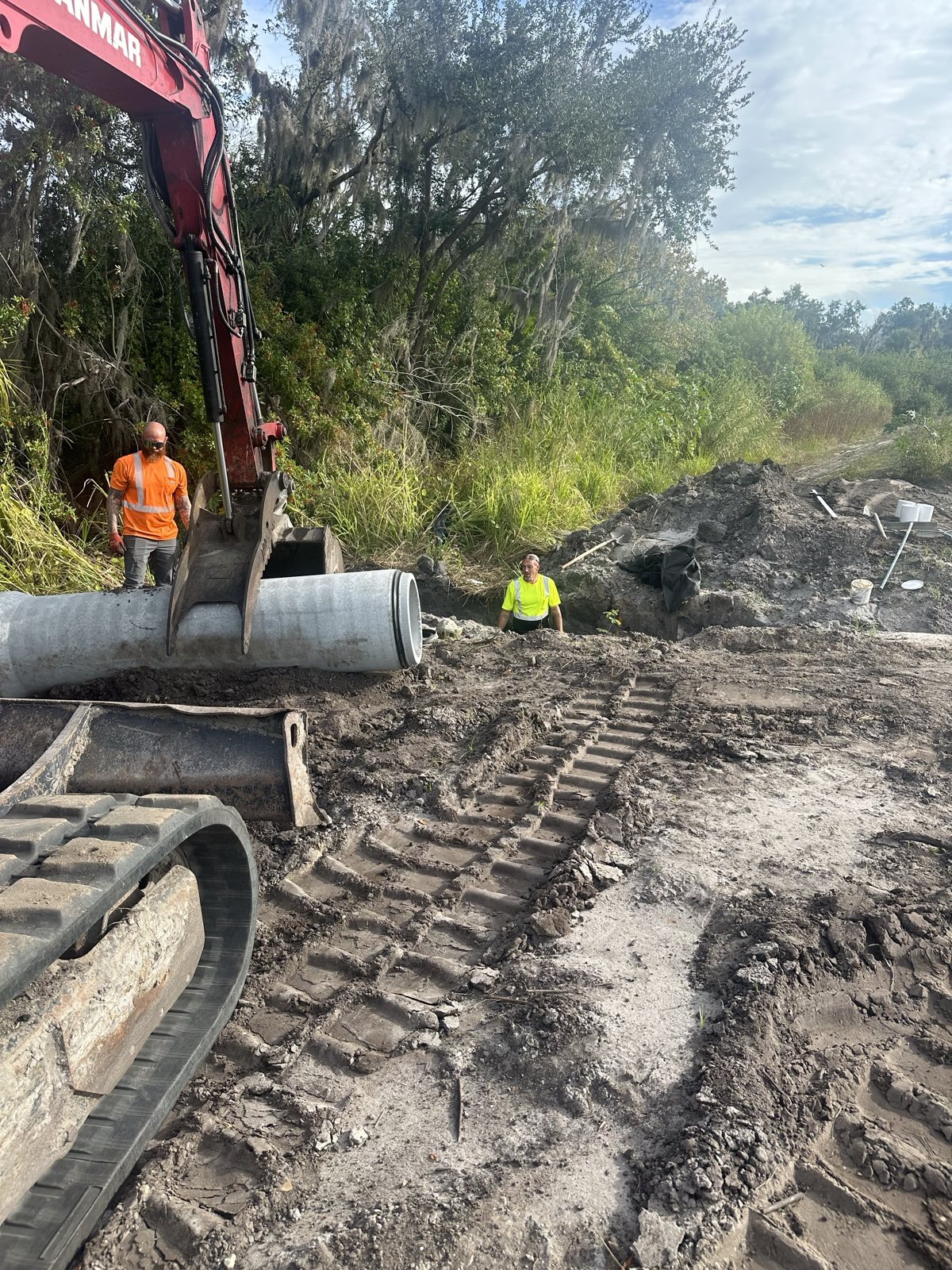
Trenching is one of those site-prep tasks that looks simple from the outside — cut a line, drop in a pipe or conduit, backfill — but trenching cost in Florida depends on more variables than most property owners expect. Utility type, soil conditions, depth, and what has to be restored on top of the trench all move the number. If you're budgeting for a new water or electrical service line, a septic connection, or an irrigation run in Sarasota, Bradenton, or anywhere in Southwest Florida, here's what actually drives trenching pricing — and what a fair quote from a Sarasota-Bradenton trenching contractor should include.
What Utility Trenching Actually Involves
Trenching is the digging and backfilling of narrow channels to install or repair underground lines — water, sewer, electrical, gas, irrigation, and increasingly data and fiber lines. It's related to but distinct from excavation, which moves larger volumes of earth for foundations, pads, and ponds, and from site grading, which shapes finished elevations. A typical trenching scope includes the trench cut itself, pipe or conduit bedding, the utility line installation — often coordinated with a licensed electrician or plumber working alongside the trenching contractor — backfill, compaction, and surface restoration where the trench crosses a finished surface like sod, sidewalk, or driveway.
What Drives Trenching Cost in Florida
A handful of variables account for most of the swing in trenching quotes across the Sarasota-Bradenton market.
Utility type. Not all trenches are priced the same. A shallow irrigation or low-voltage line costs far less to trench than a deep sewer lateral, a high-pressure gas line, or a large-diameter water main — deeper, more heavily regulated utilities require wider trenches, more careful bedding, and often inspection sign-off.
Soil type and rock. Southwest Florida's sandy soil trenches quickly in most areas, which keeps costs on the lower end. But pockets of Manatee and Sarasota counties — and much of the Gulf Coast further south — sit over limestone or coral rock close to the surface, and hitting rock can significantly raise the cost of a trench run because it requires rock saws, hammers, or specialized excavator attachments instead of a standard trencher or backhoe.
Depth and length. Cost scales with both dimensions — a longer run costs more, and so does a deeper one, since deeper trenches typically need wider cuts for worker safety and more material to bed and backfill properly.
Access and restoration. A trench across an open yard is inexpensive to restore. A trench that crosses a driveway, sidewalk, or landscaped bed adds saw-cutting, patching, or re-sodding on top of the digging cost — and tight urban lots or fenced yards that limit equipment access slow production and raise price.
High water table. As with excavation, groundwater is a factor here too. Southwest Florida's water table sits close to the surface across much of Manatee and Sarasota counties, and a deep trench that hits water may need dewatering to stay open and workable, particularly during the wet season.
Typical Trenching Price Ranges in Florida
National cost-data aggregators including Angi and HomeGuide put basic trenching at roughly $5 to $12 per linear foot on average, with more difficult conditions — length, obstructions, or hard soil — pushing that to $13 to $40 per linear foot. Florida's sandy soil trenches toward the low end of that range in open, easy-access conditions, but limestone or coral rock pockets can push costs toward double the sandy-soil rate. These are market ranges from national data, not site-specific bids — the only way to get an accurate number for your project is a site visit.
- •Electrical service or low-voltage lines: roughly $4–$12 per linear foot
- •Irrigation and landscape lighting runs: generally priced similarly to electrical, on the lower end of the range
- •Natural gas lines: roughly $15–$25 per linear foot, reflecting stricter depth and bedding requirements
- •Water and sewer connections: among the widest ranges — septic and well lines commonly run $60–$120 per linear foot, and tying into a public water main can run up to $200 per linear foot depending on depth, distance, and utility company connection fees
- •Rock conditions: expect costs roughly 50–150% higher than the sandy-soil baseline for the same run
These figures come from national cost-data aggregators and reflect typical single-utility residential runs. Commercial projects, multiple parallel utility runs, or trenching tied to a subdivision's site-development plan are priced per project based on engineering specs and total linear footage.
Utility Locates Are Required Before You Dig
Florida law requires a free utility locate through the statewide Sunshine 811 system before any excavation or trenching begins, regardless of depth. The service typically requires at least two full business days' notice before work can start, so it needs to be built into your schedule rather than treated as a same-day formality. Skipping this step isn't just a safety risk — hitting an unmarked line is also a liability the homeowner or contractor can be held responsible for. Confirm with Sunshine811.com or your contractor exactly how much lead time your project needs, since requirements can be updated.
How Trenching Fits Into the Site-Prep Sequence
Trenching for underground utilities typically happens after excavation and rough grading establish the pad, and before foundation prep and fine grading close out the site. On new-construction projects in Parrish and other fast-growing Southwest Florida communities, trenching is often coordinated closely with the utility company's own tap and inspection schedule, since electrical, water, and sewer connections each run on separate timelines. Our excavation cost guide and our guide to what trenching involves in Southwest Florida cover the phases on either side of a trenching scope in more detail.
What a Professional Trenching Quote Should Include
When comparing trenching quotes in Bradenton, Sarasota, and the surrounding area, look for these details spelled out before you sign:
- •Itemized scope — trench length, depth, utility type, bedding material, and restoration work broken out separately, not buried in a lump sum
- •A site visit before pricing — soil conditions and rock risk vary block to block in Southwest Florida, so a fair quote is based on your actual lot, not a phone estimate
- •Utility locate confirmation — proof that Sunshine 811 has been called and lines marked before digging starts
- •Restoration terms — exactly what surface repair is included (sod, driveway patch, sidewalk) and what isn't
- •License and insurance documentation — Florida requires contractor licensing for trenching and underground utility work; confirm credentials before signing
Lethermon Grade Excavations handles trenching for water, sewer, electrical, and irrigation lines throughout Bradenton, Sarasota, Parrish, and the surrounding Southwest Florida area. We call in utility locates before we dig, tell you upfront if we expect to hit rock or water, and restore the surface once the line is in. Contact us for a free, on-site estimate.
Frequently Asked Questions
How much does trenching cost in Florida?
It depends heavily on utility type and soil. Basic trenching runs roughly $5 to $12 per linear foot on average, with electrical lines on the lower end, gas lines around $15–$25 per foot, and water or sewer connections running $60 to $200+ per foot depending on depth and tie-in requirements. Hitting rock can push any of these ranges 50–150% higher. Get a site-specific quote before budgeting.
What's the difference between trenching and excavation?
Trenching digs narrow channels for utility lines — water, sewer, electrical, gas, irrigation. Excavation moves larger volumes of earth for foundations, basements, pads, and ponds. Many projects need both, and trenching typically follows the rough excavation and grading phase.
Do I need a permit or locate before trenching in Florida?
Florida law requires a free utility locate through Sunshine 811 before any digging, regardless of depth, and it needs to be requested with lead time before work starts. Separate building or right-of-way permits may also apply depending on your county and what the trench crosses — check with your local building department.
Does rocky soil affect trenching cost in Southwest Florida?
Yes. Most of the region trenches easily through sandy soil, but pockets of Manatee and Sarasota counties sit over limestone or coral rock close to the surface. Hitting rock requires specialized equipment and can raise cost significantly compared with a standard sandy-soil trench.
Written by
Kameron LethermonOwner of Lethermon Grade Excavations. Military background with 15+ years of excavation and construction experience in Southwest Florida. View full profile →