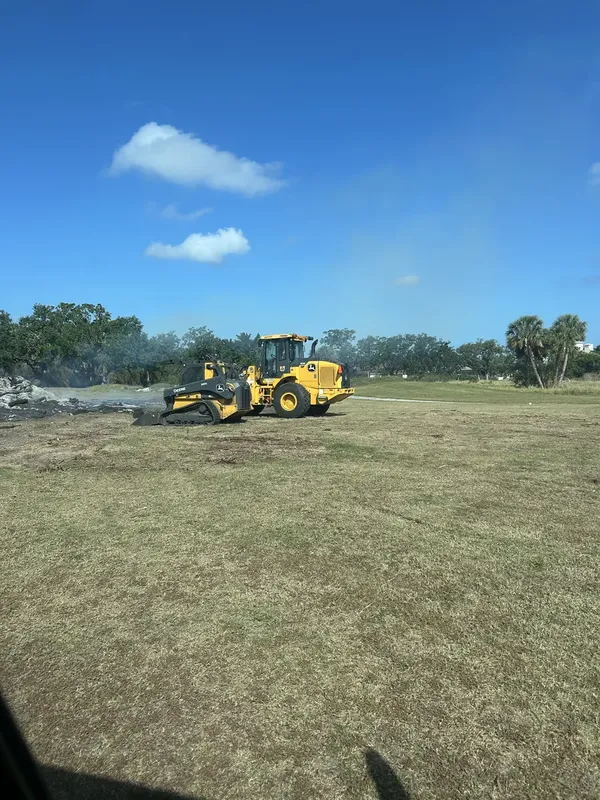
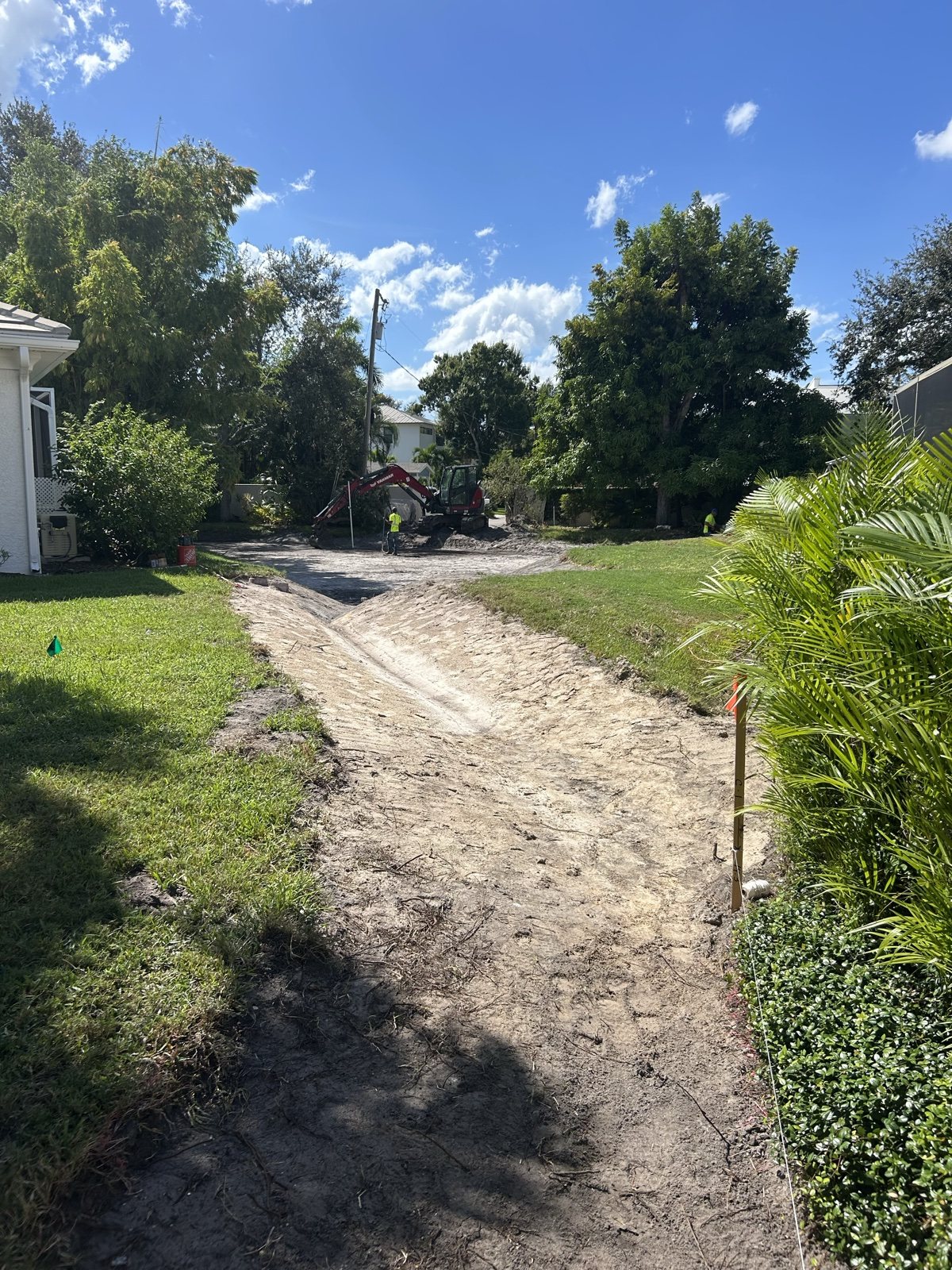
A pond can do a lot of work on a Southwest Florida property. It can hold stormwater off a pasture, supply irrigation, give livestock a water source, or simply turn a low, soggy corner into something worth looking at. But pond excavation in Florida is not the same as digging a hole and waiting for rain. Our high water table, sandy soils, and layered permitting mean the planning matters as much as the digging. This guide walks through what to settle before a machine shows up, how a pond dig actually runs, and where the common mistakes happen, with a focus on Manatee and Sarasota counties.
Start With Why You Want the Pond
The purpose of the pond shapes almost every decision that follows: where it goes, how deep it is, how the banks are sloped, and which agencies need to weigh in. Be clear about it before you call anyone.
- •Stormwater: a pond meant to catch runoff from a driveway, barn, or yard is a drainage feature first. Where it overflows matters as much as how much it holds.
- •Agriculture: a pond for irrigation or livestock may fall under different rules than a pond dug for looks.
- •Fill: some owners dig a pond partly to generate fill for a house pad or driveway on the same property.
- •Appearance and wildlife: a pond dug mainly for the view still has to be built so the banks hold and the water level makes sense year round.
Many ponds serve more than one purpose. That is fine, but tell your contractor and any permitting agency all of them, because the answer to "do I need a permit?" can change depending on the use.
Do You Need a Permit to Dig a Pond in Florida?
Often, yes, and you should assume you need to ask before you dig. There is no single answer that fits every lot. The requirements depend on the pond's size and purpose, whether it is near wetlands or other surface waters, whether it changes how water leaves your property, and which county or city you are in.
The water management district
In this part of the state, the Southwest Florida Water Management District (SWFWMD) handles Environmental Resource Permits. The district's own permitting materials describe these permits as protecting wetlands and floodplain functions, treating the quality of stormwater runoff, and reducing the risk of new development causing flooding. A new pond can touch all three, so SWFWMD is usually the first call.
Florida law does carve out some exemptions. Section 373.406 of the Florida Statutes exempts certain wholly owned, manmade excavated farm ponds from these rules, but the statute also says that work may not begin without a written determination from the district or the Department of Environmental Protection confirming the activity qualifies. The exemption also has limits tied to size and to wetlands and other surface waters. In plain terms: even if you believe your pond is exempt, get that confirmation in writing first.
The county
The county has its own rules on top of the district's. In unincorporated Manatee County, the Land Development Code restricts development within wetlands and wetland buffers without the county's prior written consent (Section 706), and it requires an erosion and sediment control plan for most development projects (Section 353). Sarasota County, and cities such as Sarasota, Venice, and North Port, have their own codes. Setbacks from property lines, wells, septic systems, and structures can also apply. Call your county or city development services office and describe the project before you commit to a location.
HOAs and community districts
If your property is in a deed-restricted community, a homeowners association or community development district may have its own approval process. In many newer neighborhoods around Lakewood Ranch and Parrish, the existing ponds are part of a permitted stormwater system owned by the community, and private ponds may not be allowed at all. Check the governing documents first.
Siting the Pond: Water Table, Soil, and Overflow
Southwest Florida is flat, sandy, and wet for much of the year. Those three facts drive where a pond belongs.
Groundwater sets the water level
Most excavated ponds here are fed largely by groundwater, so the water level in your pond will rise and fall with the water table through the seasons. A pond dug during the dry season can look shallow and then fill well up its banks once the summer rains return. A good contractor plans for both ends of that swing so the banks are not underwater in August or a mudflat in May.
Soil decides the slopes
Our sandy soils do not hold a steep bank for long. UF/IFAS Extension guidance on pond construction says side slopes of an excavated pond should be no steeper than the natural angle of repose of the material being dug, which in loose sand means a gentle slope. Gentler slopes also make a pond safer to walk around and easier to mow. If you hit pockets of muck, clay, or shell, the plan may need to change, and that is something to find out early.
Plan where the water goes when it is full
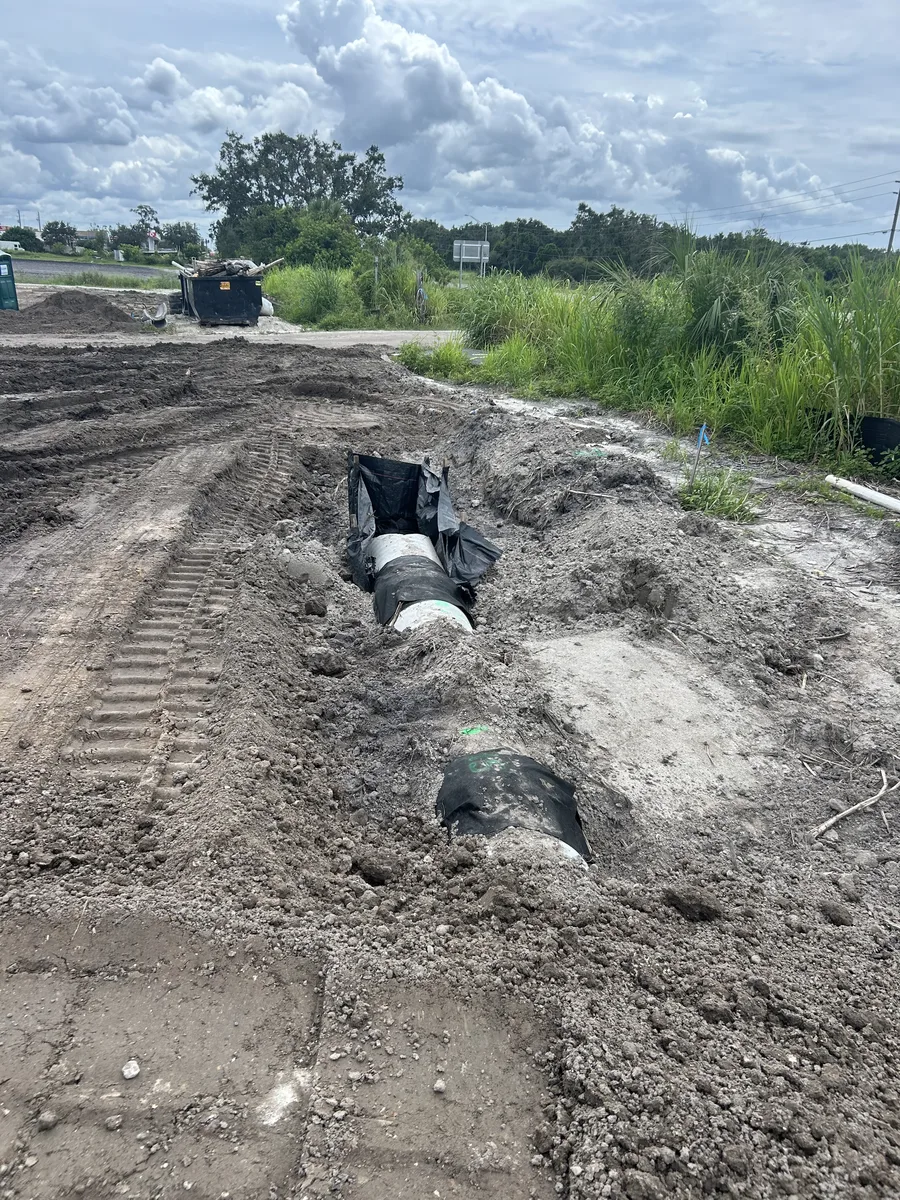
Every pond eventually overflows in a big storm. Before digging, decide where that water will go, and make sure it does not end up on a neighbor's lot, against your house, or across a driveway. This is where pond work overlaps with drainage solutions and site grading. A pond with no planned overflow route can create the very flooding problem it was supposed to fix.
Do not forget what is underground
Florida's Underground Facility Damage Prevention and Safety Act, Chapter 556 of the Florida Statutes, requires excavators to notify Sunshine 811 before digging. Rural lots can have buried power, water, irrigation, or communication lines that no one remembers until a bucket finds them.
What a Pond Excavation Project Looks Like
Every site is different, but a well-run pond dig generally follows this order:
Site walk. Look at the low spots, where water sits now, access for equipment, trees, and anything that looks like a wetland.
Permits and approvals. Confirm what SWFWMD, the county or city, and any HOA require, and get it in writing.
Utility locates. Call Sunshine 811 and wait for lines to be marked.
Layout. Stake the pond footprint, the top of the banks, and the overflow route.
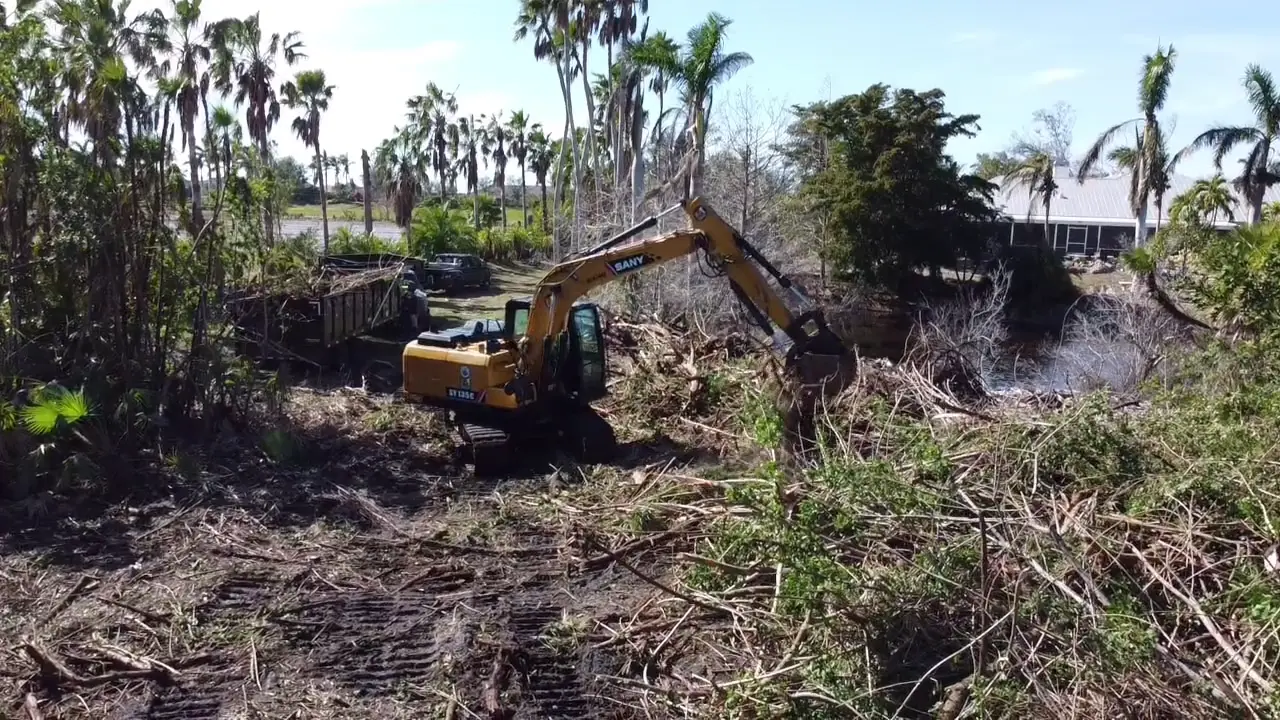
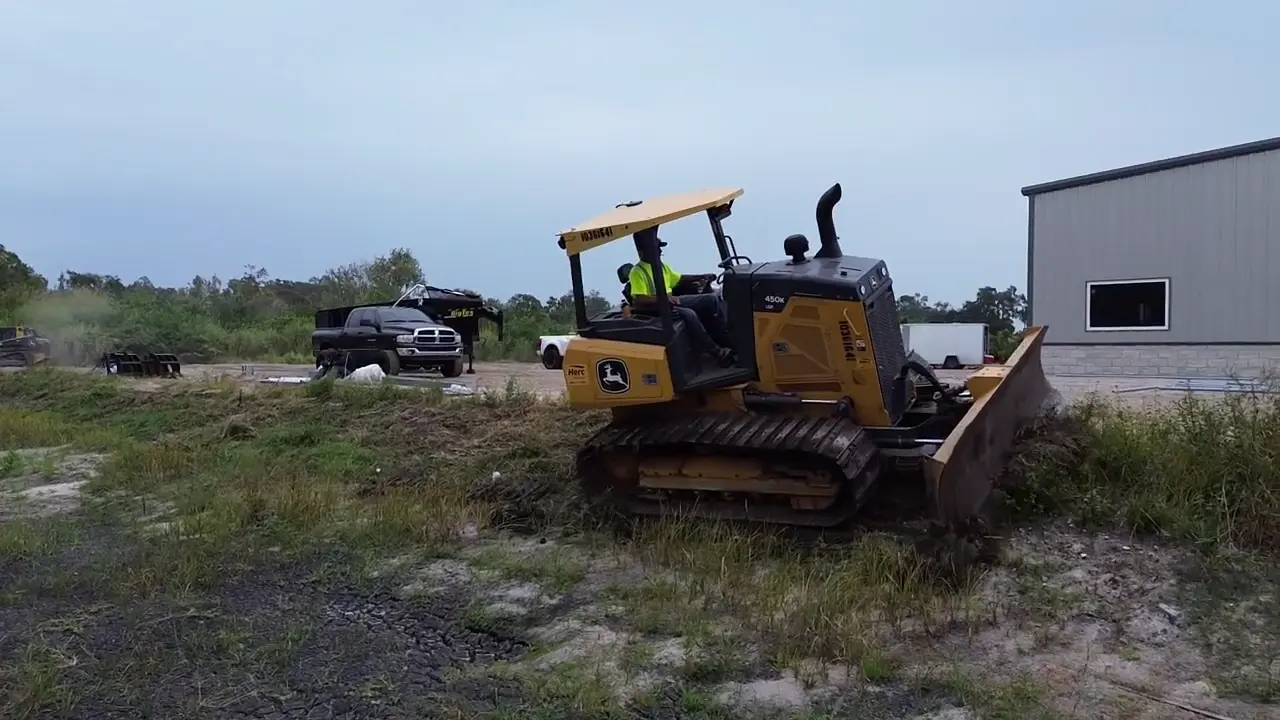
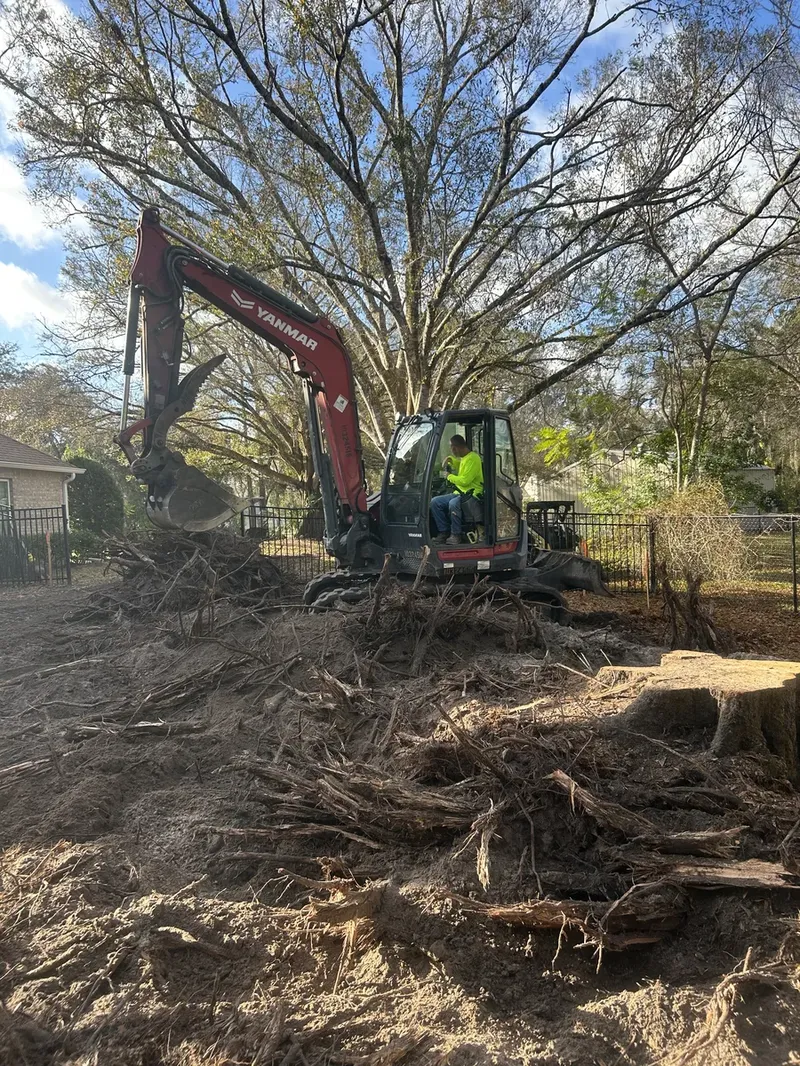
Clearing. Remove brush, stumps, and roots from the footprint and the work area.
Erosion control. Install silt fence or other controls before the soil is opened up, as your plan and permit require.
Excavation. Dig to the planned depth and shape, managing water as the dig goes below the water table.
Spoil handling. Spread, stockpile, or haul off the excavated material, depending on the plan.
Bank shaping and stabilization. Slope the banks evenly and cover bare soil with sod or seed so it does not wash back into the pond.
What happens to all that dirt
Digging a pond produces a lot of material, and it has to go somewhere. Spoil can sometimes be used on site, for example to raise a building pad or a low area, but only where it is suitable and the permits allow it. Wet, mucky, or organic material is not structural fill. Our guide to fill dirt for a Florida building pad explains what makes good fill and what does not. Whatever is not used on site gets hauled off.
Timing: Dig in the Dry Season
The best time for pond excavation in Southwest Florida is generally late fall through spring. With the water table lower, the dig is easier to manage, equipment can work without rutting a wet field, and you can see how deep the groundwater sits before the rains return. Finishing in the dry months also gives sod and new banks time to establish before summer storms test them. We covered this in more detail in why dry season is the time to start excavation.
A New Pond Is Not the Same as Fixing an Old One
If you already have a pond that has filled with sediment, choked with vegetation, or stopped draining after storms, the job is restoration, not new construction. That is usually a dredging project, and the rules around it depend on whether the pond is part of a permitted stormwater system. Our article on when a retention pond needs dredging covers that side of things.
Pond Excavation in Parrish, Lakewood Ranch, and Sarasota
Lethermon digs new ponds on residential acreage, farms, and development sites across Manatee and Sarasota counties. Parrish still has plenty of pasture and larger homesites where a pond makes practical sense; see our page on pond excavation in Parrish. Around Lakewood Ranch, ponds tend to be tied into larger stormwater plans, and our Lakewood Ranch pond excavation page covers that work. In and around Sarasota, city and county rules differ, so the first step is always confirming which jurisdiction you are in; here is our Sarasota pond excavation page. For the full scope of what we do, start with our pond excavation services.
Questions to Ask Before You Hire
- •What permits or written determinations does this pond need, and who will apply for them?
- •How will you account for the seasonal rise and fall of the water table?
- •What side slopes will you cut, and how will the banks be stabilized?
- •Where will the overflow go in a heavy storm?
- •What happens to the excavated material?
- •Will you call Sunshine 811 and wait for locates before digging?
Get Your Pond Planned Right
A pond is one of the few features on a property that is hard to undo. Done well, it handles water, adds value, and needs little attention. Done carelessly, it erodes, floods a neighbor, or brings a code enforcement letter. Kameron Lethermon directs our crews, and we will tell you plainly what your site can support and who needs to sign off before we dig. Request a free estimate and we will walk the property with you.
Frequently Asked Questions
Do I need a permit to dig a pond in Florida?
Often, yes. In Southwest Florida, check with the Southwest Florida Water Management District (SWFWMD) and your county or city before digging. Some farm ponds can qualify for an exemption under Section 373.406, Florida Statutes, but work may not begin without a written determination from the district or DEP confirming the exemption applies. HOAs and community development districts may have their own rules too.
How deep should a pond be in Southwest Florida?
It depends on the pond's purpose, the soil, and how far the water table rises and falls through the year. Most excavated ponds here are fed largely by groundwater, so the design has to account for both the dry-season low and the wet-season high. Your contractor and any permit conditions should set the depth for your specific site.
When is the best time of year to dig a pond in Florida?
Generally late fall through spring, when the water table is lower and the ground is firmer. Digging in the dry season makes the excavation easier to manage and gives new banks and sod time to establish before the summer rains.
Can the dirt from my pond be used as fill on my property?
Sometimes. Clean, suitable material can be used to raise low areas or a building pad where the permits allow it, but wet, mucky, or organic soil is not structural fill. Anything that is not suitable or not needed is hauled off.
Written by
Kameron LethermonOwner of Lethermon Grade Excavations. Military background with 15+ years of excavation and construction experience in Southwest Florida. View full profile →