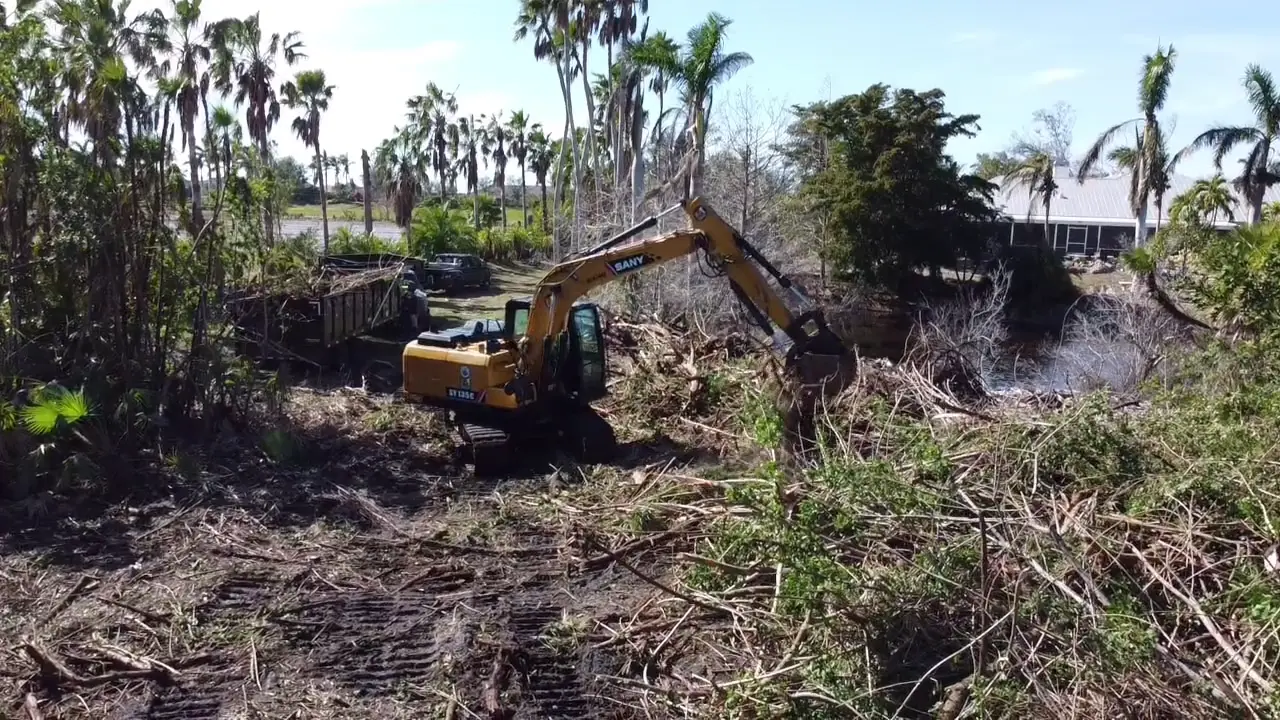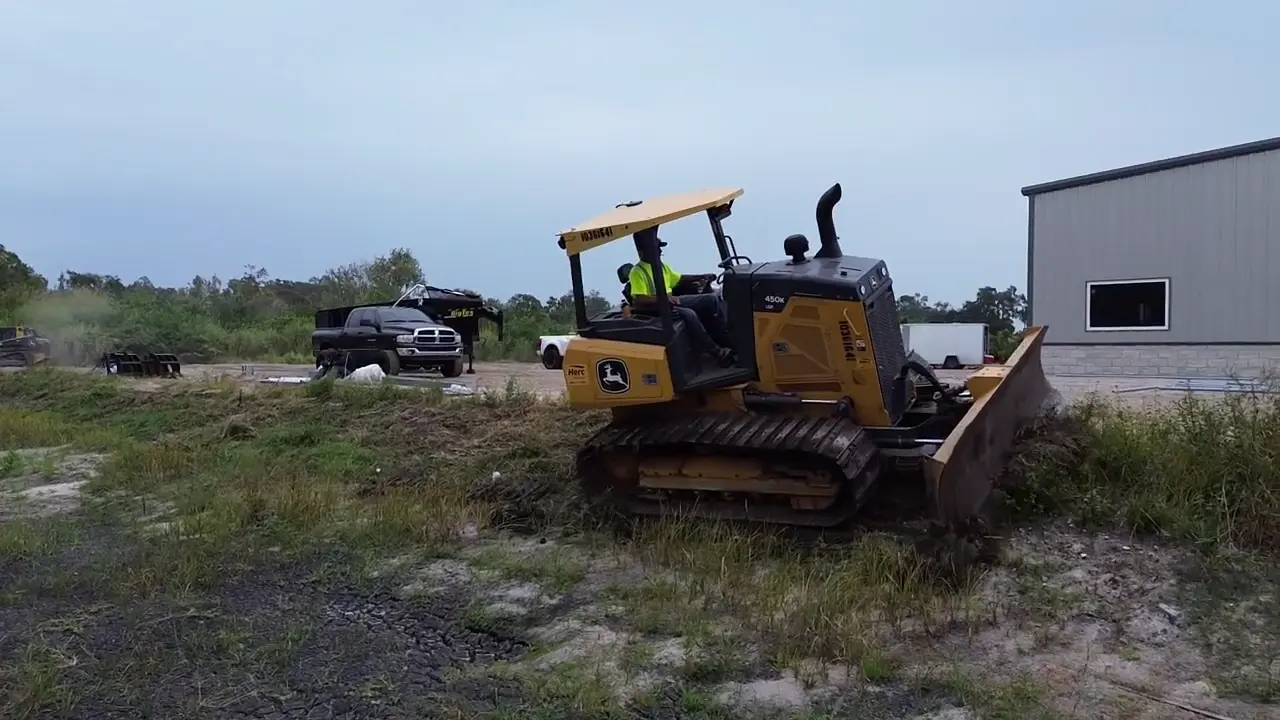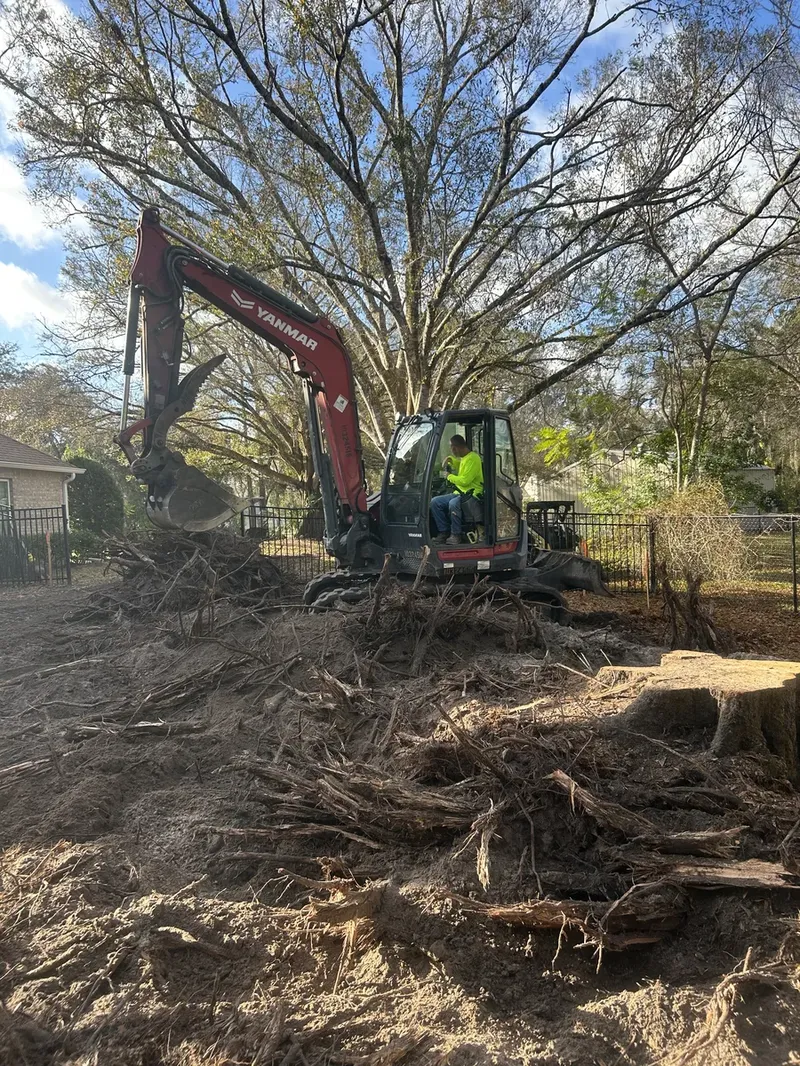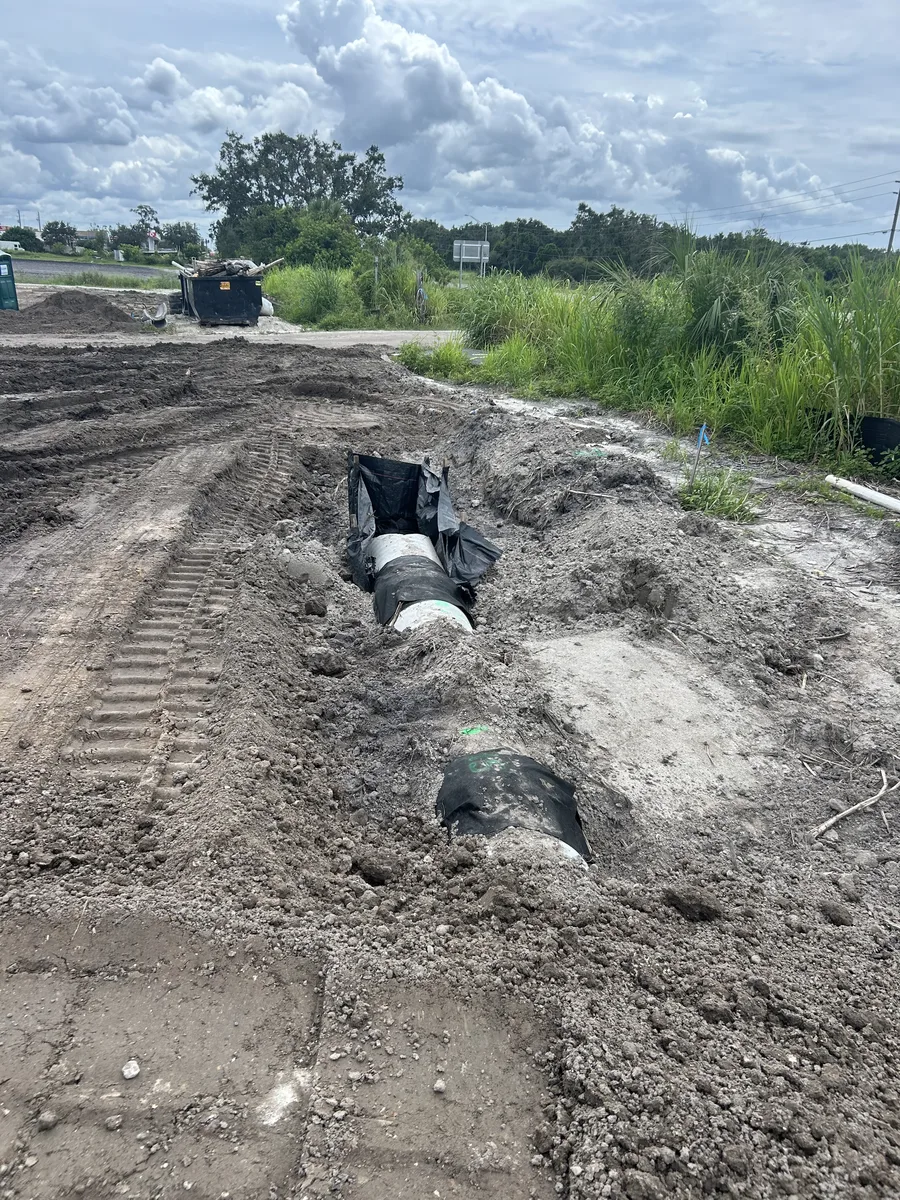
Waterfront lot grading in Florida is not ordinary site grading with a better view. Seawalls, high groundwater, flood maps, and tight access change how the ground is shaped and in what order. This guide walks Southwest Florida property owners and builders through what makes a waterfront lot different, what to settle before equipment shows up, and how a disciplined crew grades next to the water.
Why Waterfront Lot Grading in Florida Is Different
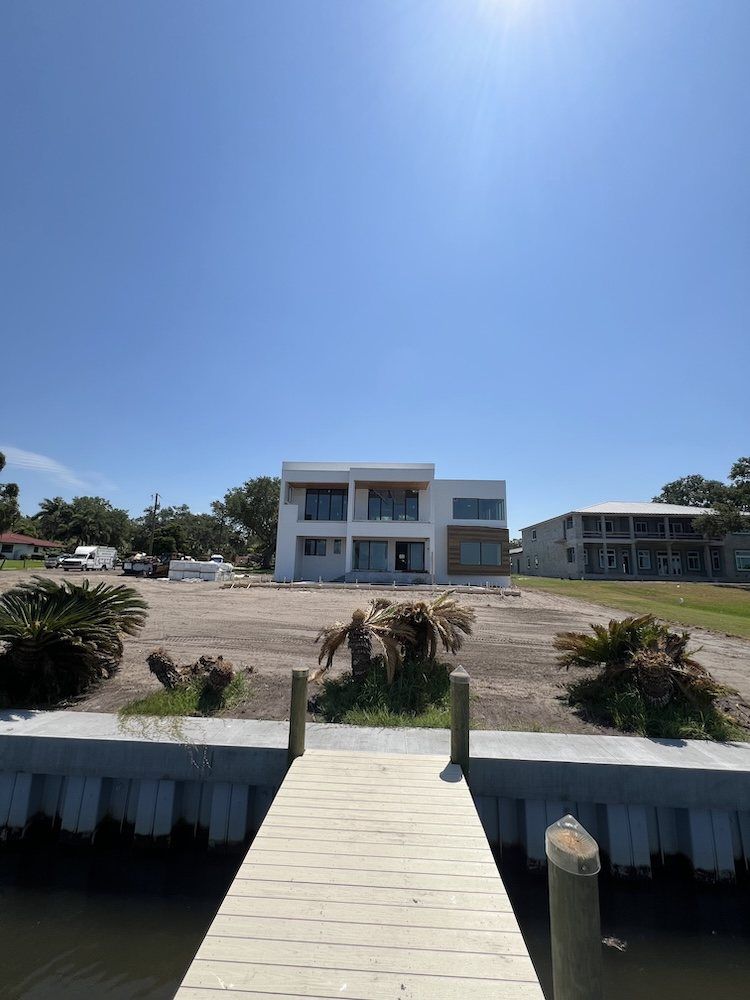
A waterfront lot sits at the low end of the local drainage system. The canal, bay, or river beside it is often the final outlet for rain that falls on your property, and its level moves with tides, storms, and seasons. The soil is typically sandy and the groundwater close to the surface, so a cut only a few feet deep can meet water. And grading near a seawall or bank puts a structure in play, because the soil behind a wall is part of what holds it up.
Four conditions drive almost every waterfront job:
- •Elevation. Flood zone and local rules set how high the finished floor and pad need to be.
- •Water at the edge. Runoff, groundwater, and tides all meet at the property line.
- •The wall or bank. Grading changes the load and the soil height beside it.
- •Access. Narrow lots, docks, and close neighbors limit where machines and trucks can go.
Start With the Flood Map and the Target Elevation
FEMA's flood maps sort coastal land into zones. Zone AE is mapped with base flood elevations, and Zone VE marks coastal areas where wave action is a factor. Whichever zone covers your lot shapes the minimum floor elevation and the building rules, and many jurisdictions layer their own requirements on top. Those rules differ by county and city, so confirm them with your local floodplain administrator, and let your surveyor or engineer set the target number.
Grading serves that elevation; it does not choose it. Ordering fill before the number is known is the most common early mistake, and we cover how fill, compaction, and elevation fit together in our guide to fill dirt for a Florida building pad. One point worth repeating: placing fill does not change your effective flood map on its own, and flood insurance requirements are a separate conversation with your lender and agent.
Seawalls, Banks, and Who Needs to Approve the Work
Do not grade blind against a seawall. Heavy equipment adds load next to the wall, and changing the soil height behind it changes the forces the wall has to resist. If a wall shows settling, leaning, cracking, or washed-out soil behind it, a qualified marine contractor or engineer should look at it before machines work nearby. A grading crew can protect a wall from a lot of avoidable stress by keeping equipment back and by sending water away from the wall instead of over it, but we are not a substitute for an engineer's call on the wall itself.
Permits at the water's edge can involve more than the building department. Depending on the site, the county or city, the Southwest Florida Water Management District, and other state or federal agencies may have a say. On sandy Gulf beaches, the Florida Department of Environmental Protection's Coastal Construction Control Line program may also apply. We will not quote a rule that could differ at your address, so confirm which approvals your parcel needs before any work starts.
Keep Sediment Out of the Water
Loose sand moves easily, and on a waterfront lot the place it moves to is the waterway. Silt fence or turbidity barriers belong along the water side before the first cut, along with a stabilized entrance so trucks do not track sand into the street. Stockpiles stay back from the edge, and the site is left graded to shed water toward the planned outlet at the end of every day. Rules on discharge to a waterway vary, so ask your contractor and your permitting authority how they apply to your project.
How a Waterfront Lot Gets Graded, Step by Step
Survey and stakes. The surveyor's elevations and property lines go in the ground first, so every pass has a target.
Clear and strip. Brush, stumps, and the organic topsoil come out so nothing decays under the pad. See our land clearing service for that stage.
Sediment and wall protection. Barriers go up on the water side, and equipment stays clear of the wall.
Rough grade and fill in lifts. Clean fill is placed in layers and compacted, not dumped in one pile, so the pad settles evenly.
Shape the drainage. Swales and slopes carry water to a designed outlet, not straight over the wall or onto a neighbor.
Finish grade and stabilize. Sod, seed, or other stabilization goes down quickly, because bare sand beside the water erodes fast.
Step five is where waterfront work most often goes wrong. A lot that drains well on paper can still push water at a wall or a neighbor if the swales do not tie into a real outlet. Our stormwater management guide for builders explains how that planning works, and our drainage solutions cover the pipe, swale, and inlet work when grading alone is not enough.
Access, Equipment, and Storm Season
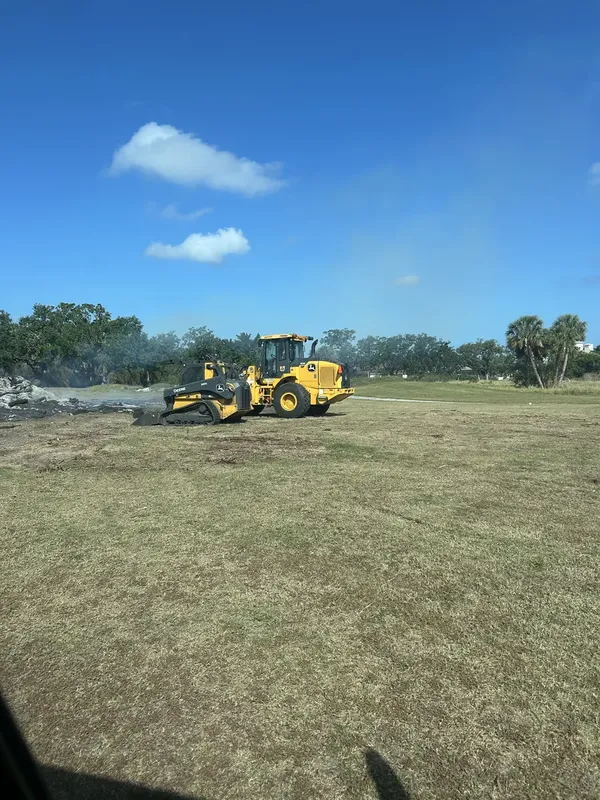
Waterfront lots tend to be tight, with a house, a dock, and neighbors close on each side. Compact track loaders and mini excavators fit where a larger machine cannot, but trucks still need a place to stage and turn, and sand near the water's edge can be soft. Plan the route in, the stockpile location, and the delivery order before the first load. Atlantic hurricane season runs June 1 through November 30, so also plan for what the site looks like if a storm is forecast: open cuts closed out, loose material secured, and drainage paths clear. Our hurricane season drainage prep guide covers the yard-level steps.
Waterfront Grading in Sarasota and Bradenton
Canal, bayfront, and Intracoastal lots are a regular part of our work around Sarasota and Bradenton. Elevation, soil, and groundwater change from one parcel to the next, even on the same street, which is why we look at each lot before quoting. Local details about our work are on our pages for site grading in Sarasota and site grading in Bradenton.
Questions to Settle Before Work Begins
- •What is the target finished elevation, and who sets it?
- •Which local, district, and state approvals apply to this parcel?
- •What condition is the seawall or bank in, and has anyone qualified looked at it?
- •Where will runoff go once the lot is graded?
- •How will sediment be kept out of the water during the work?
- •Is there room for equipment, trucks, and a stockpile?
Get a Free Estimate
If you are planning a build or a yard reset on the water, Lethermon Grade Excavations will walk the lot with you, talk through elevation, access, and drainage, and give you a clear scope. Kameron Lethermon directs our crews, and we tell you up front when water, a wall, or the weather will shape the job. Request a free estimate and we will take it from there.
Frequently Asked Questions
Can you grade right up to a seawall?
Not without a plan. Heavy equipment adds load next to the wall, and changing the soil level behind it changes the forces on it. If the wall looks settled, leaning, or has washed-out soil behind it, have a qualified marine contractor or engineer look at it first, and keep grading away from it until they say otherwise.
Do I need a permit to grade a waterfront lot?
Often, yes, and sometimes from more than one agency. Requirements depend on your county or city, your flood zone, how close the work is to the water, and the size of the project. Check with your local building department and the Southwest Florida Water Management District, and ask about state review if you are on a sandy Gulf beach. We do not quote rules that may differ at your address.
Does adding fill change my flood zone?
No. Placing fill does not change the effective flood map by itself. Fill can help a build meet its elevation requirements, but your flood zone, insurance, and lender requirements are separate questions for your surveyor, insurance agent, and local floodplain administrator.
When is the best time to grade a waterfront lot?
Late fall through spring is generally easier, because the ground is drier and groundwater sits lower. Waterfront work can still go ahead in the wet season with a solid dewatering and erosion control plan. A walk-through of your lot is the best way to judge timing.
Written by
Kameron LethermonOwner of Lethermon Grade Excavations. Military background with 15+ years of excavation and construction experience in Southwest Florida. View full profile →